
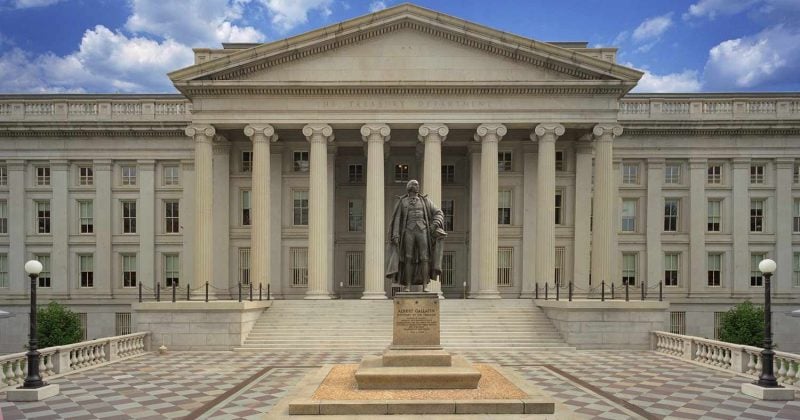
US Treasury’s payment fraud crackdown recovered $4B in a single year

US Treasury’s payment fraud crackdown recovered $4B in a single year

New pre-payment screening tools, AI, and a paper check ban are reshaping how the federal government moves money

The federal government loses a staggering amount of money every year to fraud, waste, and improper payments. The US Treasury is trying to fix that, and the early numbers suggest the effort is working better than almost anyone expected.

In fiscal year 2024, Treasury recovered and prevented more than $4 billion in fraudulent or improper disbursements. That figure represents a roughly sixfold jump from fiscal year 2023, when the comparable number was $652.7 million.

How the money was found

The $4 billion recovery did not come from one silver-bullet fix. It came from several layered interventions hitting at once.

Advertisement

Risk-based screening expansions contributed $500 million of that total. Prioritizing high-risk transactions before they cleared added another $2.5 billion. Machine-learning AI flagged roughly $1 billion in suspect payments. And processing efficiency improvements recovered $180 million more.

Then fiscal year 2025 numbers came in, and they were even larger. The Do Not Pay Business Center, which cross-references payment recipients against databases of deceased individuals, debarred vendors, and other ineligible parties, helped identify and avert $11 billion in fraud. That is not money recovered after the fact. That is money that never left the Treasury in the first place.

Paper checks are getting phased out entirely

One of the clearest signals that this modernization is serious comes from Executive Order 14247, which mandates that the federal government stop issuing paper checks by September 30, 2025. All federal disbursements would shift to electronic funds transfers.

New legislative proposals are also moving through the process. Statutory changes being considered would formally expand Treasury’s pre-payment verification authority and make fraud screening a legal requirement rather than an administrative preference.

What this means for crypto and digital payment markets

The stablecoin legislative debate currently running through Congress intersects with this in a specific way. Proposals to create a federal regulatory framework for dollar-pegged stablecoins would, in theory, bring those instruments under the kind of compliance and verification requirements that Treasury is now building into traditional payment flows.

For investors watching the payments space, the $11 billion figure from the Do Not Pay Business Center is the number worth anchoring to. That is the scale of fraudulent disbursement that a reasonably well-designed pre-payment screening system can intercept in a single year.

Disclosure: This article was edited by Editorial Team. For more information on how we create and review content, see our Editorial Policy.

US Treasury’s payment fraud crackdown recovered $4B in a single year

US Treasury’s payment fraud crackdown recovered $4B in a single year

New pre-payment screening tools, AI, and a paper check ban are reshaping how the federal government moves money

The federal government loses a staggering amount of money every year to fraud, waste, and improper payments. The US Treasury is trying to fix that, and the early numbers suggest the effort is working better than almost anyone expected.

In fiscal year 2024, Treasury recovered and prevented more than $4 billion in fraudulent or improper disbursements. That figure represents a roughly sixfold jump from fiscal year 2023, when the comparable number was $652.7 million.

How the money was found

The $4 billion recovery did not come from one silver-bullet fix. It came from several layered interventions hitting at once.

Advertisement

Risk-based screening expansions contributed $500 million of that total. Prioritizing high-risk transactions before they cleared added another $2.5 billion. Machine-learning AI flagged roughly $1 billion in suspect payments. And processing efficiency improvements recovered $180 million more.

Then fiscal year 2025 numbers came in, and they were even larger. The Do Not Pay Business Center, which cross-references payment recipients against databases of deceased individuals, debarred vendors, and other ineligible parties, helped identify and avert $11 billion in fraud. That is not money recovered after the fact. That is money that never left the Treasury in the first place.

Paper checks are getting phased out entirely

One of the clearest signals that this modernization is serious comes from Executive Order 14247, which mandates that the federal government stop issuing paper checks by September 30, 2025. All federal disbursements would shift to electronic funds transfers.

New legislative proposals are also moving through the process. Statutory changes being considered would formally expand Treasury’s pre-payment verification authority and make fraud screening a legal requirement rather than an administrative preference.

What this means for crypto and digital payment markets

The stablecoin legislative debate currently running through Congress intersects with this in a specific way. Proposals to create a federal regulatory framework for dollar-pegged stablecoins would, in theory, bring those instruments under the kind of compliance and verification requirements that Treasury is now building into traditional payment flows.

For investors watching the payments space, the $11 billion figure from the Do Not Pay Business Center is the number worth anchoring to. That is the scale of fraudulent disbursement that a reasonably well-designed pre-payment screening system can intercept in a single year.

Disclosure: This article was edited by Editorial Team. For more information on how we create and review content, see our Editorial Policy.