
Federal Reserve Chair Kevin Warsh has room to challenge rate hike consensus

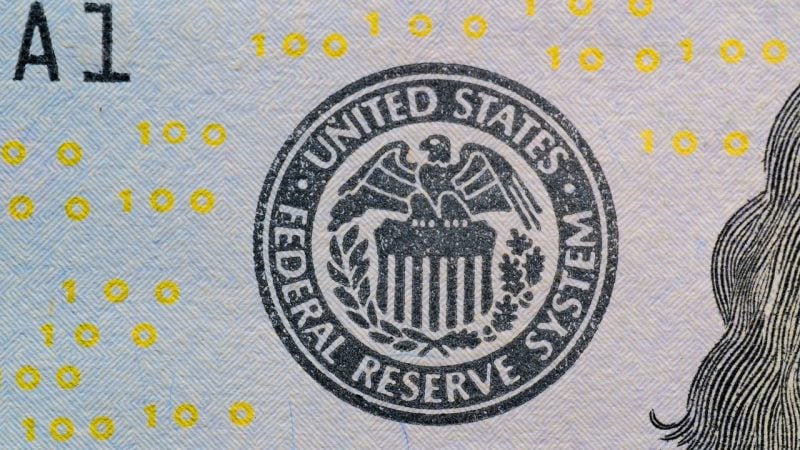
Photo: Đào Thân / Pexels

Federal Reserve Chair Kevin Warsh has room to challenge rate hike consensus

The new Fed chair's first rate increase doesn't necessarily mean a hiking cycle is coming, and history backs him up

Kevin Warsh just raised interest rates for the first time since 2023. Markets immediately started pricing in a parade of follow-up hikes. Warsh, for his part, seems content to let them wonder.

The Federal Reserve’s new chair announced a 25 basis point increase on September 16, pushing the federal funds target range to 3.75%-4%. The move was unanimous across the FOMC. But unanimity on one hike does not mean unanimity on a hiking cycle, and the distinction matters enormously for anyone holding risk assets right now.

One hike does not a cycle make

The more interesting historical parallel is Alan Greenspan’s 1997 playbook. That March, the Fed raised rates by a solitary 25 basis points. Then it stopped. No follow-up. No escalation. Just one surgical move to address a specific inflationary concern, followed by patience.

Advertisement

Warsh appears to be studying from that same textbook. During his August 28 speech at Jackson Hole, he emphasized that inflation progress had been insufficient, setting the stage for September’s move. But he was careful not to promise anything beyond it.

His post-decision commentary rejected the kind of heavy forward guidance that defined the Jerome Powell era. Warsh stressed data dependence and the primacy of price stability, a combination that gives him maximum flexibility to do nothing next time if conditions warrant it.

The inflation picture is real but complicated

The case for hiking was not manufactured. Core PCE inflation hit 3.3% in July 2026, well above the Fed’s 2% target and stubbornly resistant to the tightening that preceded Warsh’s tenure. Rising energy prices, amplified by geopolitical tensions, have added fuel to an already warm inflation backdrop.

Warsh was confirmed as Fed Chair on May 13, 2026, with a 54-45 Senate vote that reflected the political friction surrounding his appointment. He inherited an economy where inflation had proven stickier than models predicted, where labor markets remained tight, and where prior rate cuts had arguably been premature.

Twelve of the FOMC’s 18 members project that an additional 25 basis point increase could happen before year-end. That’s a meaningful majority, but projections are not commitments. The dot plot is a snapshot of individual opinions at a moment in time, not a binding contract with markets.

What this means for markets

For interest rate-sensitive assets, the September hike creates an immediate recalculation. Borrowing costs tick higher. Discount rates on future cash flows increase. The sectors that benefited most from the low-rate environment of 2024 and early 2025, particularly real estate and growth-heavy tech, face renewed pressure.

After the 1997 solo hike, markets initially struggled with the ambiguity. But once it became clear that the Fed was capable of making a calibrated, one-off adjustment without triggering a full cycle, risk assets found their footing. The S&P 500 had a very good 1997.

Disclosure: This article was edited by Editorial Team. For more information on how we create and review content, see our Editorial Policy.
Federal Reserve Chair Kevin Warsh has room to challenge rate hike consensus

The new Fed chair's first rate increase doesn't necessarily mean a hiking cycle is coming, and history backs him up

Photo: Đào Thân / Pexels

Kevin Warsh just raised interest rates for the first time since 2023. Markets immediately started pricing in a parade of follow-up hikes. Warsh, for his part, seems content to let them wonder.

The Federal Reserve’s new chair announced a 25 basis point increase on September 16, pushing the federal funds target range to 3.75%-4%. The move was unanimous across the FOMC. But unanimity on one hike does not mean unanimity on a hiking cycle, and the distinction matters enormously for anyone holding risk assets right now.

One hike does not a cycle make

The more interesting historical parallel is Alan Greenspan’s 1997 playbook. That March, the Fed raised rates by a solitary 25 basis points. Then it stopped. No follow-up. No escalation. Just one surgical move to address a specific inflationary concern, followed by patience.

Advertisement

Warsh appears to be studying from that same textbook. During his August 28 speech at Jackson Hole, he emphasized that inflation progress had been insufficient, setting the stage for September’s move. But he was careful not to promise anything beyond it.

His post-decision commentary rejected the kind of heavy forward guidance that defined the Jerome Powell era. Warsh stressed data dependence and the primacy of price stability, a combination that gives him maximum flexibility to do nothing next time if conditions warrant it.

The inflation picture is real but complicated

The case for hiking was not manufactured. Core PCE inflation hit 3.3% in July 2026, well above the Fed’s 2% target and stubbornly resistant to the tightening that preceded Warsh’s tenure. Rising energy prices, amplified by geopolitical tensions, have added fuel to an already warm inflation backdrop.

Warsh was confirmed as Fed Chair on May 13, 2026, with a 54-45 Senate vote that reflected the political friction surrounding his appointment. He inherited an economy where inflation had proven stickier than models predicted, where labor markets remained tight, and where prior rate cuts had arguably been premature.

Twelve of the FOMC’s 18 members project that an additional 25 basis point increase could happen before year-end. That’s a meaningful majority, but projections are not commitments. The dot plot is a snapshot of individual opinions at a moment in time, not a binding contract with markets.

What this means for markets

For interest rate-sensitive assets, the September hike creates an immediate recalculation. Borrowing costs tick higher. Discount rates on future cash flows increase. The sectors that benefited most from the low-rate environment of 2024 and early 2025, particularly real estate and growth-heavy tech, face renewed pressure.

After the 1997 solo hike, markets initially struggled with the ambiguity. But once it became clear that the Fed was capable of making a calibrated, one-off adjustment without triggering a full cycle, risk assets found their footing. The S&P 500 had a very good 1997.

Disclosure: This article was edited by Editorial Team. For more information on how we create and review content, see our Editorial Policy.