
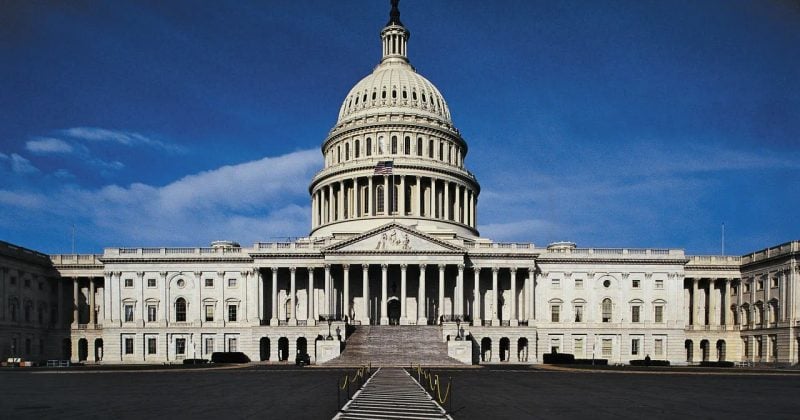
Washington moves toward clearer rulebook for digital assets
The Senate Banking Committee's bipartisan approval of the CLARITY Act marks the most consequential step toward US crypto market structure in years
Congress has spent the better part of a decade arguing about who should regulate crypto. The Senate Banking Committee just made its most decisive move yet toward settling that debate.
On May 14, 2026, the committee approved the Digital Asset Market Clarity Act, better known as the CLARITY Act, by a 15-9 vote. The tally included all Republicans on the committee plus two Democrats, which in the current political environment qualifies as a genuine bipartisan moment.
Bitcoin noticed. The price briefly crossed $82,000 following the vote, a roughly 2.5% intraday move, before settling around $81,500.
What the CLARITY Act actually does
The CLARITY Act splits regulatory jurisdiction along a commodity-versus-security line. The Commodity Futures Trading Commission, the CFTC, gets authority over digital assets classified as commodities. The Securities and Exchange Commission, the SEC, retains oversight of anything that qualifies as a security.
Amendments considered during the Senate process included restrictions on digital asset holdings by public officials and enhanced oversight requirements for decentralized finance, or DeFi, operations tied to sanctions compliance.
The news moving money, markets, and the world—before your day starts.
Daily. Free. Join 34,000+ readers across crypto, finance, and policy.
The road ahead is not fully paved
Two significant policy questions remain unresolved and could complicate floor votes. Stablecoin regulation has its own separate legislative track and has not been folded cleanly into the CLARITY Act framework. DeFi policy, particularly around how decentralized protocols comply with existing financial regulations, remains contested enough that it could slow or reshape the bill before it reaches the Senate floor.
On the tax side, the House Ways and Means Committee held a hearing on June 9, 2026, working through several digital asset tax bills. The most notable was the Tax Clarity for Mining and Staking Act, aimed at simplifying how miners and validators report income.
What this means for investors and the market
Regulatory clarity has been the single most cited reason institutional capital has stayed on the sidelines or moved slowly into digital assets. A defined CFTC-SEC jurisdiction split removes one of the largest structural objections fund managers have used to justify limited allocation.
Any amendment that expands DeFi compliance requirements could hit decentralized protocol tokens harder than centralized exchange assets. Delays on the stablecoin question could create uncertainty that bleeds into the broader market. And the CLARITY Act still has to pass the full Senate, survive any conference process with the House, and get signed.