
Zhongji Innolight tests investor appetite for what could be Hong Kong’s biggest IPO of 2026
The Chinese optical module maker's secondary listing could raise up to $8 billion as AI infrastructure demand reshapes capital markets across Asia
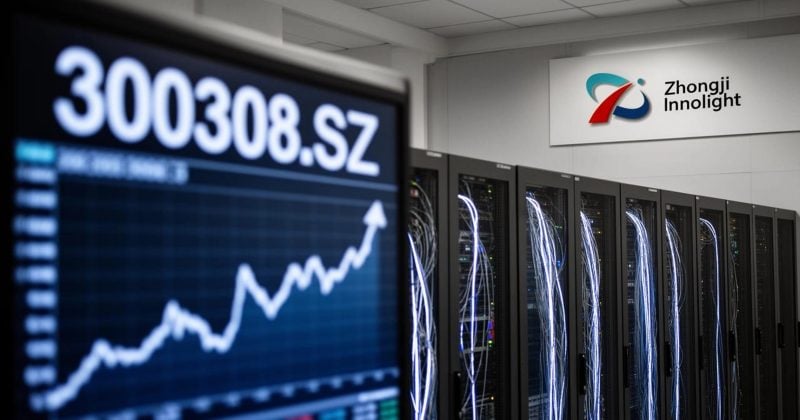
Zhongji Innolight, the Chinese company that makes the optical modules powering AI data centers worldwide, is gauging investor demand for a Hong Kong secondary listing that could raise as much as $7 billion to $8 billion. If it hits the upper end, this would be Hong Kong’s largest IPO of 2026, eclipsing Luxshare Precision’s $3.1 billion deal from earlier in July.
From confidential filing to blockbuster listing
Zhongji Innolight, already listed on the Shenzhen Stock Exchange under ticker 300308.SZ, filed confidentially with Hong Kong’s exchange back in April 2026. The initial target was a more modest $3 billion raise.
The company cleared its HKEX listing hearing on July 17, 2026, posting its formal post-hearing information the same day. Somewhere between filing and clearing, the deal size more than doubled.
The bank lineup includes Goldman Sachs, Morgan Stanley, CICC, and GF Securities, with those bank appointments announced as far back as November 2025.
The resulting structure will be an A+H share arrangement, meaning Hong Kong shares will trade alongside the existing Shenzhen-listed stock.
Macro, rates, and crypto—what moved markets and what matters next.
Daily. Free. Join 34,000+ readers across crypto, finance, and policy.
Why optical modules matter in the AI era
Zhongji Innolight produces high-speed optical communication modules that allow massive amounts of data to travel between servers in AI data centers at very high speeds. Every major hyperscaler building out AI training infrastructure needs optical transceivers, and as AI models get larger and training clusters expand, the demand for high-bandwidth interconnects has grown proportionally.
Hong Kong’s IPO market heats up
Luxshare Precision’s $3.1 billion deal earlier in July 2026 had briefly held the crown as the year’s largest Hong Kong IPO. Zhongji Innolight is poised to take that title before the month is even over.
The A+H share structure gives companies deep domestic liquidity from Shenzhen’s retail-heavy market and international institutional access through Hong Kong.
What this means for investors
The risk side of the ledger isn’t empty. Geopolitical tensions around Chinese technology companies remain a persistent concern. Export controls, tariff uncertainty, and the broader decoupling narrative could all affect investor sentiment. An A+H listed company with deep ties to both Chinese and Western hyperscaler supply chains sits right at the fault line of these geopolitical pressures.
The deal hasn’t priced yet. When a company’s fundraising target more than doubles between filing and hearing, from $3 billion to potentially $8 billion, that’s the market telling the company it’s being too conservative.