
Via theafricareport.com
Zimbabwe delays US dollar phase-out until inflation stabilizes, betting on gold-backed ZiG currency
The country's sixth attempt at currency reform since 2000 now targets 2030 for a mono-currency system, while a new crypto regulatory framework takes shape alongside a central bank digital token
Zimbabwe just blinked. The government has confirmed it won’t rush to ditch the US dollar in favor of its gold-backed ZiG currency, opting instead to wait until inflation is firmly under control and the exchange rate holds steady.
The target for making ZiG the sole legal tender is now roughly 2030. The US dollar currently accounts for approximately 85% of all transactions in Zimbabwe, a dominance born not from love of American monetary policy but from deep, generational distrust of anything Harare prints.
The ZiG experiment so far
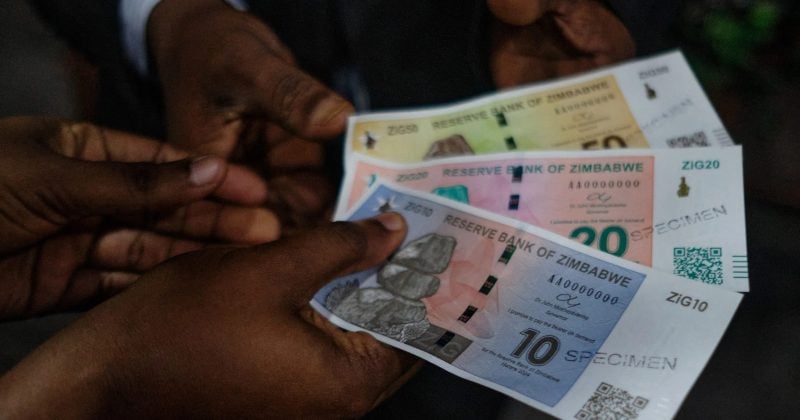
The Zimbabwe Gold currency, or ZiG, launched in April 2024 as a gold-backed alternative to the dollar. It entered the world backed by approximately $285 million in assets, a modest foundation for a national currency but a meaningful signal that the Reserve Bank of Zimbabwe was trying something different this time around.
Annual inflation fell to 3.2% in July 2026, down from 4.7% in June. For context, Zimbabwe’s inflation was running at triple-digit levels in previous years.
The RBZ has also rolled out redesigned higher-denomination ZiG banknotes, which entered circulation in April 2026. New denominations are a practical requirement for a currency that the government wants people to actually use for everyday purchases rather than treating as a novelty.
Macro, rates, and crypto—what moved markets and what matters next.
Daily. Free. Join 34,000+ readers across crypto, finance, and policy.
The Reserve Bank has issued a gold-backed digital ZiG token, usable via wallets or cards for electronic payments. It sits in an unusual space — a CBDC backed by a physical commodity rather than by government fiat alone, which makes it a hybrid that doesn’t fit neatly into the usual CBDC debates.
New crypto regulations enter the picture
In June 2026, the government introduced Statutory Instrument 99, a regulatory framework requiring virtual asset service providers to register with the Financial Intelligence Unit. The registration fee is $500 annually.
For crypto investors specifically, Zimbabwe’s trajectory highlights a broader theme playing out across emerging markets. When national currencies fail repeatedly, people don’t just switch to another government-issued alternative. They diversify into dollar stablecoins, Bitcoin, and other digital assets that exist outside the reach of central bank policy. Zimbabwe’s new regulatory framework acknowledges this reality by trying to bring crypto into the tent rather than banning it outright.
The risk for the ZiG is that the very stability required to make it the sole currency — low inflation, predictable exchange rates, steady reserves — is also what makes the US dollar so attractive in the first place. Convincing a population to abandon the world’s reserve currency for a gold-backed token issued by the same institution that presided over 2008’s hyperinflation is not a marketing problem. It’s a credibility problem, and those take longer than six years to solve.