
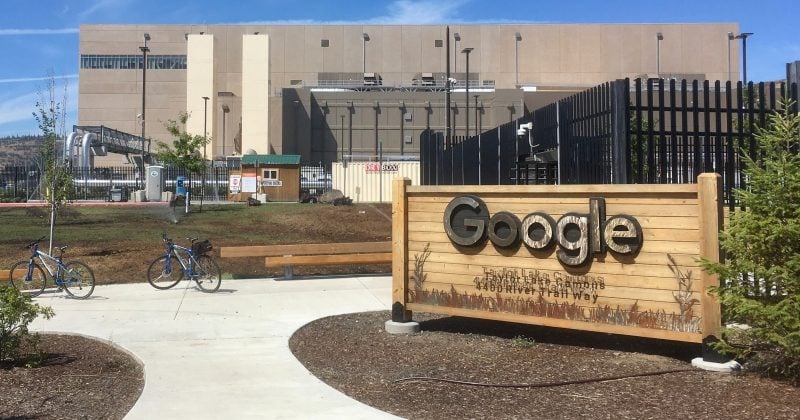
Alphabet plans to spend up to $185 billion on data centers in 2026, more than double last year

Alphabet plans to spend up to $185 billion on data centers in 2026, more than double last year

Google's parent company is betting the farm on AI infrastructure as investors hunt for proof that massive capex translates to actual revenue growth.

Alphabet just told the world it plans to spend between $175 billion and $185 billion on capital expenditures in 2026. That’s more than double what it spent last year, and the vast majority is headed toward AI compute capacity, data centers, and Google Cloud infrastructure.

To put that number in perspective, $180 billion is roughly the GDP of Hungary. Google’s parent company is prepared to spend an entire mid-sized European economy’s worth of output on servers and buildings to house them.

The AI arms race has a price tag

Alphabet isn’t alone in this spending spree. The total projected AI-related capital expenditures across major tech giants, including Microsoft, Amazon, and Meta, is expected to reach approximately $600 billion to $725 billion for 2026.

Advertisement

One specific project in Alphabet’s pipeline is a $1.5 billion data center expansion in Jackson County, Alabama, scheduled for completion between 2026 and 2027.

Alphabet’s Q2 2026 earnings report is expected around July 23. Analysts are projecting roughly $101.22 billion in quarterly revenue and earnings per share of $2.87.

Google Cloud is the bright spot

If there’s one data point that justifies Alphabet’s aggressive spending, it’s this: Google Cloud revenue surged 63% year-over-year in Q1 2026, hitting $20 billion for the quarter.

Why crypto investors should care

First, the sheer scale of AI infrastructure spending is reshaping energy markets. Data centers are enormous power consumers, and the rush to build them is straining electrical grids in multiple regions. This dynamic directly intersects with Bitcoin mining, which competes for the same energy resources. As hyperscalers lock up power purchase agreements and grid capacity, miners face higher costs and reduced access to cheap electricity. Some Bitcoin mining operations have already pivoted to selling their energy contracts to AI data center operators at a premium.

Second, the AI compute boom is accelerating demand for decentralized alternatives. Projects focused on decentralized GPU computing and distributed AI training networks have gained traction precisely because centralized compute is becoming scarce and expensive. When Alphabet, Microsoft, and Amazon collectively spend over $600 billion on proprietary infrastructure, the value proposition of permissionless compute networks becomes clearer for developers who can’t afford hyperscaler pricing.

Third, the broader macro picture matters. When the largest companies on Earth are doubling their capex budgets, it signals confidence in future demand. If AI monetization disappoints, these companies could face margin compression that ripples through equity markets. And when equity markets wobble, crypto’s correlation to risk assets means digital assets feel the tremor too.

Disclosure: This article was edited by Editorial Team. For more information on how we create and review content, see our Editorial Policy.

Alphabet plans to spend up to $185 billion on data centers in 2026, more than double last year

Alphabet plans to spend up to $185 billion on data centers in 2026, more than double last year

Google's parent company is betting the farm on AI infrastructure as investors hunt for proof that massive capex translates to actual revenue growth.

Alphabet just told the world it plans to spend between $175 billion and $185 billion on capital expenditures in 2026. That’s more than double what it spent last year, and the vast majority is headed toward AI compute capacity, data centers, and Google Cloud infrastructure.

To put that number in perspective, $180 billion is roughly the GDP of Hungary. Google’s parent company is prepared to spend an entire mid-sized European economy’s worth of output on servers and buildings to house them.

The AI arms race has a price tag

Alphabet isn’t alone in this spending spree. The total projected AI-related capital expenditures across major tech giants, including Microsoft, Amazon, and Meta, is expected to reach approximately $600 billion to $725 billion for 2026.

Advertisement

One specific project in Alphabet’s pipeline is a $1.5 billion data center expansion in Jackson County, Alabama, scheduled for completion between 2026 and 2027.

Alphabet’s Q2 2026 earnings report is expected around July 23. Analysts are projecting roughly $101.22 billion in quarterly revenue and earnings per share of $2.87.

Google Cloud is the bright spot

If there’s one data point that justifies Alphabet’s aggressive spending, it’s this: Google Cloud revenue surged 63% year-over-year in Q1 2026, hitting $20 billion for the quarter.

Why crypto investors should care

First, the sheer scale of AI infrastructure spending is reshaping energy markets. Data centers are enormous power consumers, and the rush to build them is straining electrical grids in multiple regions. This dynamic directly intersects with Bitcoin mining, which competes for the same energy resources. As hyperscalers lock up power purchase agreements and grid capacity, miners face higher costs and reduced access to cheap electricity. Some Bitcoin mining operations have already pivoted to selling their energy contracts to AI data center operators at a premium.

Second, the AI compute boom is accelerating demand for decentralized alternatives. Projects focused on decentralized GPU computing and distributed AI training networks have gained traction precisely because centralized compute is becoming scarce and expensive. When Alphabet, Microsoft, and Amazon collectively spend over $600 billion on proprietary infrastructure, the value proposition of permissionless compute networks becomes clearer for developers who can’t afford hyperscaler pricing.

Third, the broader macro picture matters. When the largest companies on Earth are doubling their capex budgets, it signals confidence in future demand. If AI monetization disappoints, these companies could face margin compression that ripples through equity markets. And when equity markets wobble, crypto’s correlation to risk assets means digital assets feel the tremor too.

Disclosure: This article was edited by Editorial Team. For more information on how we create and review content, see our Editorial Policy.