
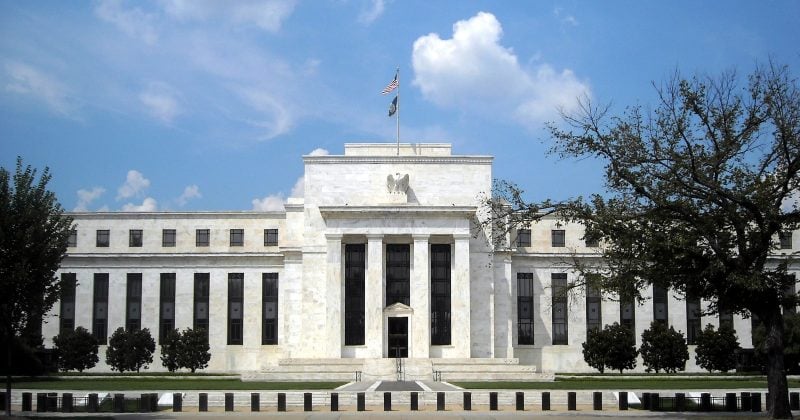
Photo: AgnosticPreachersKid / Wikimedia Commons / CC BY-SA 3.0 (https://creativecommons.org/licenses/by-sa/3.0)
US stats agency overhaul will quietly lower the Fed’s favorite inflation number
The Bureau of Economic Analysis is revising how it calculates the PCE price index, and the math could shave up to 0.2 percentage points off core inflation readings.
The Bureau of Economic Analysis is about to do something that sounds boring but matters a great deal: it’s changing how it counts inflation. Specifically, the agency plans to revise the methodology behind the Personal Consumption Expenditures price index, the metric the Federal Reserve treats as its north star when deciding whether to raise, cut, or hold interest rates.
What’s actually changing
The BEA is updating how it measures three specific components of consumer spending: portfolio management and investment advice services, legal services, and computer software and accessories. The changes will roll out as part of the agency’s annual GDP revisions, scheduled for September 30, 2026. The revisions will reach back retroactively to 2021, effectively rewriting five years of inflation history.
Goldman Sachs estimates the adjusted core PCE figure for May 2026 would land at 3.2%, down from the currently reported 3.4%. JPMorgan is slightly less optimistic, pegging the revised number at 3.3%.
For context, the headline PCE price index came in at 4.1% year-over-year as of the latest data released on June 25, 2026.
Why this matters for crypto and risk assets
A core PCE reading of 3.2% instead of 3.4% doesn’t automatically trigger rate cuts. But it does change the conversation inside the Federal Open Market Committee. If the Fed perceives inflation as moderating, even partially because of a statistical revision rather than actual price declines, it creates room for a more dovish posture.
Macro, rates, and crypto—what moved markets and what matters next.
Daily. Free. Join 34,000+ readers across crypto, finance, and policy.
The retroactive nature of the revision adds another wrinkle. When the BEA rewrites inflation data going back to 2021, it reshapes the entire narrative around the post-pandemic inflation surge.
The broader context
A headline PCE reading of 4.1% is still well above the Fed’s 2% target. Core PCE at 3.4%, or even a revised 3.2%, signals that underlying price pressures remain elevated even when you strip out volatile food and energy costs.
The BEA’s revisions are designed to more accurately capture how Americans spend money in 2026 versus 2021. Portfolio management fees, legal costs, and software pricing have all evolved in ways the old methodology didn’t fully account for.
If Chair Powell and the FOMC use the revised data as justification for holding rates steady, or even signaling future cuts, that could influence Bitcoin and other digital assets. Crypto has shown a strong inverse correlation with rate expectations throughout this cycle.