
Brookings Institution projects $10.3T investment in AI infrastructure by 2032
The projected spending would dwarf every previous US infrastructure buildout, from railroads to highways, in relative economic terms
The United States is about to pour more money into a single industry than it has into any infrastructure project in its history. A study published by the Brookings Institution projects that investment in AI-related infrastructure will hit $10.3 trillion between 2025 and 2032, averaging roughly 3.63% of US GDP annually over that stretch.
To put that in perspective: the railroad boom, America’s most celebrated infrastructure buildout, peaked at around 2.24% of GDP. This AI bet would exceed that by a wide margin, and it clocks in at more than three times the relative spending on the interstate highway system and six times early electrification.
The numbers behind the buildout
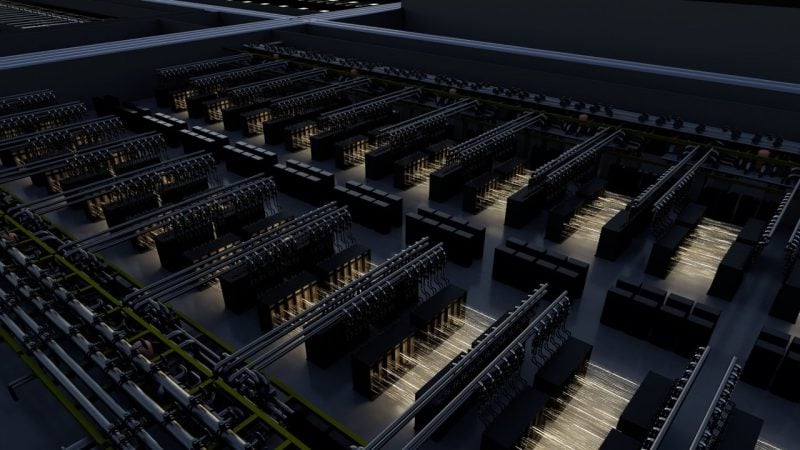
The study, authored by Columbia University’s Stijn Van Nieuwerburgh, breaks the $10.3 trillion across several categories: data center buildings, power systems, network infrastructure, and specialized chips and equipment.
Hyperscaler capital expenditures jumped from $97 billion in 2020 to over $400 billion in 2025. The projection for 2026 alone sits at approximately $800 billion.
Amazon, Alphabet, Microsoft, Meta, and Oracle are the primary drivers of that spending. Their combined capex through 2029 is estimated at $4.2 trillion.
AI, tech, and the markets they move—in one daily briefing.
Daily. Free. Join 34,000+ readers across crypto, finance, and policy.
On the capacity side, the study anticipates an additional 183 gigawatts of compute power coming online by 2032. Some estimates in the research stretch that figure as high as 509 GW, depending on demand trajectories and build-out speed.
A financing structure that should make people nervous
The financing mechanics are shifting away from straightforward on-balance-sheet capital expenditures toward more complex, off-balance-sheet funding structures. That means joint ventures, private credit facilities, and securitizations are increasingly filling the gap.
The study flags this dynamic explicitly, noting that reliance on these mechanisms introduces uncertainties around future AI demand and operational risks.