
Chinese state-backed lender financed servers packed with restricted Nvidia chips

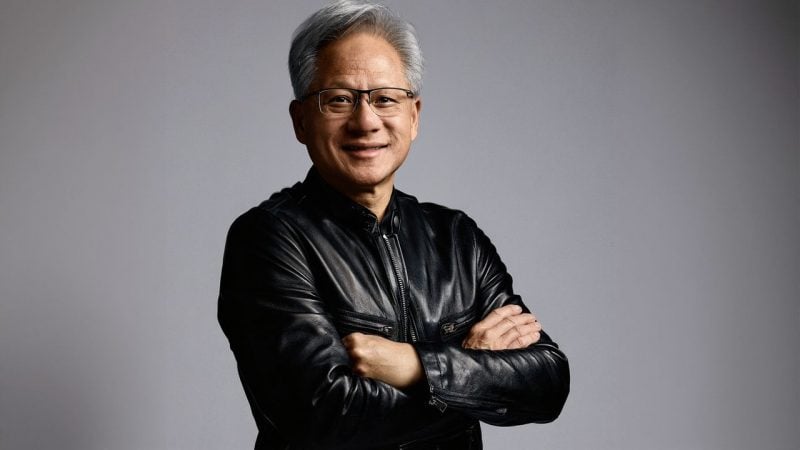
NVIDIA official newsroom (nvidianews.nvidia.com/bios/jensen-huang)

Chinese state-backed lender financed servers packed with restricted Nvidia chips

Semi-Tech Leasing Group helped Glory View Technology acquire more than 700 servers, including machines running Nvidia's export-controlled B300 chips

A Chinese financing company controlled largely by local governments helped bankroll the purchase of Nvidia chips that the US has restricted from export, according to a Bloomberg report.

The lender is Semi-Tech Leasing Group Co. The hardware is Nvidia’s Blackwell-series B300, a chip that sits squarely inside the US export-control fence.

Following the money to the servers

The buyer on the other end of the financing was Glory View Technology Co. Semi-Tech’s funding covered more than 700 servers for the company.

At least one of those deals involved a contract for 32 Asustek servers equipped with B300 chips. Those chips fall under US export restrictions.

The financing came through sale-and-leaseback arrangements. Glory View raised more than 3 billion yuan, or approximately $450 million, this way to build out its AI infrastructure.

Advertisement

Who is behind Semi-Tech

Semi-Tech is majority-controlled by municipal governments in Shenzhen and Beijing.

The company is also tied to China’s national semiconductor fund. That fund is the state’s main vehicle for pushing domestic chip ambitions.

Glory View is far from Semi-Tech’s only bet on compute. The lender has put more than 11 billion yuan, about $1.6 billion, into computing infrastructure.

Most of that money has flowed toward a major China Mobile data center hub in Ningxia.

Then there is the paperwork. Later filings submitted to regulators in Beijing were changed to strip out certain hardware details and supplier information.

Why export controls struggle with finance

US export rules on advanced AI chips were built around a fairly simple idea. Keep the most powerful hardware away from Chinese buyers, and you slow China’s AI progress.

Enforcement typically focuses on the physical movement of chips and the companies that ship them.

The Semi-Tech case shows how a leasing structure can add another strand. The money comes from a state-backed source, the servers come from a hardware maker, and the restricted silicon sits inside.

What this means for chipmakers, regulators and investors

For US regulators, the immediate pressure point is visibility. If government-linked lenders can finance restricted hardware, enforcement may need to look at balance sheets as well as shipping manifests.

For Beijing, the financing pattern fits a broader strategy. Semi-Tech’s backers include two major city governments and links to the national chip fund, and its biggest compute bet supports a China Mobile hub.

Disclosure: This article was edited by Diego Almada Lopez. For more information on how we create and review content, see our Editorial Policy.
Chinese state-backed lender financed servers packed with restricted Nvidia chips

Semi-Tech Leasing Group helped Glory View Technology acquire more than 700 servers, including machines running Nvidia's export-controlled B300 chips

NVIDIA official newsroom (nvidianews.nvidia.com/bios/jensen-huang)

A Chinese financing company controlled largely by local governments helped bankroll the purchase of Nvidia chips that the US has restricted from export, according to a Bloomberg report.

The lender is Semi-Tech Leasing Group Co. The hardware is Nvidia’s Blackwell-series B300, a chip that sits squarely inside the US export-control fence.

Following the money to the servers

The buyer on the other end of the financing was Glory View Technology Co. Semi-Tech’s funding covered more than 700 servers for the company.

At least one of those deals involved a contract for 32 Asustek servers equipped with B300 chips. Those chips fall under US export restrictions.

The financing came through sale-and-leaseback arrangements. Glory View raised more than 3 billion yuan, or approximately $450 million, this way to build out its AI infrastructure.

Advertisement

Who is behind Semi-Tech

Semi-Tech is majority-controlled by municipal governments in Shenzhen and Beijing.

The company is also tied to China’s national semiconductor fund. That fund is the state’s main vehicle for pushing domestic chip ambitions.

Glory View is far from Semi-Tech’s only bet on compute. The lender has put more than 11 billion yuan, about $1.6 billion, into computing infrastructure.

Most of that money has flowed toward a major China Mobile data center hub in Ningxia.

Then there is the paperwork. Later filings submitted to regulators in Beijing were changed to strip out certain hardware details and supplier information.

Why export controls struggle with finance

US export rules on advanced AI chips were built around a fairly simple idea. Keep the most powerful hardware away from Chinese buyers, and you slow China’s AI progress.

Enforcement typically focuses on the physical movement of chips and the companies that ship them.

The Semi-Tech case shows how a leasing structure can add another strand. The money comes from a state-backed source, the servers come from a hardware maker, and the restricted silicon sits inside.

What this means for chipmakers, regulators and investors

For US regulators, the immediate pressure point is visibility. If government-linked lenders can finance restricted hardware, enforcement may need to look at balance sheets as well as shipping manifests.

For Beijing, the financing pattern fits a broader strategy. Semi-Tech’s backers include two major city governments and links to the national chip fund, and its biggest compute bet supports a China Mobile hub.

Disclosure: This article was edited by Diego Almada Lopez. For more information on how we create and review content, see our Editorial Policy.