
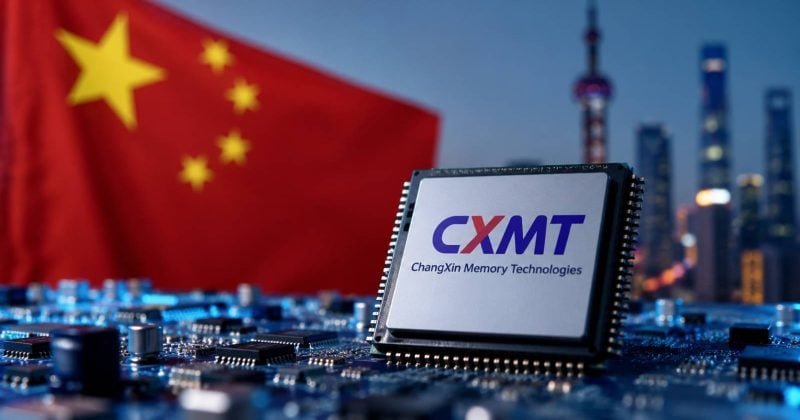
CXMT surges 470% in Shanghai Stock Exchange debut, becomes China’s most valuable listed company

CXMT surges 470% in Shanghai Stock Exchange debut, becomes China’s most valuable listed company

China's leading DRAM chipmaker raised up to $9.8 billion in Asia's largest IPO of 2026, while crypto traders on Hyperliquid had already been betting on the outcome.

ChangXin Memory Technologies just had the kind of first day at work most companies can only dream about. The Chinese memory chipmaker’s shares exploded 470% on their Shanghai STAR Market debut, a move so violent it potentially catapulted CXMT into the position of China’s most valuable publicly traded company. On day one.

The IPO itself was already historic before a single share changed hands on the open market. CXMT raised approximately $8.6 to $9.8 billion, with total gross proceeds reaching up to 66.6 billion yuan. That makes it Asia’s largest IPO of 2026 and the biggest semiconductor listing on a mainland Chinese exchange since SMIC went public back in 2020.

The numbers behind the frenzy

CXMT priced its shares at 8.66 yuan apiece around July 15. By the time the stock started trading on July 27, demand had already gone parabolic. Retail oversubscription exceeded 200 times, leaving investors with a winning allocation rate of roughly 0.47%. In English: for every 200 people who wanted shares, roughly one actually got them.

Advertisement

Pre-listing valuations had pegged the company at around 580 billion yuan, or approximately $85 billion. After the 470% first-day surge, those numbers look almost quaint.

For context, CXMT held approximately 7.7% to 8% of the global DRAM market share through 2025 and into early 2026. That’s still a fraction of what Samsung and Micron command.

Where crypto enters the picture

Before CXMT even started trading in Shanghai, crypto traders were already placing bets on its valuation through an entirely different venue. Trade.xyz launched a perpetual futures contract on the Hyperliquid blockchain that let global traders speculate on CXMT’s market cap ahead of its debut. The pre-market trading dynamics on that platform implied a valuation of nearly $500 billion.

Why this IPO matters beyond the ticker

DRAM, the type of memory chip CXMT produces, is essential for everything from smartphones to data centers to AI infrastructure. The proceeds from this IPO are largely earmarked for capacity expansion, which means more fabrication facilities, more production lines, and a bigger slice of a market currently dominated by Korean and American incumbents.

A 200x oversubscription ratio signals that capital is eager to flow into China’s domestic chip industry despite ongoing geopolitical uncertainty. The third implication: a 470% surge means the company left an enormous amount of money on the table by pricing at 8.66 yuan. That’s great for investors who secured allocations, less great for CXMT’s balance sheet.

Disclosure: This article was edited by Editorial Team. For more information on how we create and review content, see our Editorial Policy.

CXMT surges 470% in Shanghai Stock Exchange debut, becomes China’s most valuable listed company

CXMT surges 470% in Shanghai Stock Exchange debut, becomes China’s most valuable listed company

China's leading DRAM chipmaker raised up to $9.8 billion in Asia's largest IPO of 2026, while crypto traders on Hyperliquid had already been betting on the outcome.

ChangXin Memory Technologies just had the kind of first day at work most companies can only dream about. The Chinese memory chipmaker’s shares exploded 470% on their Shanghai STAR Market debut, a move so violent it potentially catapulted CXMT into the position of China’s most valuable publicly traded company. On day one.

The IPO itself was already historic before a single share changed hands on the open market. CXMT raised approximately $8.6 to $9.8 billion, with total gross proceeds reaching up to 66.6 billion yuan. That makes it Asia’s largest IPO of 2026 and the biggest semiconductor listing on a mainland Chinese exchange since SMIC went public back in 2020.

The numbers behind the frenzy

CXMT priced its shares at 8.66 yuan apiece around July 15. By the time the stock started trading on July 27, demand had already gone parabolic. Retail oversubscription exceeded 200 times, leaving investors with a winning allocation rate of roughly 0.47%. In English: for every 200 people who wanted shares, roughly one actually got them.

Advertisement

Pre-listing valuations had pegged the company at around 580 billion yuan, or approximately $85 billion. After the 470% first-day surge, those numbers look almost quaint.

For context, CXMT held approximately 7.7% to 8% of the global DRAM market share through 2025 and into early 2026. That’s still a fraction of what Samsung and Micron command.

Where crypto enters the picture

Before CXMT even started trading in Shanghai, crypto traders were already placing bets on its valuation through an entirely different venue. Trade.xyz launched a perpetual futures contract on the Hyperliquid blockchain that let global traders speculate on CXMT’s market cap ahead of its debut. The pre-market trading dynamics on that platform implied a valuation of nearly $500 billion.

Why this IPO matters beyond the ticker

DRAM, the type of memory chip CXMT produces, is essential for everything from smartphones to data centers to AI infrastructure. The proceeds from this IPO are largely earmarked for capacity expansion, which means more fabrication facilities, more production lines, and a bigger slice of a market currently dominated by Korean and American incumbents.

A 200x oversubscription ratio signals that capital is eager to flow into China’s domestic chip industry despite ongoing geopolitical uncertainty. The third implication: a 470% surge means the company left an enormous amount of money on the table by pricing at 8.66 yuan. That’s great for investors who secured allocations, less great for CXMT’s balance sheet.

Disclosure: This article was edited by Editorial Team. For more information on how we create and review content, see our Editorial Policy.