
Drone attacks on Black Sea tankers threaten Kazakhstan’s oil exports and rattle energy markets

Drone attacks on Black Sea tankers threaten Kazakhstan’s oil exports and rattle energy markets

Strikes near Russia's CPC terminal have suspended loadings multiple times in four days, putting a key artery of global oil supply under fire

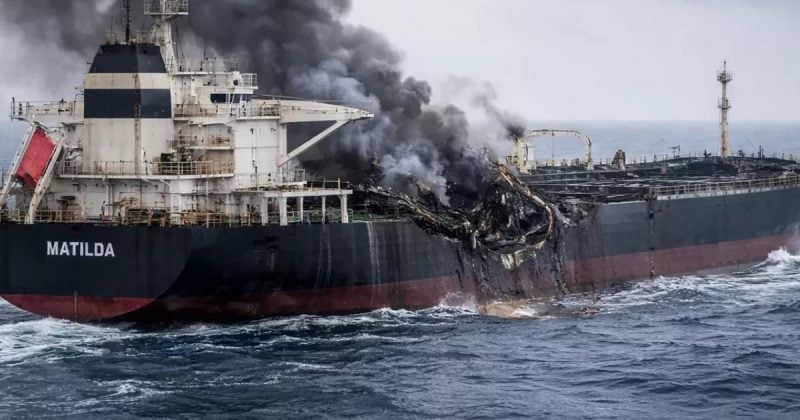
Someone is shooting at the global oil supply chain, and markets are paying attention. Drone strikes hit multiple oil tankers near the Caspian Pipeline Consortium’s marine terminal in Novorossiysk over a four-day stretch in mid-July 2026, forcing repeated suspensions of loading operations and drawing sharp reactions from governments on both sides of the conflict.

The attacks landed on July 17, July 19, and July 20, with vessels including the Nordic Zenith and NELSA among those struck while loading or preparing to load Kazakh crude. No casualties were reported, though crews had to fight onboard fires before the situation stabilized.

Why this pipeline matters more than most people realize

The CPC pipeline stretches roughly 940 miles from Kazakhstan’s oil fields to the Black Sea, and it handles around 80% of Kazakhstan’s crude exports. CPC handles over 1% of global oil supply, which sounds modest until you remember that commodity markets move on fractions of a percent.

Major American energy companies have skin in this game. Chevron and ExxonMobil are both stakeholders in the CPC, meaning the geopolitical drama unfolding near Novorossiysk has a direct line to corporate earnings calls in Houston.

Advertisement

The tankers targeted were registered in Liberia, the Marshall Islands, and Cameroon, a reminder that the shipping industry’s flag-of-convenience system means attacks on vessels with no Russian or Ukrainian affiliation still land in the middle of a war narrative.

A pattern, not an incident

This is the fifth attack on CPC facilities since 2025. Earlier strikes were reported in November 2025 and January 2026, which means whoever is behind these operations has been running a sustained, methodical campaign against this specific chokepoint.

Russia has pointed the finger at Ukraine, framing the strikes as an attempt to destabilize oil markets. Ukraine has not claimed responsibility publicly. Kazakhstan, whose economy depends heavily on CPC export revenues, condemned the attacks as threats to global energy security, putting Astana in the uncomfortable position of criticizing actions Russia attributes to Ukraine while Kazakhstan tries to maintain neutral-ish relations with Moscow.

The operational disruption is real. CPC suspended loadings on at least two separate occasions following the July 19 and July 20 strikes.

What investors should be watching

The immediate market read is straightforward: supply disruptions at a facility handling more than 1% of global output create upward pressure on oil prices.

For equity investors, Chevron and ExxonMobil carry direct exposure to CPC throughput. Reduced volumes hurt their upstream production numbers, and prolonged disruption could affect how those companies account for Kazakh assets.

For traders, the key variables to track are the pace of CPC’s loading resumptions after each attack, any indication that terminal infrastructure rather than just vessels has been damaged, and whether the attack tempo accelerates as we move deeper into summer, when European energy demand planning for winter typically peaks.

Disclosure: This article was edited by Editorial Team. For more information on how we create and review content, see our Editorial Policy.

Drone attacks on Black Sea tankers threaten Kazakhstan’s oil exports and rattle energy markets

Drone attacks on Black Sea tankers threaten Kazakhstan’s oil exports and rattle energy markets

Strikes near Russia's CPC terminal have suspended loadings multiple times in four days, putting a key artery of global oil supply under fire

Someone is shooting at the global oil supply chain, and markets are paying attention. Drone strikes hit multiple oil tankers near the Caspian Pipeline Consortium’s marine terminal in Novorossiysk over a four-day stretch in mid-July 2026, forcing repeated suspensions of loading operations and drawing sharp reactions from governments on both sides of the conflict.

The attacks landed on July 17, July 19, and July 20, with vessels including the Nordic Zenith and NELSA among those struck while loading or preparing to load Kazakh crude. No casualties were reported, though crews had to fight onboard fires before the situation stabilized.

Why this pipeline matters more than most people realize

The CPC pipeline stretches roughly 940 miles from Kazakhstan’s oil fields to the Black Sea, and it handles around 80% of Kazakhstan’s crude exports. CPC handles over 1% of global oil supply, which sounds modest until you remember that commodity markets move on fractions of a percent.

Major American energy companies have skin in this game. Chevron and ExxonMobil are both stakeholders in the CPC, meaning the geopolitical drama unfolding near Novorossiysk has a direct line to corporate earnings calls in Houston.

Advertisement

The tankers targeted were registered in Liberia, the Marshall Islands, and Cameroon, a reminder that the shipping industry’s flag-of-convenience system means attacks on vessels with no Russian or Ukrainian affiliation still land in the middle of a war narrative.

A pattern, not an incident

This is the fifth attack on CPC facilities since 2025. Earlier strikes were reported in November 2025 and January 2026, which means whoever is behind these operations has been running a sustained, methodical campaign against this specific chokepoint.

Russia has pointed the finger at Ukraine, framing the strikes as an attempt to destabilize oil markets. Ukraine has not claimed responsibility publicly. Kazakhstan, whose economy depends heavily on CPC export revenues, condemned the attacks as threats to global energy security, putting Astana in the uncomfortable position of criticizing actions Russia attributes to Ukraine while Kazakhstan tries to maintain neutral-ish relations with Moscow.

The operational disruption is real. CPC suspended loadings on at least two separate occasions following the July 19 and July 20 strikes.

What investors should be watching

The immediate market read is straightforward: supply disruptions at a facility handling more than 1% of global output create upward pressure on oil prices.

For equity investors, Chevron and ExxonMobil carry direct exposure to CPC throughput. Reduced volumes hurt their upstream production numbers, and prolonged disruption could affect how those companies account for Kazakh assets.

For traders, the key variables to track are the pace of CPC’s loading resumptions after each attack, any indication that terminal infrastructure rather than just vessels has been damaged, and whether the attack tempo accelerates as we move deeper into summer, when European energy demand planning for winter typically peaks.

Disclosure: This article was edited by Editorial Team. For more information on how we create and review content, see our Editorial Policy.