
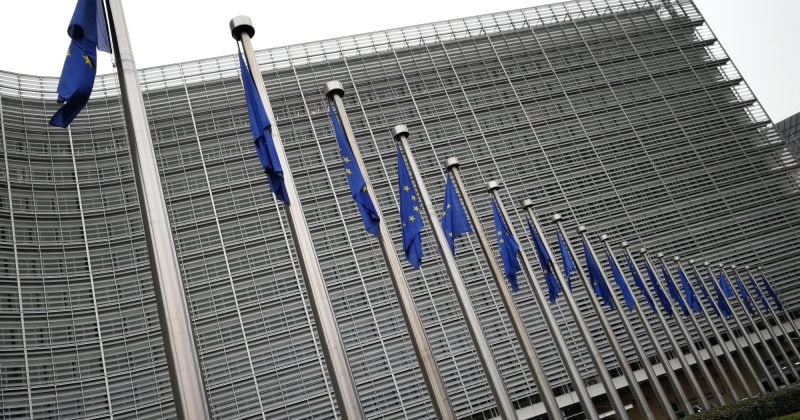
European Commission allocates €1.4B from frozen Russian assets to Ukraine

Via tripadvisor.com

European Commission allocates €1.4B from frozen Russian assets to Ukraine

The fourth tranche of profits from immobilized Russian central bank assets highlights how traditional finance infrastructure remains the backbone of geopolitical economic warfare, with crypto playing a very different role on the margins.

The European Commission transferred €1.4 billion in profits generated from frozen Russian central bank assets on March 31, routing the funds toward Ukraine’s war effort and loan repayment obligations. It’s the fourth such allocation, and the money comes from extraordinary revenues accrued during the second half of 2025 on roughly €210 billion in Russian central bank assets immobilized across EU central securities depositories, primarily Euroclear.

Where the money goes

The allocation follows a framework the EU established in 2024. It splits neatly: 95% of the funds flow through the Ukraine Loan Cooperation Mechanism, known as ULCM, which helps Ukraine service and repay loans under the G7’s Extraordinary Revenue Acceleration initiative. The remaining 5%, roughly €70 million in this tranche, goes to the European Peace Facility for direct military assistance.

The G7’s ERA loans to Ukraine have cumulatively reached nearly €45 billion. The frozen asset revenues essentially act as a servicing mechanism for that debt, letting Ukraine focus its own limited fiscal resources elsewhere.

Advertisement

The EU isn’t actually confiscating the principal. The €210 billion in Russian central bank assets remains technically intact, just untouchable. The legal framework only captures the profits those assets generate while sitting frozen. An earlier transfer took place in August 2025, and each tranche corresponds to revenue accumulated over a specific period.

The crypto angle nobody asked for, but that actually matters

There is no Bitcoin involved in this €1.4 billion transfer. No stablecoins, no smart contracts. The EU’s mechanism for capturing Russian asset profits runs entirely through traditional financial infrastructure. Euroclear, one of the world’s largest securities settlement systems, handles the transactions.

EU regulators have been aggressively targeting crypto entities suspected of helping Russian actors evade sanctions. Multiple exchanges and service providers have faced investigations and compliance actions tied to Russian-linked transactions since the 2022 invasion.

What this means for investors

The continued immobilization of €210 billion in Russian state assets represents one of the most aggressive uses of financial infrastructure as a geopolitical weapon in modern history. Sovereign wealth held in foreign jurisdictions is only as safe as the political relationship between those jurisdictions.

The EU has demonstrated that it can build entirely new legal frameworks to redirect financial flows in response to geopolitical crises, and do so within existing treaty structures. That institutional capacity could be applied to other sanctions regimes, other asset classes, and potentially to crypto infrastructure itself.

Disclosure: This article was edited by Editorial Team. For more information on how we create and review content, see our Editorial Policy.

European Commission allocates €1.4B from frozen Russian assets to Ukraine

European Commission allocates €1.4B from frozen Russian assets to Ukraine

The fourth tranche of profits from immobilized Russian central bank assets highlights how traditional finance infrastructure remains the backbone of geopolitical economic warfare, with crypto playing a very different role on the margins.

Via tripadvisor.com

The European Commission transferred €1.4 billion in profits generated from frozen Russian central bank assets on March 31, routing the funds toward Ukraine’s war effort and loan repayment obligations. It’s the fourth such allocation, and the money comes from extraordinary revenues accrued during the second half of 2025 on roughly €210 billion in Russian central bank assets immobilized across EU central securities depositories, primarily Euroclear.

Where the money goes

The allocation follows a framework the EU established in 2024. It splits neatly: 95% of the funds flow through the Ukraine Loan Cooperation Mechanism, known as ULCM, which helps Ukraine service and repay loans under the G7’s Extraordinary Revenue Acceleration initiative. The remaining 5%, roughly €70 million in this tranche, goes to the European Peace Facility for direct military assistance.

The G7’s ERA loans to Ukraine have cumulatively reached nearly €45 billion. The frozen asset revenues essentially act as a servicing mechanism for that debt, letting Ukraine focus its own limited fiscal resources elsewhere.

Advertisement

The EU isn’t actually confiscating the principal. The €210 billion in Russian central bank assets remains technically intact, just untouchable. The legal framework only captures the profits those assets generate while sitting frozen. An earlier transfer took place in August 2025, and each tranche corresponds to revenue accumulated over a specific period.

The crypto angle nobody asked for, but that actually matters

There is no Bitcoin involved in this €1.4 billion transfer. No stablecoins, no smart contracts. The EU’s mechanism for capturing Russian asset profits runs entirely through traditional financial infrastructure. Euroclear, one of the world’s largest securities settlement systems, handles the transactions.

EU regulators have been aggressively targeting crypto entities suspected of helping Russian actors evade sanctions. Multiple exchanges and service providers have faced investigations and compliance actions tied to Russian-linked transactions since the 2022 invasion.

What this means for investors

The continued immobilization of €210 billion in Russian state assets represents one of the most aggressive uses of financial infrastructure as a geopolitical weapon in modern history. Sovereign wealth held in foreign jurisdictions is only as safe as the political relationship between those jurisdictions.

The EU has demonstrated that it can build entirely new legal frameworks to redirect financial flows in response to geopolitical crises, and do so within existing treaty structures. That institutional capacity could be applied to other sanctions regimes, other asset classes, and potentially to crypto infrastructure itself.

Disclosure: This article was edited by Editorial Team. For more information on how we create and review content, see our Editorial Policy.