
Google’s Private AI Compute brings secure server-side memory to personal AI
The new system processes sensitive data in hardware-secured enclaves that even Google employees can't access, starting with Pixel 10 features.
Google just unveiled a system that lets its most powerful AI models handle your personal data in the cloud while promising that nobody, not even Google itself, can peek at it. Private AI Compute, announced on November 11, 2025, during the Pixel Feature Drop event, uses a layered security architecture to process sensitive information in what the company calls a privacy-equivalent to on-device computation.
The pitch is straightforward: your phone isn’t powerful enough to run the biggest AI models locally, but you also don’t want your personal data floating around on someone else’s servers. Google says it solved that tension.
How the security architecture works
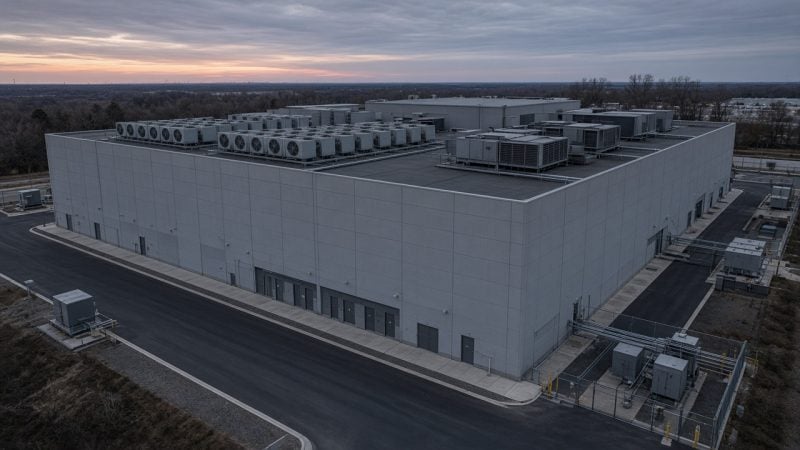
Private AI Compute runs on a combination of Google’s custom Tensor Processing Units and AMD-based Trusted Execution Environments, wrapped inside what the company calls Titanium Intelligence Enclaves. Think of it like a bank vault inside a bank vault: the hardware itself enforces isolation, meaning data being processed is walled off from the broader cloud infrastructure.
Three key mechanisms keep things locked down. Remote attestation verifies the integrity of the computing environment before any data arrives. End-to-end encryption protects information in transit and at rest. And ephemeral processing ensures that data is deleted after each request completes.
Google brought in NCC Group, an independent security consultancy, to validate the system. The assessment ran from spring through fall 2025, covering the architecture, cryptography, and underlying code.
AI, tech, and the markets they move—in one daily briefing.
Daily. Free. Join 34,000+ readers across crypto, finance, and policy.
What it actually does on your phone
The first features leveraging Private AI Compute are rolling out on Pixel 10 devices. Magic Cue, a suggestion engine that surfaces contextually relevant actions, now taps into larger Gemini AI models running in these secure enclaves rather than relying solely on the phone’s local chipset.
The Recorder app also gets an upgrade. Expanded transcription capabilities can now handle longer, more complex audio by offloading processing to Private AI Compute. Previously, transcription quality was constrained by whatever the device could handle natively.
The competitive landscape and why it matters
Google isn’t operating in a vacuum here. Apple has been building its own privacy-focused AI infrastructure, and a growing ecosystem of confidential computing providers offers similar promises to enterprise customers. What distinguishes Google’s approach is the tight vertical integration: custom silicon, proprietary enclaves, and consumer hardware all designed to work as a single stack.