
Iranian oil tankers idle off coast as US blockade chokes exports, and Tehran turns to crypto to survive

Via axios.com

Iranian oil tankers idle off coast as US blockade chokes exports, and Tehran turns to crypto to survive

Iran's oil exports have cratered 93% since the US naval blockade began in April, pushing Tehran deeper into Bitcoin and stablecoin transactions that have already drawn $344 million in frozen assets from US Treasury enforcement.

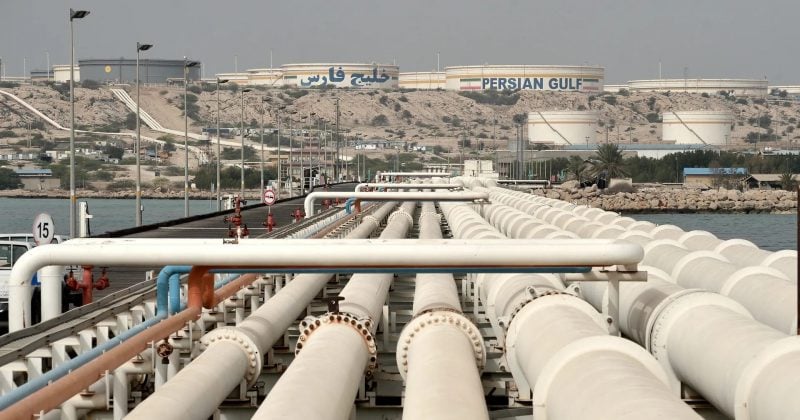
A flotilla of Iranian oil tankers is sitting motionless off the country’s coastline. The US naval blockade that kicked off on April 13 has effectively strangled Tehran’s ability to move crude, creating a maritime parking lot that tells you everything about the current state of Iranian energy exports.

Iran’s oil shipments collapsed 93% in May to roughly 65,000 barrels per day, down from over 2 million bpd earlier in the year. Total volume for the month came in at just 2.01 million barrels, worth approximately $219 million. For a country that was already financially battered by the 2026 war, those numbers represent something close to an economic tourniquet.

The blockade’s bite and Tehran’s crypto workaround

The US Navy hasn’t been shy about enforcement. By early June, American forces had boarded and disabled at least nine vessels that attempted to violate the blockade. Some have slipped through. At least 26 Iranian ships managed to bypass the blockade by mid-April, and three tankers successfully navigated around enforcement in June, carrying an estimated 4.8 to 5 million barrels of oil.

Advertisement

With traditional banking channels largely sealed off by sanctions and physical shipping routes blocked, Iran has increasingly turned to cryptocurrencies to keep money flowing. Bitcoin and USDT have become go-to instruments for settling oil transactions outside the reach of the conventional financial system. Iran even proposed collecting transit tolls of $1 per barrel for vessels passing through the Strait of Hormuz, payable in crypto.

The US Treasury noticed. Authorities have sanctioned wallets and exchanges linked to Iranian crypto operations and frozen more than $344 million in related assets.

Oil market shockwaves and the crypto connection

There’s a paradoxical dynamic that sanctions enforcement creates demand for crypto even as it triggers regulatory crackdowns on crypto. Iran needs digital assets precisely because the traditional system is blocked. The US then targets the digital assets being used for evasion. The net effect is a tug-of-war that introduces regulatory uncertainty into markets that were already trying to price in a complex geopolitical environment.

What crypto investors should actually watch

The $344 million in frozen assets represents the US government’s willingness and ability to reach into crypto markets when national security interests are at stake. Every wallet sanctioned and every exchange targeted sets a precedent that could affect how digital asset platforms handle compliance going forward. Exchanges that handle significant Middle Eastern or Central Asian trading volumes may face heightened scrutiny, and compliance costs across the industry could tick upward as a result.

Stablecoins like USDT face a more pointed challenge. Tether and other stablecoin issuers operate within a framework that theoretically allows them to freeze tokens linked to sanctioned entities. The Iranian situation is testing whether that framework works at scale and under pressure. If stablecoin issuers are seen as either unable or unwilling to comply with sanctions enforcement, the regulatory response could reshape the stablecoin landscape in ways that affect every DeFi protocol and centralized exchange that relies on USDT as a base pair.

The $219 million in monthly oil revenue that Iran managed to scrape together in May, combined with the $344 million the US has already frozen on-chain, tells a story about how deeply crypto has embedded itself in the machinery of geopolitical conflict.

Disclosure: This article was edited by Editorial Team. For more information on how we create and review content, see our Editorial Policy.

Iranian oil tankers idle off coast as US blockade chokes exports, and Tehran turns to crypto to survive

Iranian oil tankers idle off coast as US blockade chokes exports, and Tehran turns to crypto to survive

Iran's oil exports have cratered 93% since the US naval blockade began in April, pushing Tehran deeper into Bitcoin and stablecoin transactions that have already drawn $344 million in frozen assets from US Treasury enforcement.

Via axios.com

A flotilla of Iranian oil tankers is sitting motionless off the country’s coastline. The US naval blockade that kicked off on April 13 has effectively strangled Tehran’s ability to move crude, creating a maritime parking lot that tells you everything about the current state of Iranian energy exports.

Iran’s oil shipments collapsed 93% in May to roughly 65,000 barrels per day, down from over 2 million bpd earlier in the year. Total volume for the month came in at just 2.01 million barrels, worth approximately $219 million. For a country that was already financially battered by the 2026 war, those numbers represent something close to an economic tourniquet.

The blockade’s bite and Tehran’s crypto workaround

The US Navy hasn’t been shy about enforcement. By early June, American forces had boarded and disabled at least nine vessels that attempted to violate the blockade. Some have slipped through. At least 26 Iranian ships managed to bypass the blockade by mid-April, and three tankers successfully navigated around enforcement in June, carrying an estimated 4.8 to 5 million barrels of oil.

Advertisement

With traditional banking channels largely sealed off by sanctions and physical shipping routes blocked, Iran has increasingly turned to cryptocurrencies to keep money flowing. Bitcoin and USDT have become go-to instruments for settling oil transactions outside the reach of the conventional financial system. Iran even proposed collecting transit tolls of $1 per barrel for vessels passing through the Strait of Hormuz, payable in crypto.

The US Treasury noticed. Authorities have sanctioned wallets and exchanges linked to Iranian crypto operations and frozen more than $344 million in related assets.

Oil market shockwaves and the crypto connection

There’s a paradoxical dynamic that sanctions enforcement creates demand for crypto even as it triggers regulatory crackdowns on crypto. Iran needs digital assets precisely because the traditional system is blocked. The US then targets the digital assets being used for evasion. The net effect is a tug-of-war that introduces regulatory uncertainty into markets that were already trying to price in a complex geopolitical environment.

What crypto investors should actually watch

The $344 million in frozen assets represents the US government’s willingness and ability to reach into crypto markets when national security interests are at stake. Every wallet sanctioned and every exchange targeted sets a precedent that could affect how digital asset platforms handle compliance going forward. Exchanges that handle significant Middle Eastern or Central Asian trading volumes may face heightened scrutiny, and compliance costs across the industry could tick upward as a result.

Stablecoins like USDT face a more pointed challenge. Tether and other stablecoin issuers operate within a framework that theoretically allows them to freeze tokens linked to sanctioned entities. The Iranian situation is testing whether that framework works at scale and under pressure. If stablecoin issuers are seen as either unable or unwilling to comply with sanctions enforcement, the regulatory response could reshape the stablecoin landscape in ways that affect every DeFi protocol and centralized exchange that relies on USDT as a base pair.

The $219 million in monthly oil revenue that Iran managed to scrape together in May, combined with the $344 million the US has already frozen on-chain, tells a story about how deeply crypto has embedded itself in the machinery of geopolitical conflict.

Disclosure: This article was edited by Editorial Team. For more information on how we create and review content, see our Editorial Policy.