
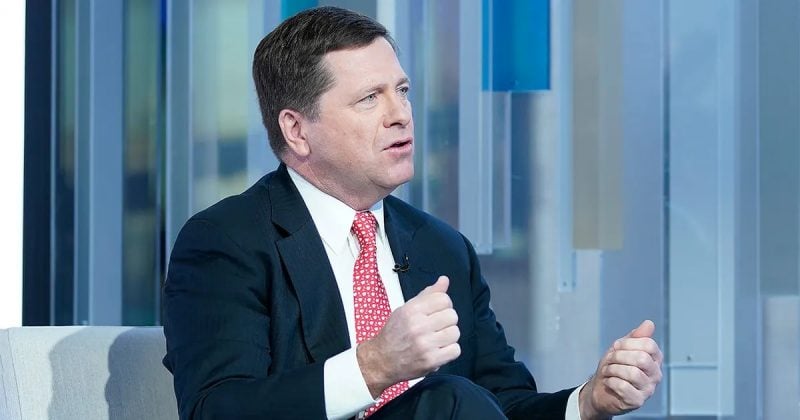
Via foxnews.com
Senate confirms Jay Clayton as Director of National Intelligence, moving crypto’s most consequential regulator to the spy world
The former SEC chairman who declared Bitcoin is not a security now takes over America's intelligence apparatus, leaving crypto with one less familiar face in Washington.
Jay Clayton, the man who spent three years as SEC chairman deciding what counts as a security and what doesn’t, just got confirmed to run America’s spy agencies. The Senate voted to install the former Wall Street regulator as Director of National Intelligence, filling a vacancy that had lingered for over a month.
From securities cop to spymaster
Trump nominated Clayton on June 11, 2026, after Tulsi Gabbard’s resignation left the DNI post without permanent leadership. The Senate Select Committee on Intelligence held its confirmation hearing on July 15, and the full chamber confirmed him shortly after.
Clayton served as SEC chairman from May 2017 through December 2020, a period that coincided with crypto’s wildest boom-and-bust cycle. He then moved to the US Attorney’s office for the Southern District of New York in mid-2025, prosecuting cases in one of the country’s most high-profile federal districts.
The confirmation came with bipartisan concerns about intelligence community oversight, though those debates centered on national security rather than financial regulation.
Clayton’s crypto legacy
Clayton publicly declared that Bitcoin is not a security. His SEC waged an aggressive campaign against initial coin offerings, treating most of them as unregistered securities sales. He also advocated for accommodating legitimate stablecoins within the financial system, recognizing their utility for payments and settlement.
Macro, rates, and crypto—what moved markets and what matters next.
Daily. Free. Join 34,000+ readers across crypto, finance, and policy.
What this means for crypto investors
The Director of National Intelligence does not regulate crypto. Clayton won’t be writing rules about token classifications or approving ETF applications from his new office.
For markets, the immediate impact is essentially zero. No significant price movements or trading volume spikes were tied to the confirmation. Bitcoin, Ethereum, and the broader market showed no meaningful reaction.
For the crypto regulatory landscape specifically, Clayton’s move creates a subtraction rather than an addition. One of the few senior government officials with genuine crypto expertise has left the regulatory and prosecutorial world entirely. His replacement dynamics at the Southern District of New York, where he served as US Attorney, could matter more for day-to-day crypto enforcement than anything he does at the DNI.