
South Korean chipmakers drag emerging-market equities lower as Bitcoin holds steady near $64K

Via wccftech.com

South Korean chipmakers drag emerging-market equities lower as Bitcoin holds steady near $64K

Samsung and SK Hynix gave back massive gains from the previous session, pulling the Kospi down 5% while crypto markets barely flinched

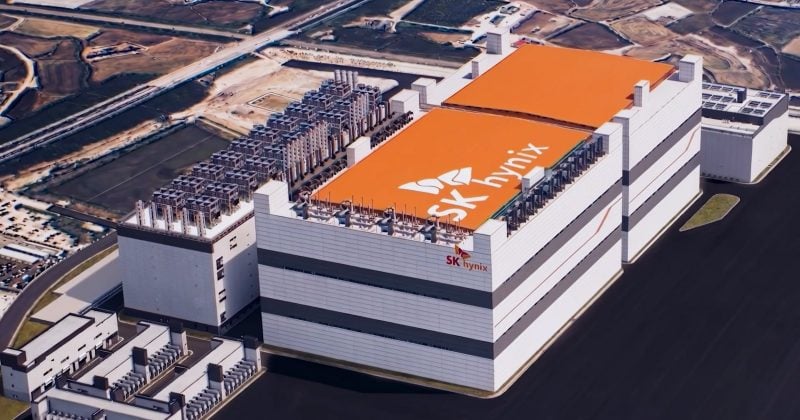
Samsung Electronics and SK Hynix, the two companies that collectively produce roughly two-thirds of the world’s memory chips, saw their shares plunge more than 7% on August 3, dragging the Kospi index down 5% and pulling the broader MSCI emerging markets index lower by 1.1%.

Meanwhile, Bitcoin sat near $64,000 like someone calmly reading a book while the house next door caught fire.

What goes up 17% must come down

To understand the scale of Monday’s selloff, you need to rewind to the previous trading session on July 31. SK Hynix surged as much as 28.4% in a single day. Samsung gained 23.7%. Together, they powered the Kospi to a record single-session surge of more than 17%.

Advertisement

Throughout July 2026, the Kospi suffered multiple sharp declines ranging from 10.8% to 11.5%, severe enough to trigger trading halts and circuit breakers. The catalyst each time was the same: mounting anxiety about whether the AI investment boom could sustain the sky-high demand projections baked into semiconductor valuations.

The AI demand question that won’t go away

Samsung and SK Hynix dominate global memory chip production, controlling approximately two-thirds of the market. The memory chips these companies produce, particularly high-bandwidth memory (HBM) used in AI training and inference, have become the critical bottleneck in the AI hardware supply chain. Every major hyperscaler from Microsoft to Google needs them.

For emerging-market investors, the concentration risk is real. South Korean chipmakers carry enormous weight in EM indices, which means that a sector-specific debate about AI spending timelines can move the entire asset class. The 1.1% decline in the MSCI emerging markets index on August 3 was almost entirely attributable to what happened in Seoul.

Bitcoin’s quiet decoupling

While Korean chip stocks swung wildly in both directions, Bitcoin remained flat near $64,000. During the July selloffs that triggered circuit breakers in Seoul, Bitcoin held steady. During the euphoric 17% Kospi rally, Bitcoin didn’t chase. And during Monday’s 5% Kospi decline, Bitcoin didn’t flinch.

The risk is that this decoupling is temporary. The July-August semiconductor volatility was sector-specific, driven by questions about AI demand rather than systemic financial stress. Traders watching both markets should pay close attention to whether Bitcoin maintains this stability if semiconductor volatility spreads beyond Korea into US-listed chip names.

Disclosure: This article was edited by Editorial Team. For more information on how we create and review content, see our Editorial Policy.

South Korean chipmakers drag emerging-market equities lower as Bitcoin holds steady near $64K

South Korean chipmakers drag emerging-market equities lower as Bitcoin holds steady near $64K

Samsung and SK Hynix gave back massive gains from the previous session, pulling the Kospi down 5% while crypto markets barely flinched

Via wccftech.com

Samsung Electronics and SK Hynix, the two companies that collectively produce roughly two-thirds of the world’s memory chips, saw their shares plunge more than 7% on August 3, dragging the Kospi index down 5% and pulling the broader MSCI emerging markets index lower by 1.1%.

Meanwhile, Bitcoin sat near $64,000 like someone calmly reading a book while the house next door caught fire.

What goes up 17% must come down

To understand the scale of Monday’s selloff, you need to rewind to the previous trading session on July 31. SK Hynix surged as much as 28.4% in a single day. Samsung gained 23.7%. Together, they powered the Kospi to a record single-session surge of more than 17%.

Advertisement

Throughout July 2026, the Kospi suffered multiple sharp declines ranging from 10.8% to 11.5%, severe enough to trigger trading halts and circuit breakers. The catalyst each time was the same: mounting anxiety about whether the AI investment boom could sustain the sky-high demand projections baked into semiconductor valuations.

The AI demand question that won’t go away

Samsung and SK Hynix dominate global memory chip production, controlling approximately two-thirds of the market. The memory chips these companies produce, particularly high-bandwidth memory (HBM) used in AI training and inference, have become the critical bottleneck in the AI hardware supply chain. Every major hyperscaler from Microsoft to Google needs them.

For emerging-market investors, the concentration risk is real. South Korean chipmakers carry enormous weight in EM indices, which means that a sector-specific debate about AI spending timelines can move the entire asset class. The 1.1% decline in the MSCI emerging markets index on August 3 was almost entirely attributable to what happened in Seoul.

Bitcoin’s quiet decoupling

While Korean chip stocks swung wildly in both directions, Bitcoin remained flat near $64,000. During the July selloffs that triggered circuit breakers in Seoul, Bitcoin held steady. During the euphoric 17% Kospi rally, Bitcoin didn’t chase. And during Monday’s 5% Kospi decline, Bitcoin didn’t flinch.

The risk is that this decoupling is temporary. The July-August semiconductor volatility was sector-specific, driven by questions about AI demand rather than systemic financial stress. Traders watching both markets should pay close attention to whether Bitcoin maintains this stability if semiconductor volatility spreads beyond Korea into US-listed chip names.

Disclosure: This article was edited by Editorial Team. For more information on how we create and review content, see our Editorial Policy.