
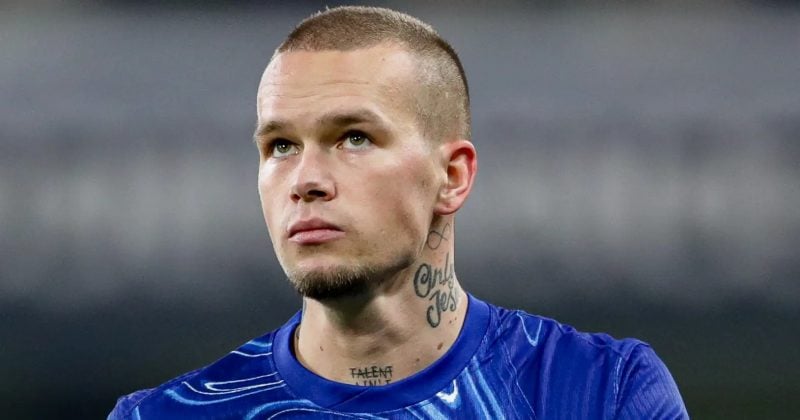
Via sportbible.com
Chelsea’s Mudryk returns after 615-day doping ban as sports tokenization faces its credibility test
The Ukrainian winger's meldonium suspension highlights the unresolved tension between athlete-linked digital assets and the messy reality of sports governance.
Mykhailo Mudryk is back. The 25-year-old Chelsea winger received clearance from the Football Association on July 31 to resume competitive play after serving a 615-day provisional suspension for testing positive for meldonium, a banned substance. He hasn’t kicked a ball in a competitive match since November 2024.
What happened with Mudryk
Mudryk tested positive for meldonium, a metabolic modulator that’s been on the World Anti-Doping Agency’s prohibited list since 2016. Mudryk initially faced a maximum four-year ban. Through negotiations with the FA and the Court of Arbitration for Sport, that punishment was reduced to time already served, roughly those 615 days. Chelsea confirmed his reintegration into the squad, with the club targeting his participation in pre-season training this August.
For Chelsea, the calculus is simple. They paid a reported fee north of $80 million for Mudryk in January 2023. Every day he sits out is money evaporating.
Why crypto should be paying attention
No crypto tokens, protocols, or digital assets were directly involved in Mudryk’s case. Not a single fan token fluctuated because of his suspension. No NFT collection crashed.
Platforms like Chiliz and Socios have built entire ecosystems around fan tokens tied to major football clubs, including several Premier League teams. These tokens give holders voting rights on minor club decisions and access to exclusive experiences. Their prices, however, tend to move on sentiment, club performance, and player news.
The news moving money, markets, and the world—before your day starts.
Daily. Free. Join 34,000+ readers across crypto, finance, and policy.
Chelsea doesn’t currently have a fan token on major platforms, which insulated the crypto market from any Mudryk-related turbulence.
Athlete-linked NFTs face an even sharper version of this problem. When someone mints a collection around a player’s brand, that asset’s floor price is essentially a leveraged bet on the player’s continued relevance and reputation. A 615-day absence is an eternity in NFT market cycles.
The tokenization blind spot
Doping cases are just one flavor of this risk. Match-fixing investigations, contract disputes, career-ending injuries, and off-field legal troubles all fall into the same bucket. Traditional sports betting markets have sophisticated models for these scenarios.
The sports world already has mechanisms for this: transfer clauses, insurance policies, salary caps. The tokenized version of sports fandom is still figuring out what happens when the music stops.