
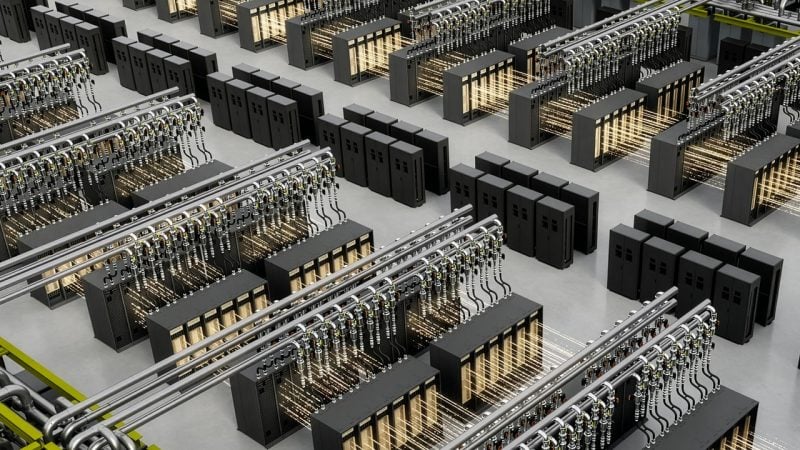
Nokia CEO says AI data centers could be built twice as fast without supply limits
Justin Hotard says memory chip and power shortages, not weak demand, are what is slowing the AI infrastructure buildout
The AI data center boom has a speed limit, and it isn’t demand. According to Nokia CEO Justin Hotard, customers would be building these facilities “2x faster” if supply constraints weren’t getting in the way.
Hotard made the remarks on October 5, 2026, during a CNBC podcast. His message was simple. The appetite for AI infrastructure is there. The parts and the power are not.
What is actually holding things back
Hotard pinned the bottleneck on two specific shortages. The first is memory chips. The second is energy and power capacity.
Nokia’s numbers back up the demand story
In the second quarter of 2026, net sales in Nokia’s AI and cloud business reached €446 million. That figure doubled compared with the same period a year earlier.
The segment accounted for 9.3% of total group sales. Nokia booked €2.8 billion in new AI and cloud orders during Q2 2026. Half of those orders are expected to convert to revenue within the next year.
AI, tech, and the markets they move—in one daily briefing.
Daily. Free. Join 34,000+ readers across crypto, finance, and policy.
How Nokia got here
Hotard took over as Nokia’s chief executive in 2025. Before that, he led Intel’s Data Center & AI Group.
Under his leadership, Nokia has pushed to strengthen its networking capabilities for AI infrastructure. The company has partnered with Nvidia and invested in optical manufacturing to build out its data center networking offerings.
What this means for the AI infrastructure trade
For Nokia specifically, the setup cuts two ways. On one hand, a strong order book and a segment doubling year over year suggest real momentum in its AI and cloud business. On the other hand, Nokia’s own customers are being slowed by shortages outside its control.
That makes the conversion of the €2.8 billion in orders worth tracking. Nokia expects half of it to turn into revenue within the next year.