
Temasek warns AI and inflation are the biggest market risks for next year

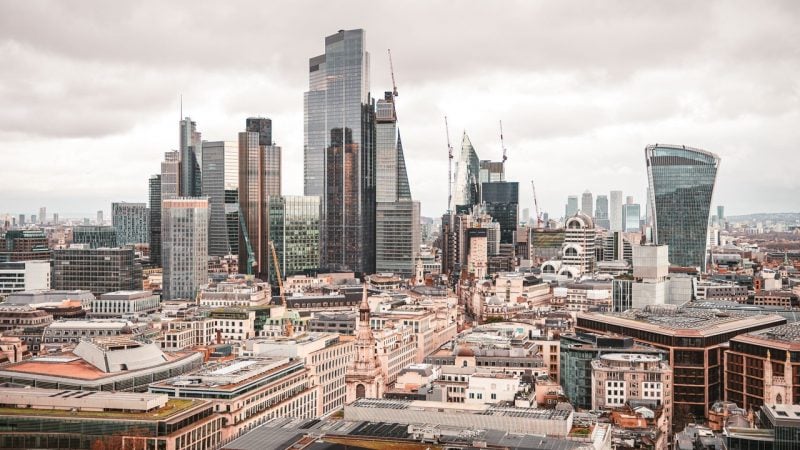
Photo: Gonzalo Facello / Pexels

Temasek warns AI and inflation are the biggest market risks for next year

Singapore's state investor flags shaky AI returns and stubborn prices even as it plans to expand its own AI exposure

One of Asia’s largest investors just named the two things most likely to ruin next year for global markets: artificial intelligence and inflation.

Temasek’s investment chief, Rohit Sipahimalani, singled out the pair as the biggest risks ahead. The firm still plans to put a much bigger share of its money into AI, which is a bit like a lifeguard warning about rip currents while wading further out.

What Temasek is actually worried about

Sipahimalani’s concern centers on the wave of US capital expenditure flowing into AI infrastructure. Companies are spending heavily on the data centers, chips and power needed to run AI systems.

His warning is about what happens if that spending fails to pay off. If the expected returns don’t show up, he cautioned, valuation pressure could trigger significant market disruption.

He made the comments in discussions around the Temasek Review 2026, the firm’s annual look at its portfolio. Interviews in July 2026 put US capex front and center as a risk factor.

Inflation is the second half of the warning, and the two risks are more connected than they look. Investors have noted that AI-driven demand for semiconductors and energy is feeding into higher prices.

Advertisement

That inflation, in turn, pushes up investment hurdle rates. A hurdle rate is the minimum return a project needs to be worth funding. When it rises, fewer deals clear the bar.

Cautious, but still buying

None of this has Temasek heading for the exits. The firm aims to raise AI-related investments to 15% of its portfolio by 2031, up from approximately 6% today.

That would mean more than doubling its relative exposure in roughly five years. The strategy pairs that expansion with an emphasis on keeping the overall portfolio resilient against rising inflation, interest rates and broader economic uncertainty.

Temasek is doing this from a position of strength. Its net portfolio value hit a record S$518 billion (approximately US$401 billion) as of March 31, 2026, a 10.5% increase from the year before.

Singapore’s regulators are sounding similar alarms

Temasek is not the only voice in Singapore raising these flags. The Monetary Authority of Singapore, the city-state’s central bank, has issued its own warnings in its Financial Stability Review.

MAS pointed to inflated capital costs stemming from AI spending. It also warned of potentially severe fiscal pressures if an AI downturn were to hit.

The central bank put numbers to that concern. A stress test it conducted on September 22, 2026, found that 32% of Singapore-listed firms could face significant revenue shocks in a severe AI downturn.

A recent report from the ASEAN+3 Macroeconomic Research Office, known as AMRO, highlighted that Asian economies are disproportionately exposed to the possible fallout once the AI boom cools.

What this means for investors

The most direct takeaway is that big institutional money is starting to separate AI enthusiasm from AI pricing. Temasek’s message is not “avoid AI.” It is “build a portfolio that survives if AI disappoints.”

The inflation link deserves close watching. If AI demand keeps pushing up chip and energy costs, it could keep price pressures and interest rates elevated longer than markets would like.

For Asian markets specifically, the warnings from MAS and AMRO raise the stakes. Economies tied closely to semiconductor supply chains and AI-related demand could feel a slowdown more sharply than others.

The key things to track from here are whether US AI capex begins to produce visible returns, whether inflation in chips and energy eases or persists, and how central banks respond.

Disclosure: This article was edited by Diego Almada Lopez. For more information on how we create and review content, see our Editorial Policy.
Temasek warns AI and inflation are the biggest market risks for next year

Singapore's state investor flags shaky AI returns and stubborn prices even as it plans to expand its own AI exposure

Photo: Gonzalo Facello / Pexels

One of Asia’s largest investors just named the two things most likely to ruin next year for global markets: artificial intelligence and inflation.

Temasek’s investment chief, Rohit Sipahimalani, singled out the pair as the biggest risks ahead. The firm still plans to put a much bigger share of its money into AI, which is a bit like a lifeguard warning about rip currents while wading further out.

What Temasek is actually worried about

Sipahimalani’s concern centers on the wave of US capital expenditure flowing into AI infrastructure. Companies are spending heavily on the data centers, chips and power needed to run AI systems.

His warning is about what happens if that spending fails to pay off. If the expected returns don’t show up, he cautioned, valuation pressure could trigger significant market disruption.

He made the comments in discussions around the Temasek Review 2026, the firm’s annual look at its portfolio. Interviews in July 2026 put US capex front and center as a risk factor.

Inflation is the second half of the warning, and the two risks are more connected than they look. Investors have noted that AI-driven demand for semiconductors and energy is feeding into higher prices.

Advertisement

That inflation, in turn, pushes up investment hurdle rates. A hurdle rate is the minimum return a project needs to be worth funding. When it rises, fewer deals clear the bar.

Cautious, but still buying

None of this has Temasek heading for the exits. The firm aims to raise AI-related investments to 15% of its portfolio by 2031, up from approximately 6% today.

That would mean more than doubling its relative exposure in roughly five years. The strategy pairs that expansion with an emphasis on keeping the overall portfolio resilient against rising inflation, interest rates and broader economic uncertainty.

Temasek is doing this from a position of strength. Its net portfolio value hit a record S$518 billion (approximately US$401 billion) as of March 31, 2026, a 10.5% increase from the year before.

Singapore’s regulators are sounding similar alarms

Temasek is not the only voice in Singapore raising these flags. The Monetary Authority of Singapore, the city-state’s central bank, has issued its own warnings in its Financial Stability Review.

MAS pointed to inflated capital costs stemming from AI spending. It also warned of potentially severe fiscal pressures if an AI downturn were to hit.

The central bank put numbers to that concern. A stress test it conducted on September 22, 2026, found that 32% of Singapore-listed firms could face significant revenue shocks in a severe AI downturn.

A recent report from the ASEAN+3 Macroeconomic Research Office, known as AMRO, highlighted that Asian economies are disproportionately exposed to the possible fallout once the AI boom cools.

What this means for investors

The most direct takeaway is that big institutional money is starting to separate AI enthusiasm from AI pricing. Temasek’s message is not “avoid AI.” It is “build a portfolio that survives if AI disappoints.”

The inflation link deserves close watching. If AI demand keeps pushing up chip and energy costs, it could keep price pressures and interest rates elevated longer than markets would like.

For Asian markets specifically, the warnings from MAS and AMRO raise the stakes. Economies tied closely to semiconductor supply chains and AI-related demand could feel a slowdown more sharply than others.

The key things to track from here are whether US AI capex begins to produce visible returns, whether inflation in chips and energy eases or persists, and how central banks respond.

Disclosure: This article was edited by Diego Almada Lopez. For more information on how we create and review content, see our Editorial Policy.