
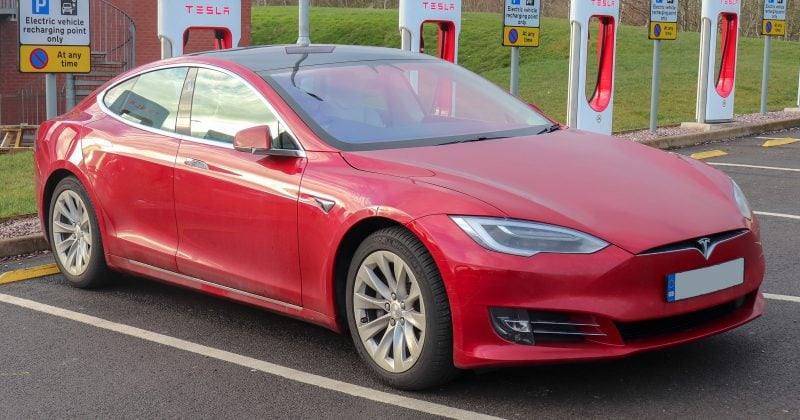
Photo: Vauxford / Wikimedia Commons / CC BY-SA 4.0 (https://creativecommons.org/licenses/by-sa/4.0)
Tesla to buy power from KKR-backed Arizona solar and battery plant
The deal connects Tesla to one of Arizona's largest planned solar-plus-storage facilities, a 1 GW project developed by private equity giant KKR's renewable energy arm.
Tesla has signed a power purchase agreement with Stellar Renewable Power, a KKR-backed renewable energy developer, to buy electricity from a massive solar and battery storage facility in Navajo County, Arizona. The project pairs a 1 GW solar farm with a 1 GW/4 GWh battery energy storage system, making it one of the largest planned solar-plus-storage installations in the state.
What the deal looks like
The project is being developed by Stellar Renewable Power, a platform KKR established in 2021 specifically to build utility-scale solar and storage assets. Stellar received a Special Use Permit from Navajo County in December 2024, clearing the local regulatory hurdle needed to move forward with construction.
Neither Tesla nor KKR has publicly disclosed the specifics of the contract. Capacity commitments, pricing terms, and duration all remain under wraps.
Tesla’s Arizona energy footprint
Tesla already runs multiple Virtual Power Plant programs across the state. These programs aggregate customer-owned Powerwalls into a coordinated network that can feed power back to the grid during peak demand. Homeowners who participate earn between $400 and $800 per Powerwall installation annually for letting Tesla orchestrate their batteries during stress events.
The news moving money, markets, and the world—before your day starts.
Daily. Free. Join 34,000+ readers across crypto, finance, and policy.
Tesla has also deployed Megapack systems at various solar sites throughout Arizona, positioning itself on both the supply and storage sides of Arizona’s energy equation.
Why KKR is in the solar business
KKR launched Stellar Renewable Power in 2021 as a dedicated vehicle for utility-scale solar and storage development. For KKR, landing Tesla as an offtaker for the Navajo County project is a strong signal to capital markets. Power purchase agreements with creditworthy buyers like Tesla make it significantly easier to finance construction.
What this means for investors
The risk side of the equation centers on execution. A 1 GW solar farm with 4 GWh of storage is an enormous project. Construction timelines, permitting delays, interconnection queues, and supply chain constraints have all plagued large-scale renewable projects in recent years. Until the facility is actually generating electrons, the PPA is a commitment on paper, not a source of power.