
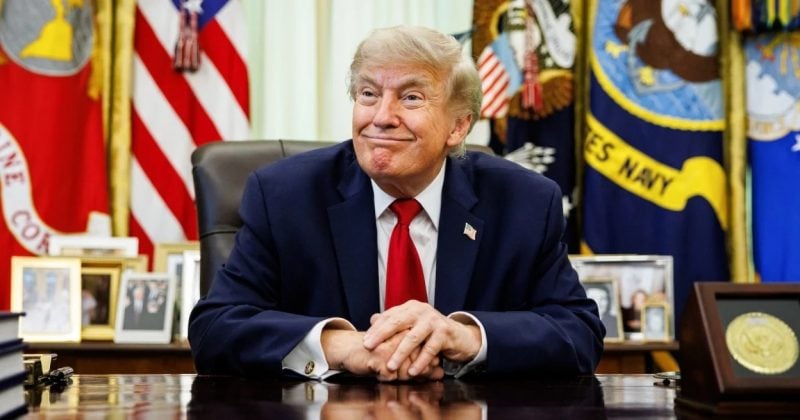
Donald Trump’s $1B crypto windfall complicates digital-asset legislation
Democrats are pushing for tougher ethics provisions in the Clarity Act after financial disclosures revealed the president earned over $1 billion from crypto ventures during his first year back in office
Being president is a decent gig. Being president while your family runs a billion-dollar crypto operation is, apparently, an even better one.
President Donald Trump’s 2025 financial disclosure revealed income exceeding $1 billion from digital asset ventures during his first year back in the White House. Estimates peg the total somewhere between $1.2 billion and $1.43 billion, with the bulk flowing from two sources: the family’s World Liberty Financial project and the infamous $TRUMP meme coin.
The disclosure has thrown a wrench into already fragile bipartisan negotiations over the Clarity Act, the sweeping market structure bill that was supposed to give the crypto industry its regulatory framework. Democrats now want the bill rewritten with provisions specifically designed to prevent sitting presidents and their families from cashing in on digital assets. The legislation, as of late July 2026, is going nowhere.
Follow the money
The numbers paint a pretty vivid picture. Roughly $500 million to $594 million of Trump’s crypto income came from World Liberty Financial, the DeFi project his family launched in 2024. WLFI controls 75% of its token sale proceeds, and those proceeds have been flowing generously to Trump-linked entities.
Another $635 million or so came from the $TRUMP meme coin. Here’s the thing about that number, though: it represents profits that were realized while retail investors were getting obliterated. The $TRUMP token has crashed more than 97% from its peak.
WLFI tokens haven’t fared much better, dropping roughly 80% in value.
The news moving money, markets, and the world—before your day starts.
Daily. Free. Join 34,000+ readers across crypto, finance, and policy.
The legislative standoff
Senator Elizabeth Warren has been leading the Democratic charge, arguing that the current draft of the Clarity Act contains loopholes wide enough to drive a presidential motorcade through. Her core argument is straightforward: a president who profits from crypto has a direct financial incentive to shape crypto regulation in his favor, and the legislation needs to explicitly block that.
Recent Senate drafts have floated a proposal to temporarily ban federal officials from issuing digital assets until 2029. That provision alone has become a dealbreaker for Republicans who view it as overreach, and for some Democrats who think it doesn’t go far enough.
The crypto industry spent years begging Washington for regulatory clarity. Congress finally started delivering, passing the GENIUS Act for stablecoins in 2025. But the broader market structure bill, the one that would actually define how tokens are classified and traded, is now hostage to a political fight that has almost nothing to do with the technology itself.
What this means for investors
For the crypto market broadly, the stalled Clarity Act is a significant problem. Without a market structure framework, the industry remains in a regulatory gray zone where enforcement actions substitute for clear rules.
The $TRUMP meme coin’s 97%-plus collapse is a case study in what happens when speculative assets tied to political narratives lose momentum. WLFI’s 80% decline tells a similar story. Even with a direct connection to the most powerful person in the country, the token couldn’t sustain its valuation.
The broader risk is that the Democratic push for stricter ethics provisions, if successful, could create a chilling effect beyond just the president’s portfolio. If legislation ends up restricting how any federal official interacts with digital assets, it could discourage the kind of government engagement the industry has been courting. On the other hand, if the Clarity Act dies entirely because neither side can agree on ethics language, the industry loses the regulatory framework it needs to mature.