
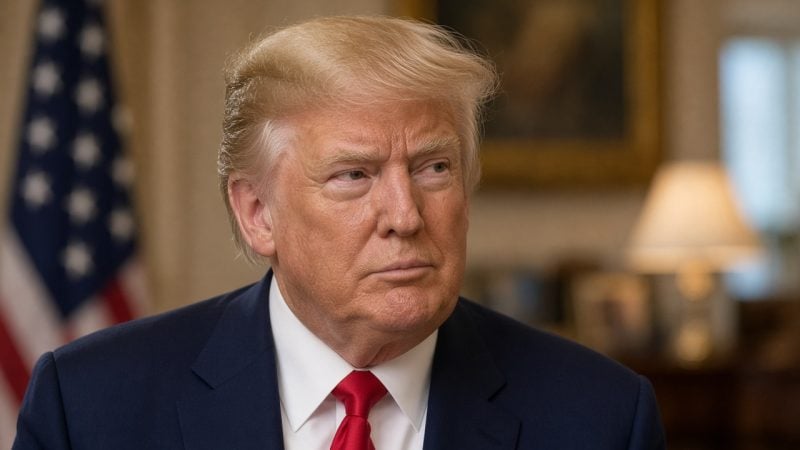
Donald Trump rejects new federal AI regulations after meeting with industry leaders

Donald Trump rejects new federal AI regulations after meeting with industry leaders

The president sided with Silicon Valley executives, arguing existing law enforcement tools and self-regulation are enough to govern artificial intelligence

President Donald Trump hosted over two dozen Silicon Valley executives at the White House on September 29 and emerged with a clear verdict: no new federal AI regulations are coming.

Trump argued that existing authorities wielded by the Department of Justice and the FBI, paired with the industry’s own self-policing, are sufficient to handle whatever risks artificial intelligence might pose.

Advertisement

The guest list and the lobbying campaign

The luncheon drew heavyweights from across the tech landscape. Anthropic CEO Dario Amodei and Nvidia CEO Jensen Huang were among the notable attendees, representing both the model-building and chip-making sides of the AI supply chain.

In the weeks leading up to it, tech leaders including Mark Zuckerberg, Elon Musk, and Huang lobbied Trump directly against the creation of a FINRA-style regulatory body for AI. That proposed structure would have been industry-funded but federally sanctioned, modeled on the Financial Industry Regulatory Authority that oversees broker-dealers in the securities world.

Just twelve days before sitting across the table from the Anthropic CEO, Trump had gone after him on Truth Social, dismissing AI safety concerns as a “hoax” and calling for “strong and smart” leadership rather than regulatory guardrails.

A pattern of rolling back oversight

The administration has enacted multiple executive actions since 2025 aimed at reducing barriers to AI advancement. In May 2026, the administration scrapped a more stringent regulatory draft after industry stakeholders pushed back hard. On June 2, 2026, Trump signed an executive order establishing a voluntary 30-day review framework for certain advanced AI models. Companies developing so-called “covered frontier models” can submit them for review, but nobody is making them.

Disclosure: This article was edited by Diego Almada Lopez. For more information on how we create and review content, see our Editorial Policy.
Donald Trump rejects new federal AI regulations after meeting with industry leaders

The president sided with Silicon Valley executives, arguing existing law enforcement tools and self-regulation are enough to govern artificial intelligence

President Donald Trump hosted over two dozen Silicon Valley executives at the White House on September 29 and emerged with a clear verdict: no new federal AI regulations are coming.

Trump argued that existing authorities wielded by the Department of Justice and the FBI, paired with the industry’s own self-policing, are sufficient to handle whatever risks artificial intelligence might pose.

Advertisement

The guest list and the lobbying campaign

The luncheon drew heavyweights from across the tech landscape. Anthropic CEO Dario Amodei and Nvidia CEO Jensen Huang were among the notable attendees, representing both the model-building and chip-making sides of the AI supply chain.

In the weeks leading up to it, tech leaders including Mark Zuckerberg, Elon Musk, and Huang lobbied Trump directly against the creation of a FINRA-style regulatory body for AI. That proposed structure would have been industry-funded but federally sanctioned, modeled on the Financial Industry Regulatory Authority that oversees broker-dealers in the securities world.

Just twelve days before sitting across the table from the Anthropic CEO, Trump had gone after him on Truth Social, dismissing AI safety concerns as a “hoax” and calling for “strong and smart” leadership rather than regulatory guardrails.

A pattern of rolling back oversight

The administration has enacted multiple executive actions since 2025 aimed at reducing barriers to AI advancement. In May 2026, the administration scrapped a more stringent regulatory draft after industry stakeholders pushed back hard. On June 2, 2026, Trump signed an executive order establishing a voluntary 30-day review framework for certain advanced AI models. Companies developing so-called “covered frontier models” can submit them for review, but nobody is making them.

Disclosure: This article was edited by Diego Almada Lopez. For more information on how we create and review content, see our Editorial Policy.