
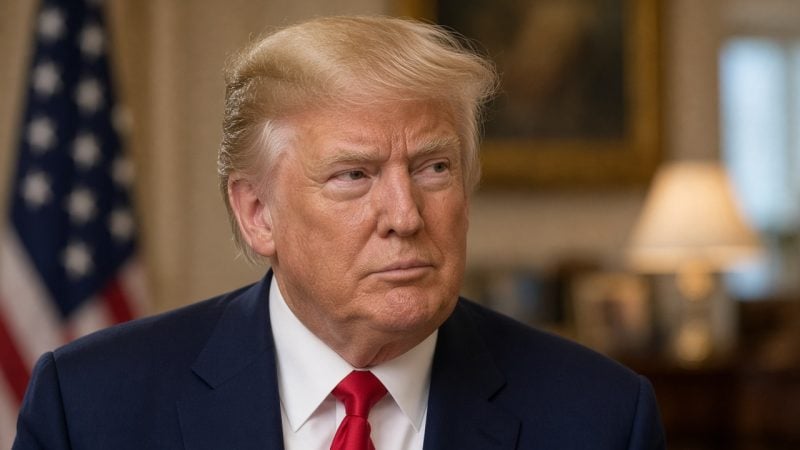
Trump to welcome Xi Jinping for first US visit in over a decade amid fragile trade truce

Trump to welcome Xi Jinping for first US visit in over a decade amid fragile trade truce

The September summit aims to project stability, but expectations for major breakthroughs remain low as tariffs, tech controls, and Taiwan loom over talks

Chinese President Xi Jinping is set to visit Washington from September 23 to 25, marking his first trip to the US in more than ten years. President Trump will greet Xi at Joint Base Andrews on September 23, followed by a formal White House ceremony, with the substantive talks scheduled for September 24.

The visit arrives at a particularly delicate moment. A trade truce established in October 2025 is set to expire on November 30, and the two sides remain far apart on how long any extension should last. The US has proposed a six-month extension, while China is pushing for a longer period.

A summit built on guardrails, not grand bargains

Preparatory negotiations have been led by US Treasury Secretary Scott Bessent and Chinese Vice Premier He Lifeng. Their talks have focused on relatively manageable topics: AI safety frameworks and trade in non-sensitive goods. The harder stuff, tariffs, technology export controls, Taiwan, Iran, remains on the agenda but firmly in the “acknowledged, not resolved” category.

Advertisement

The trade truce itself was always more ceasefire than peace treaty. When it was struck in late 2025, it paused the escalatory tariff cycle that had rattled global supply chains and spooked equity markets. But the underlying structural tensions, accusations of intellectual property theft, restrictions on semiconductor exports, disputes over state subsidies, never went away.

What investors are watching

Markets will be parsing every joint statement and press conference for hints about the truce extension. The difference between a six-month rollover and a multi-year framework matters enormously for companies with deep China exposure.

US agricultural producers and the aerospace industry stand to benefit most if the leaders commit to specific purchase agreements. The previous Beijing summit in May 2026 yielded commitments on agricultural and aircraft purchases, and there is quiet speculation that a similar playbook could emerge here.

Tariff-sensitive sectors, from consumer electronics to industrial machinery, could see positive momentum if the rhetoric coming out of the summit leans conciliatory.

The geopolitical backdrop

Technology has become the central battleground, with the US tightening export controls on advanced semiconductors and AI chips while China accelerates its domestic chip industry. Taiwan remains the most dangerous flashpoint, with both sides maintaining positions that are essentially irreconcilable in the near term. And Iran’s nuclear program has introduced yet another axis of disagreement, with Washington and Beijing holding divergent views on sanctions enforcement.

For Trump, the summit offers a chance to project the image of a dealmaker engaging with America’s most consequential rival on his terms, on his turf. For Xi, the visit is an opportunity to demonstrate that China remains a co-equal power on the world stage, worthy of the full diplomatic pageantry that a state visit entails.

Disclosure: This article was edited by Editorial Team. For more information on how we create and review content, see our Editorial Policy.
Trump to welcome Xi Jinping for first US visit in over a decade amid fragile trade truce

The September summit aims to project stability, but expectations for major breakthroughs remain low as tariffs, tech controls, and Taiwan loom over talks

Chinese President Xi Jinping is set to visit Washington from September 23 to 25, marking his first trip to the US in more than ten years. President Trump will greet Xi at Joint Base Andrews on September 23, followed by a formal White House ceremony, with the substantive talks scheduled for September 24.

The visit arrives at a particularly delicate moment. A trade truce established in October 2025 is set to expire on November 30, and the two sides remain far apart on how long any extension should last. The US has proposed a six-month extension, while China is pushing for a longer period.

A summit built on guardrails, not grand bargains

Preparatory negotiations have been led by US Treasury Secretary Scott Bessent and Chinese Vice Premier He Lifeng. Their talks have focused on relatively manageable topics: AI safety frameworks and trade in non-sensitive goods. The harder stuff, tariffs, technology export controls, Taiwan, Iran, remains on the agenda but firmly in the “acknowledged, not resolved” category.

Advertisement

The trade truce itself was always more ceasefire than peace treaty. When it was struck in late 2025, it paused the escalatory tariff cycle that had rattled global supply chains and spooked equity markets. But the underlying structural tensions, accusations of intellectual property theft, restrictions on semiconductor exports, disputes over state subsidies, never went away.

What investors are watching

Markets will be parsing every joint statement and press conference for hints about the truce extension. The difference between a six-month rollover and a multi-year framework matters enormously for companies with deep China exposure.

US agricultural producers and the aerospace industry stand to benefit most if the leaders commit to specific purchase agreements. The previous Beijing summit in May 2026 yielded commitments on agricultural and aircraft purchases, and there is quiet speculation that a similar playbook could emerge here.

Tariff-sensitive sectors, from consumer electronics to industrial machinery, could see positive momentum if the rhetoric coming out of the summit leans conciliatory.

The geopolitical backdrop

Technology has become the central battleground, with the US tightening export controls on advanced semiconductors and AI chips while China accelerates its domestic chip industry. Taiwan remains the most dangerous flashpoint, with both sides maintaining positions that are essentially irreconcilable in the near term. And Iran’s nuclear program has introduced yet another axis of disagreement, with Washington and Beijing holding divergent views on sanctions enforcement.

For Trump, the summit offers a chance to project the image of a dealmaker engaging with America’s most consequential rival on his terms, on his turf. For Xi, the visit is an opportunity to demonstrate that China remains a co-equal power on the world stage, worthy of the full diplomatic pageantry that a state visit entails.

Disclosure: This article was edited by Editorial Team. For more information on how we create and review content, see our Editorial Policy.