
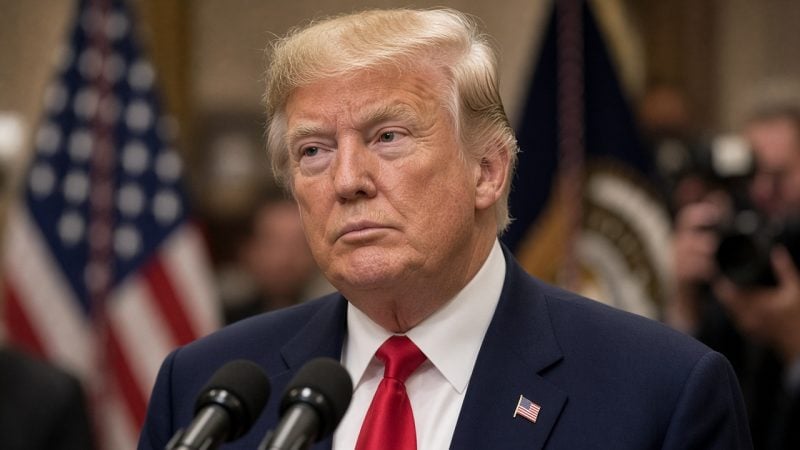
Trump adopts less aggressive stance ahead of Xi summit, and rare earth minerals explain why
China's stranglehold on critical mineral supply chains appears to have cooled Washington's rhetoric before the September summit
President Trump is heading into his next meeting with Chinese President Xi Jinping with notably fewer verbal grenades than usual. The September 24 summit, expected to cover trade truce extensions, tariffs, and critical mineral access, comes with a diplomatic temperature several degrees lower than past encounters.
The rare earth reality check
China controls roughly 70% of global rare earth mining capacity, according to consultancy AlixPartners. Beijing also commands approximately 85% of global rare earth refining capacity. And when it comes to the finished product, rare earth metal alloys and magnets, China’s share climbs to around 90%.
Those magnets aren’t decorating refrigerators. They’re inside F-35 fighter jets, electric vehicle motors, wind turbines, smartphones, and MRI machines.
This supply chain reality has historically given Beijing a powerful card to play during trade disputes. And right now, with a one-year suspension of Chinese rare earth export controls set to expire around November 2026, just two months after the summit, the timing makes that card especially relevant.
Trump has refrained from imposing new tariffs or export bans in the lead-up to the meeting. That’s a notable departure from the playbook of previous summits, where escalatory threats often served as pre-negotiation positioning.
Why the shift matters
China’s delivery of rare earth materials has reportedly fallen short of US expectations, creating a situation where antagonizing Beijing could backfire in tangible, supply-chain-disrupting ways.
The news moving money, markets, and the world—before your day starts.
Daily. Free. Join 34,000+ readers across crypto, finance, and policy.
When China restricted rare earth exports in 2010 during a dispute with Japan, prices for some elements spiked by more than tenfold.
The approaching November expiration of China’s export control suspension adds urgency. If those controls snap back into place without a new agreement, US manufacturers in the automotive, technology, and defense sectors could face immediate sourcing problems.
Market implications and the long game
The longer-term picture is more complex. Washington has been working to reduce American dependence on Chinese rare earth supplies, investing in domestic mining operations and processing facilities. But building that infrastructure takes years, not months. The US currently lacks the refining and processing capacity to meaningfully replace Chinese supply, and every credible timeline for achieving that independence stretches well into the next decade.
Companies are actively diversifying supply chains, looking to sources in Australia, Canada, and parts of Africa.
The summit’s agenda, covering trade truce extensions alongside critical mineral access, suggests both sides recognize the mutual economic entanglement. For China, maintaining access to American technology markets and agricultural exports remains important.