
TSMC drops $100B on Arizona expansion, bringing total US investment to $265B

TSMC drops $100B on Arizona expansion, bringing total US investment to $265B

The largest single foreign direct investment in US history has massive implications for the AI chip supply chain and crypto mining hardware.

Taiwan Semiconductor Manufacturing Co. just committed another $100 billion to its Arizona operations, pushing its total US investment to a staggering $265 billion. To put that number in perspective, it’s roughly the GDP of Finland.

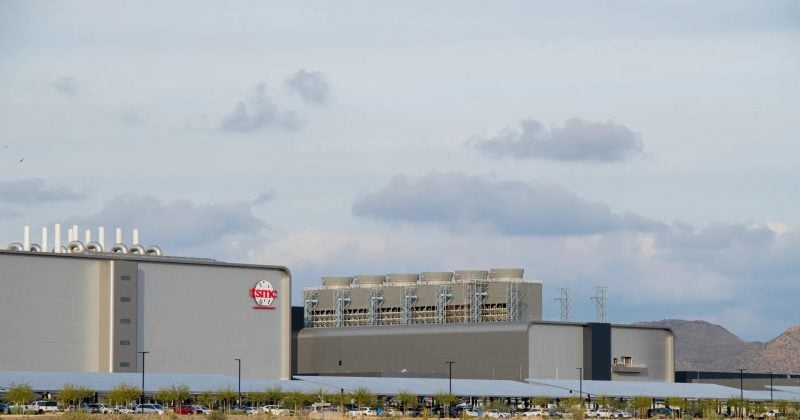
The expansion will add four new advanced semiconductor manufacturing facilities in Phoenix, bringing TSMC’s total footprint in the state to 12 cutting-edge chip and packaging plants. Production capacity is expected to ramp up through the end of the decade, with the facilities targeting surging demand for AI chips and high-performance computing hardware.

Why this matters for crypto

The decision to massively expand domestic manufacturing addresses one of crypto’s quieter systemic risks: geographic concentration of chip production. For years, the industry has been uncomfortably dependent on fabrication facilities clustered in Taiwan, a region sitting squarely in the crosshairs of US-China geopolitical tension. A single disruption to TSMC’s Taiwanese operations could have cascading effects on everything from AI training infrastructure to Bitcoin mining hardware availability.

Advertisement

The timing isn’t accidental either. AI chip demand has been climbing at a pace that makes crypto bull runs look measured. TSMC’s earnings call, where the investment was announced on July 16, 2026, made clear that artificial intelligence workloads are the primary demand driver.

The geopolitical chess game

This investment didn’t happen in a vacuum. It landed during a period of intensifying US efforts to reshore critical manufacturing, particularly in semiconductors. Members of the Trump administration have emphasized the job creation potential and supply chain benefits of TSMC’s expansion. Phoenix Mayor Kate Gallego called it the largest economic development investment in US history.

TSMC’s commitment has grown dramatically over the past few years. The company’s initial US pledge was roughly $65 billion. That figure has now ballooned to $265 billion, a fourfold increase that reflects both carrots (federal incentives under the CHIPS Act framework) and sticks (trade restrictions making it strategically advantageous to produce closer to major customers).

For the crypto mining industry, this reshoring trend carries a specific implication. Mining operations in the US, which have expanded significantly as China cracked down on the practice, stand to benefit from shorter, more reliable supply chains for next-generation ASIC chips. Currently, most mining hardware is designed in China but fabricated in Taiwan before being shipped to mining farms in Texas, Georgia, and other US states. Arizona-based fabrication could shorten that loop considerably.

What investors should be watching

First, watch Bitcoin mining hardware costs. More fabrication capacity, particularly at advanced process nodes, should eventually put downward pressure on ASIC prices. Cheaper, more efficient mining hardware improves margins for publicly traded miners like Marathon Digital, Riot Platforms, and CleanSpark.

Second, consider the AI-crypto convergence. Projects building at the intersection of artificial intelligence and blockchain, including decentralized compute networks like Render and Akash, depend on GPU availability. TSMC’s expanded capacity for AI chip production could ease the GPU scarcity that has constrained these networks.

The risk side is worth noting too. TSMC’s Arizona facilities have faced well-documented challenges with construction timelines and workforce training. Building cutting-edge fabs outside Taiwan’s deeply specialized labor ecosystem is genuinely difficult. If production ramps disappoint, the supply constraints that currently benefit chip companies’ margins could persist longer than expected, keeping hardware costs elevated for crypto miners and AI builders alike.

Disclosure: This article was edited by Editorial Team. For more information on how we create and review content, see our Editorial Policy.

TSMC drops $100B on Arizona expansion, bringing total US investment to $265B

TSMC drops $100B on Arizona expansion, bringing total US investment to $265B

The largest single foreign direct investment in US history has massive implications for the AI chip supply chain and crypto mining hardware.

Taiwan Semiconductor Manufacturing Co. just committed another $100 billion to its Arizona operations, pushing its total US investment to a staggering $265 billion. To put that number in perspective, it’s roughly the GDP of Finland.

The expansion will add four new advanced semiconductor manufacturing facilities in Phoenix, bringing TSMC’s total footprint in the state to 12 cutting-edge chip and packaging plants. Production capacity is expected to ramp up through the end of the decade, with the facilities targeting surging demand for AI chips and high-performance computing hardware.

Why this matters for crypto

The decision to massively expand domestic manufacturing addresses one of crypto’s quieter systemic risks: geographic concentration of chip production. For years, the industry has been uncomfortably dependent on fabrication facilities clustered in Taiwan, a region sitting squarely in the crosshairs of US-China geopolitical tension. A single disruption to TSMC’s Taiwanese operations could have cascading effects on everything from AI training infrastructure to Bitcoin mining hardware availability.

Advertisement

The timing isn’t accidental either. AI chip demand has been climbing at a pace that makes crypto bull runs look measured. TSMC’s earnings call, where the investment was announced on July 16, 2026, made clear that artificial intelligence workloads are the primary demand driver.

The geopolitical chess game

This investment didn’t happen in a vacuum. It landed during a period of intensifying US efforts to reshore critical manufacturing, particularly in semiconductors. Members of the Trump administration have emphasized the job creation potential and supply chain benefits of TSMC’s expansion. Phoenix Mayor Kate Gallego called it the largest economic development investment in US history.

TSMC’s commitment has grown dramatically over the past few years. The company’s initial US pledge was roughly $65 billion. That figure has now ballooned to $265 billion, a fourfold increase that reflects both carrots (federal incentives under the CHIPS Act framework) and sticks (trade restrictions making it strategically advantageous to produce closer to major customers).

For the crypto mining industry, this reshoring trend carries a specific implication. Mining operations in the US, which have expanded significantly as China cracked down on the practice, stand to benefit from shorter, more reliable supply chains for next-generation ASIC chips. Currently, most mining hardware is designed in China but fabricated in Taiwan before being shipped to mining farms in Texas, Georgia, and other US states. Arizona-based fabrication could shorten that loop considerably.

What investors should be watching

First, watch Bitcoin mining hardware costs. More fabrication capacity, particularly at advanced process nodes, should eventually put downward pressure on ASIC prices. Cheaper, more efficient mining hardware improves margins for publicly traded miners like Marathon Digital, Riot Platforms, and CleanSpark.

Second, consider the AI-crypto convergence. Projects building at the intersection of artificial intelligence and blockchain, including decentralized compute networks like Render and Akash, depend on GPU availability. TSMC’s expanded capacity for AI chip production could ease the GPU scarcity that has constrained these networks.

The risk side is worth noting too. TSMC’s Arizona facilities have faced well-documented challenges with construction timelines and workforce training. Building cutting-edge fabs outside Taiwan’s deeply specialized labor ecosystem is genuinely difficult. If production ramps disappoint, the supply constraints that currently benefit chip companies’ margins could persist longer than expected, keeping hardware costs elevated for crypto miners and AI builders alike.

Disclosure: This article was edited by Editorial Team. For more information on how we create and review content, see our Editorial Policy.