
WTO lifts 2026 trade growth forecast to 3.9% as AI goods carry the load

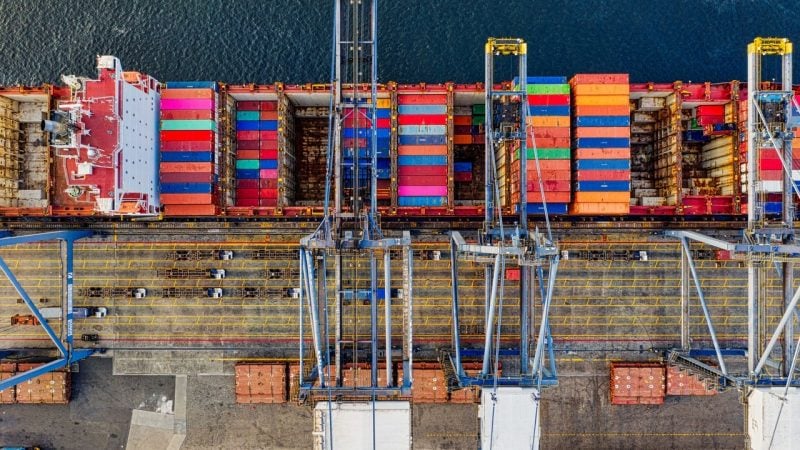
Photo: Tom Fisk / Pexels

WTO lifts 2026 trade growth forecast to 3.9% as AI goods carry the load

Semiconductors and servers are offsetting the drag from the Iran conflict, but services trade is losing ground

The World Trade Organization has sharply upgraded its view of global commerce. Merchandise trade volumes are now projected to grow 3.9% in 2026, then speed up to 4.1% in 2027.

Back in March, the same organization was penciling in 1.9% for this year. That means the forecast more than doubled in about seven months.

What changed in the WTO’s math

The revised Global Trade Outlook landed on October 8, 2026. Alongside the 2026 upgrade, the WTO raised its 2027 merchandise trade estimate from 2.6% to 4.1%.

The engine behind the upgrade is artificial intelligence. More precisely, it is the physical hardware that AI runs on: semiconductors, servers and the rest of the equipment that fills data centers.

Those AI-enabling goods accounted for nearly 47% of global merchandise trade growth. Their volumes jumped 67% year-on-year.

Advertisement

The first half of 2026 tells the same story. Merchandise trade grew 3.5% over that stretch, and AI-related goods drove nearly half of it.

AI infrastructure spending is expected to rise by at least 30% in 2026, followed by another 10-20% in 2027.

The war-shaped hole in the outlook

The US-Israeli conflict with Iran, which began in February 2026, has rattled energy markets and disrupted shipping routes through the Persian Gulf.

WTO economists pointed to the resilience of goods trade. Supply chains have adapted to higher fuel and fertilizer costs rather than buckling under them.

Services are a different matter. The WTO cut its 2026 services trade growth forecast to 3.3%, down from the 4.8% it projected earlier.

Geography matters here too. Asia is expected to lead the expansion in merchandise trade, while the Middle East faces significant declines in exports.

How this stacks up historically

The broader economy is expected to grow more slowly than trade. The WTO projects global GDP growth of 2.6% in 2026 and 2.9% in 2027.

Merchandise trade volumes grew 4.2% in 2025, and the projections imply a cumulative increase of more than 12% by 2027 compared with 2024 levels.

That adds up to one of the strongest multi-year trade growth forecasts since before the 2008-2009 global financial crisis.

The catch is concentration. Much of this growth traces back to one theme: heavy investment in AI infrastructure such as data centers and semiconductor production.

Disclosure: This article was edited by Diego Almada Lopez. For more information on how we create and review content, see our Editorial Policy.
WTO lifts 2026 trade growth forecast to 3.9% as AI goods carry the load

Semiconductors and servers are offsetting the drag from the Iran conflict, but services trade is losing ground

Photo: Tom Fisk / Pexels

The World Trade Organization has sharply upgraded its view of global commerce. Merchandise trade volumes are now projected to grow 3.9% in 2026, then speed up to 4.1% in 2027.

Back in March, the same organization was penciling in 1.9% for this year. That means the forecast more than doubled in about seven months.

What changed in the WTO’s math

The revised Global Trade Outlook landed on October 8, 2026. Alongside the 2026 upgrade, the WTO raised its 2027 merchandise trade estimate from 2.6% to 4.1%.

The engine behind the upgrade is artificial intelligence. More precisely, it is the physical hardware that AI runs on: semiconductors, servers and the rest of the equipment that fills data centers.

Those AI-enabling goods accounted for nearly 47% of global merchandise trade growth. Their volumes jumped 67% year-on-year.

Advertisement

The first half of 2026 tells the same story. Merchandise trade grew 3.5% over that stretch, and AI-related goods drove nearly half of it.

AI infrastructure spending is expected to rise by at least 30% in 2026, followed by another 10-20% in 2027.

The war-shaped hole in the outlook

The US-Israeli conflict with Iran, which began in February 2026, has rattled energy markets and disrupted shipping routes through the Persian Gulf.

WTO economists pointed to the resilience of goods trade. Supply chains have adapted to higher fuel and fertilizer costs rather than buckling under them.

Services are a different matter. The WTO cut its 2026 services trade growth forecast to 3.3%, down from the 4.8% it projected earlier.

Geography matters here too. Asia is expected to lead the expansion in merchandise trade, while the Middle East faces significant declines in exports.

How this stacks up historically

The broader economy is expected to grow more slowly than trade. The WTO projects global GDP growth of 2.6% in 2026 and 2.9% in 2027.

Merchandise trade volumes grew 4.2% in 2025, and the projections imply a cumulative increase of more than 12% by 2027 compared with 2024 levels.

That adds up to one of the strongest multi-year trade growth forecasts since before the 2008-2009 global financial crisis.

The catch is concentration. Much of this growth traces back to one theme: heavy investment in AI infrastructure such as data centers and semiconductor production.

Disclosure: This article was edited by Diego Almada Lopez. For more information on how we create and review content, see our Editorial Policy.