
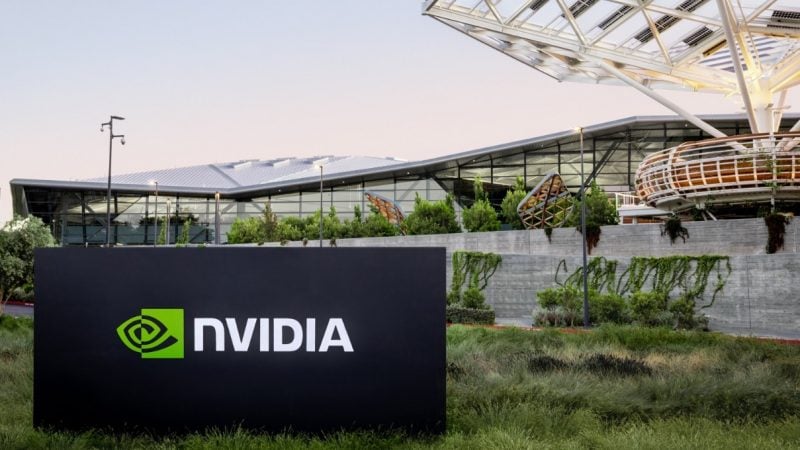
Nvidia boosts buyback plan by record $150B amid AI competition

Nvidia boosts buyback plan by record $150B amid AI competition

The chipmaker's $235B total repurchase authorization dwarfs Apple's previous record and signals management's confidence in the staying power of AI demand.

Nvidia just committed to buying back more of its own stock than the GDP of most countries. The chipmaker authorized an additional $150 billion in share repurchases on September 28, bringing its total remaining buyback program to a staggering $235 billion. That’s not just a company record. It’s the largest single increase to a share repurchase authorization in corporate history.

The previous record holder? Apple, which authorized $110 billion in buybacks back in 2024. Nvidia didn’t just break that ceiling, it obliterated it by roughly 36%.

What Nvidia is actually doing

The $150 billion addition builds on an $80 billion increase Nvidia already made in May 2026. The company plans to execute the full program through fiscal 2028, funded by what CEO Jensen Huang described as robust cash generation from AI and accelerated computing demand.

Advertisement

“NVIDIA’s growth is being driven by a once-in-a-generation platform shift to AI and accelerated computing.”

Nvidia ended its July 2026 quarter sitting on $22.44 billion in cash and equivalents. The stock responded with a modest bump of roughly 2% to 2.8% on the day of the announcement. Investors were already in a good mood: Nvidia shares had climbed approximately 20% to 24% year-to-date before the buyback news landed.

Why the biggest buyback ever, and why now

Nvidia’s stock, while up solidly this year, has actually lagged behind competitors like AMD and Intel on a year-to-date basis. A record buyback sends a clear signal to Wall Street: management believes the stock is undervalued relative to future cash flows.

AMD has been gaining ground in the data center GPU market. Intel is pouring resources into its own AI accelerator roadmap. Custom chip efforts from hyperscalers like Google, Amazon, and Microsoft continue to mature. Nvidia still dominates the AI training market, but the moat isn’t as wide as it was two years ago.

By aggressively reducing share count, Nvidia can maintain earnings-per-share growth even if revenue growth moderates.

The hyperscaler backdrop

The infrastructure buildout powering AI applications shows no signs of slowing down. Projections suggest the hyperscaler infrastructure buildout could exceed $1.3 trillion by 2027. Each new generation of AI models, from frontier labs like OpenAI, Anthropic, and Google DeepMind, requires exponentially more compute.

With quarterly cash positions north of $22 billion and growing, the company can fund massive buybacks while still investing billions in next-generation chip architectures and software ecosystems like CUDA, which remains the industry standard for GPU programming.

Investors watching Nvidia’s execution through fiscal 2028 will be tracking two variables closely: the pace of actual repurchases relative to the authorization, and whether competitive pressure from AMD, Intel, and custom silicon meaningfully erodes Nvidia’s pricing power in the data center GPU market.

Disclosure: This article was edited by Diego Almada Lopez. For more information on how we create and review content, see our Editorial Policy.
Nvidia boosts buyback plan by record $150B amid AI competition

The chipmaker's $235B total repurchase authorization dwarfs Apple's previous record and signals management's confidence in the staying power of AI demand.

Nvidia just committed to buying back more of its own stock than the GDP of most countries. The chipmaker authorized an additional $150 billion in share repurchases on September 28, bringing its total remaining buyback program to a staggering $235 billion. That’s not just a company record. It’s the largest single increase to a share repurchase authorization in corporate history.

The previous record holder? Apple, which authorized $110 billion in buybacks back in 2024. Nvidia didn’t just break that ceiling, it obliterated it by roughly 36%.

What Nvidia is actually doing

The $150 billion addition builds on an $80 billion increase Nvidia already made in May 2026. The company plans to execute the full program through fiscal 2028, funded by what CEO Jensen Huang described as robust cash generation from AI and accelerated computing demand.

Advertisement

“NVIDIA’s growth is being driven by a once-in-a-generation platform shift to AI and accelerated computing.”

Nvidia ended its July 2026 quarter sitting on $22.44 billion in cash and equivalents. The stock responded with a modest bump of roughly 2% to 2.8% on the day of the announcement. Investors were already in a good mood: Nvidia shares had climbed approximately 20% to 24% year-to-date before the buyback news landed.

Why the biggest buyback ever, and why now

Nvidia’s stock, while up solidly this year, has actually lagged behind competitors like AMD and Intel on a year-to-date basis. A record buyback sends a clear signal to Wall Street: management believes the stock is undervalued relative to future cash flows.

AMD has been gaining ground in the data center GPU market. Intel is pouring resources into its own AI accelerator roadmap. Custom chip efforts from hyperscalers like Google, Amazon, and Microsoft continue to mature. Nvidia still dominates the AI training market, but the moat isn’t as wide as it was two years ago.

By aggressively reducing share count, Nvidia can maintain earnings-per-share growth even if revenue growth moderates.

The hyperscaler backdrop

The infrastructure buildout powering AI applications shows no signs of slowing down. Projections suggest the hyperscaler infrastructure buildout could exceed $1.3 trillion by 2027. Each new generation of AI models, from frontier labs like OpenAI, Anthropic, and Google DeepMind, requires exponentially more compute.

With quarterly cash positions north of $22 billion and growing, the company can fund massive buybacks while still investing billions in next-generation chip architectures and software ecosystems like CUDA, which remains the industry standard for GPU programming.

Investors watching Nvidia’s execution through fiscal 2028 will be tracking two variables closely: the pace of actual repurchases relative to the authorization, and whether competitive pressure from AMD, Intel, and custom silicon meaningfully erodes Nvidia’s pricing power in the data center GPU market.

Disclosure: This article was edited by Diego Almada Lopez. For more information on how we create and review content, see our Editorial Policy.