
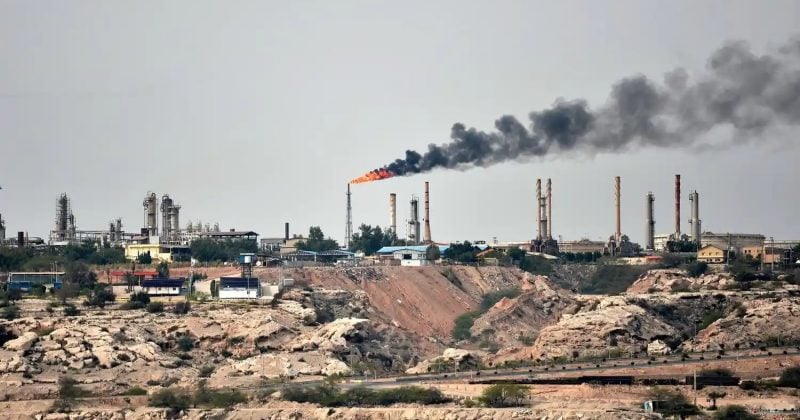
Via nytimes.com
Oil markets may face oversupply as Washington pressured to resolve Iran conflict
Brent crude has fallen sharply from its crisis highs, and analysts see prices dropping to $70 by year-end, with ripple effects already hitting crypto markets.
Brent crude has tumbled to around $87 per barrel after falling more than 7% in a recent session, a dramatic comedown from the $100 to $120 range it occupied earlier this year when the US-Iran conflict was at full boil. The Strait of Hormuz closure knocked an estimated 11 to 14 million barrels per day off global supply, roughly 14% to 20% of global oil trade. Now, with diplomatic efforts gaining traction and military strikes paused, the market is staring at the opposite problem: too much oil.
From shortage to surplus in record time
The US Energy Information Administration is projecting inventory builds of 2.7 million barrels per day in Q4 2026 and an even more dramatic 5.0 million barrels per day in 2027. That kind of supply glut would push Brent crude down to an estimated $70 per barrel by the fourth quarter and $65 per barrel next year.
The February and March 2026 peak of the conflict saw supply losses that dwarfed previous disruptions. When the Strait of Hormuz, a chokepoint for roughly a fifth of the world’s oil, was effectively shut down, energy markets entered territory that most risk models had categorized as a tail event.
Crypto’s oil problem
During the sharpest oil price spikes earlier this year, Bitcoin, Ethereum, and Solana all experienced significant risk-off selling. The pattern was consistent: oil up, crypto down. When de-escalation headlines hit, the trade reversed.
Macro, rates, and crypto—what moved markets and what matters next.
Daily. Free. Join 34,000+ readers across crypto, finance, and policy.
Hyperliquid saw surging volumes in oil perpetual futures during the most volatile stretches, a trend that JPMorgan flagged in its analysis of weekend trading activity. Traditional oil futures markets close on weekends. Decentralized perpetual markets don’t. When headlines break on a Saturday, traders go where liquidity is available.
The US Treasury expanded sanctions in July 2026, targeting not just Iran’s oil infrastructure but also cryptocurrency wallets and networks tied to sanctions evasion. Iran has been using digital currencies to circumvent financial restrictions. The expanded sanctions mean that wallets associated with Iranian oil transactions are being blacklisted, and the ripple effects touch exchanges, DeFi protocols, and anyone who interacts with flagged addresses.