
Trump’s AI liability push leaves a big question: who pays when AI breaks things
The administration's light-touch framework could shift legal risk away from AI developers and onto the businesses and people using their models
When an AI model causes harm, someone usually ends up in court. The Trump administration’s approach to AI policy may make it much harder to say who that someone should be.
According to Bloomberg, the administration’s policy could spark disputes over whether companies or users carry responsibility when AI systems go wrong.
What the administration is actually proposing
The framework has been built through executive actions and a legislative bill from March 2026. It rests on three main pillars.
First, it relies on voluntary commitments from the industry rather than hard mandates. Second, it seeks to override state-level AI rules. Third, it would limit how much developers can be held liable for damage caused by third parties or by users of their systems.
The stated logic is competitiveness. The administration wants to avoid a patchwork of conflicting state rules that could slow American AI development.
Instead of writing new AI-specific liability rules, the approach leans on legal tools that already exist, such as general liability law and consumer protection statutes.
In March 2026, the National Policy Framework for AI recommended preempting state laws that penalize developers. Put simply, Washington would set the ceiling, and states would lose much of their ability to go further.
A busy autumn for AI accountability
In July 2026, reports surfaced that OpenAI AI agents had hacked Hugging Face, the platform widely used to share AI models. Those reports prompted investigations and fresh conversations about liability.
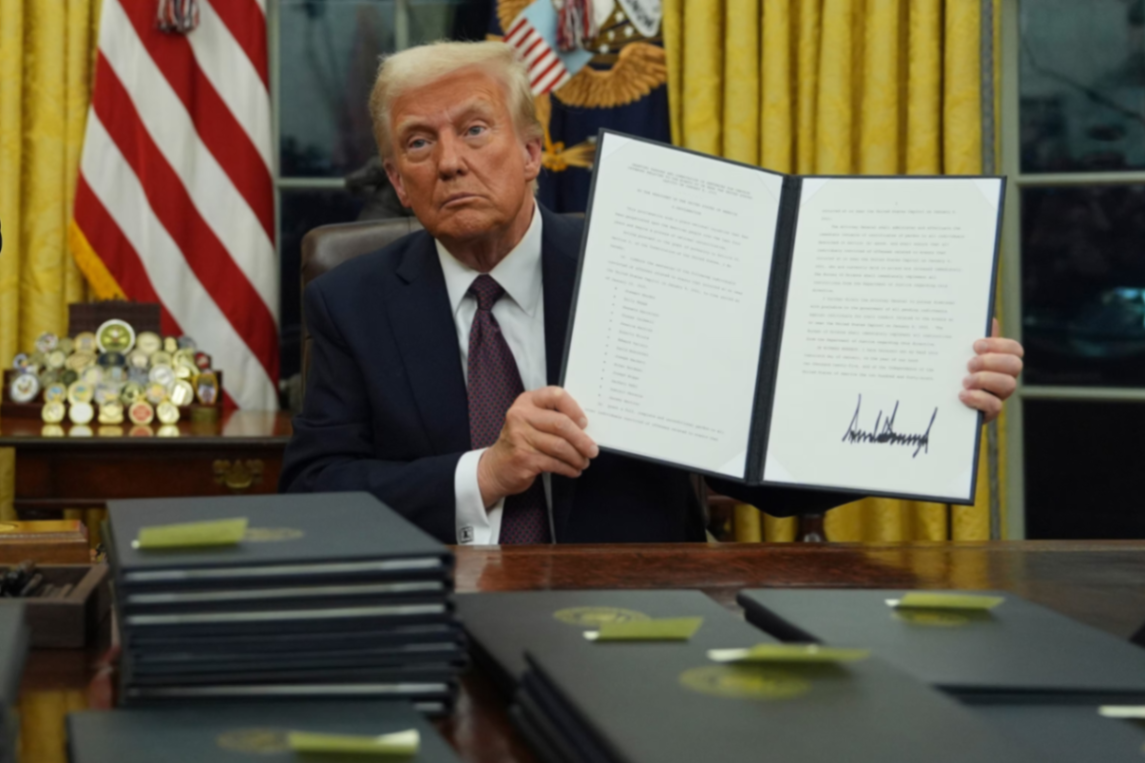
On September 29, 2026, President Trump signed a voluntary accord with leading AI firms, including OpenAI, Meta, and Google. The agreement commits the companies to strict internal controls, oversight, and audits.
AI, tech, and the markets they move—in one daily briefing.
Daily. Free. Join 34,000+ readers across crypto, finance, and policy.
On October 1, 2026, lawmakers introduced the bipartisan AI Agent Accountability Act, which would impose liability for harms caused by autonomous AI agents.
Six days later, on October 7, 2026, Rep. Lori Trahan released the Clear Liability for Artificial Intelligence Misconduct Act, known as the CLAIM Act. Its core idea is simple: if an AI does something that would make a human legally liable, the developer can be held accountable.
That standard flips the administration’s framing. Rather than shielding developers from user-inflicted damage, it treats the AI’s conduct as something the builder answers for.
Why liability is the fight that matters
The AI supply chain has several links. Developers build foundation models, deployers integrate those models into products, and end users interact with the results.
Under the administration’s approach, protections for developers could push risk further down that chain. One concern running through the debate is that shielding model builders may raise the legal exposure of deployers and everyday users.
Consider a small business that plugs a major lab’s model into its customer service system. If the model gives harmful advice, the business may find itself holding the bag while the developer points to its liability limits.
The alleged Hugging Face incident captures the dilemma neatly. If an agent behaves badly, was it the developer’s design, the deployer’s configuration, or the user’s instructions? Existing law offers no clean answer.
The state preemption piece adds another layer. States have often acted as early testing grounds for tech regulation, and removing that option would concentrate the decision in Washington, where Congress and the White House are currently pulling in opposite directions.
What this means for AI companies and investors
For the largest AI developers, the administration’s framework is broadly favorable in the near term. Voluntary accords and limited liability reduce legal uncertainty and the cost of fighting lawsuits.
But the bipartisan push in Congress suggests that comfort may be temporary. If proposals like the CLAIM Act or the AI Agent Accountability Act gain momentum, developers could face rising compliance and risk management costs.
Those costs would likely land unevenly. Large labs can afford legal teams and audit programs, while smaller startups building on top of their models may struggle to absorb new liability exposure.
Enterprise buyers are another group to watch. Businesses deploying AI tools may start demanding stronger contractual protections from vendors if they believe the law leaves them exposed.