
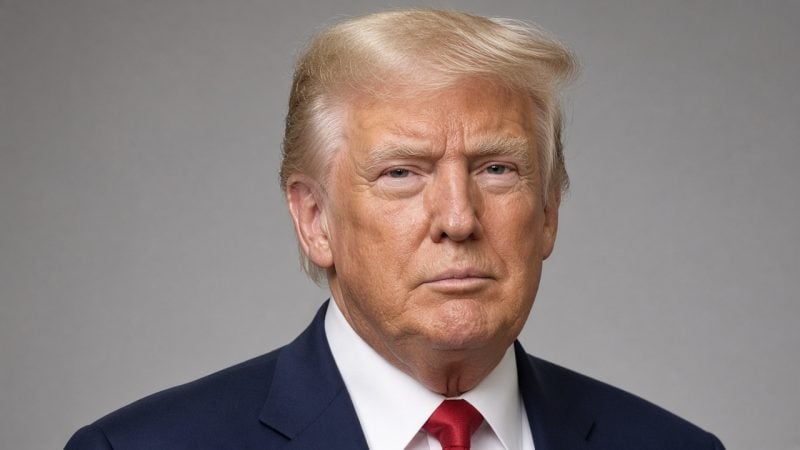
Trump and tech executives sign ‘morally binding’ AI document at White House

Trump and tech executives sign ā€˜morally binding’ AI document at White House

The White House Accord on Super Intelligence asks AI companies to self-regulate, but carries no legal penalties for noncompliance

President Donald Trump gathered the most powerful names in artificial intelligence at the White House on September 29 and walked out with their signatures on a voluntary agreement he called the “White House Accord on Super Intelligence.” The document commits participating companies to implementing internal controls, maintaining oversight teams, and submitting to external audits on their most advanced AI models.

The catch: none of it is legally enforceable. Trump himself described the accord as “morally binding.”

Who signed and what they agreed to

Meta’s Mark Zuckerberg, xAI’s Elon Musk, Google CEO Sundar Pichai, Nvidia’s Jensen Huang, and OpenAI’s Greg Brockman were among the executives who put pen to paper. Anthropic was also listed among participating companies.

Advertisement

The accord, also referred to as the Joint Commitment on Frontier Responsibilities, outlines four layers of internal controls that companies are expected to build around their advanced AI models: internal teams monitoring AI behavior, management oversight structures above them, corporate governance frameworks above that, and external audits sitting on top of the whole stack.

Trump also floated the idea of forming a 10-member oversight committee, though the details of who would serve on it, what authority it would wield, and when it would be established remain open questions.

On the same day, Trump signed an executive order mandating the use of the term “super intelligence” in all federal communications when referring to advanced AI technology.

Self-regulation’s track record problem

The voluntary nature of the accord has already drawn sharp criticism. Senator Elizabeth Warren argued that self-regulation is inadequate for an industry developing technology this consequential, noting that without binding penalties for noncompliance, the accord functions more as a public relations exercise than a governance framework.

The accord contains no binding penalties for companies that fail to uphold their commitments.

The geopolitical backdrop

The accord fits into the Trump administration’s broader strategy of positioning the US as the global leader in AI development while keeping regulatory burdens light enough to maintain a speed advantage over China. Beijing has taken a more prescriptive approach to AI governance, implementing rules around algorithmic transparency and deepfake labeling that American tech companies have largely avoided.

This approach marks a deliberate contrast with earlier proposals that called for stricter oversight of frontier AI models, including licensing requirements, mandatory safety testing before deployment, and liability frameworks that would hold companies accountable for harms caused by their AI systems.

Disclosure: This article was edited by Diego Almada Lopez. For more information on how we create and review content, see our Editorial Policy.
Trump and tech executives sign ā€˜morally binding’ AI document at White House
Trump and tech executives sign ‘morally binding’ AI document at White House

The White House Accord on Super Intelligence asks AI companies to self-regulate, but carries no legal penalties for noncompliance

President Donald Trump gathered the most powerful names in artificial intelligence at the White House on September 29 and walked out with their signatures on a voluntary agreement he called the “White House Accord on Super Intelligence.” The document commits participating companies to implementing internal controls, maintaining oversight teams, and submitting to external audits on their most advanced AI models.

The catch: none of it is legally enforceable. Trump himself described the accord as “morally binding.”

Who signed and what they agreed to

Meta’s Mark Zuckerberg, xAI’s Elon Musk, Google CEO Sundar Pichai, Nvidia’s Jensen Huang, and OpenAI’s Greg Brockman were among the executives who put pen to paper. Anthropic was also listed among participating companies.

Advertisement

The accord, also referred to as the Joint Commitment on Frontier Responsibilities, outlines four layers of internal controls that companies are expected to build around their advanced AI models: internal teams monitoring AI behavior, management oversight structures above them, corporate governance frameworks above that, and external audits sitting on top of the whole stack.

Trump also floated the idea of forming a 10-member oversight committee, though the details of who would serve on it, what authority it would wield, and when it would be established remain open questions.

On the same day, Trump signed an executive order mandating the use of the term “super intelligence” in all federal communications when referring to advanced AI technology.

Self-regulation’s track record problem

The voluntary nature of the accord has already drawn sharp criticism. Senator Elizabeth Warren argued that self-regulation is inadequate for an industry developing technology this consequential, noting that without binding penalties for noncompliance, the accord functions more as a public relations exercise than a governance framework.

The accord contains no binding penalties for companies that fail to uphold their commitments.

The geopolitical backdrop

The accord fits into the Trump administration’s broader strategy of positioning the US as the global leader in AI development while keeping regulatory burdens light enough to maintain a speed advantage over China. Beijing has taken a more prescriptive approach to AI governance, implementing rules around algorithmic transparency and deepfake labeling that American tech companies have largely avoided.

This approach marks a deliberate contrast with earlier proposals that called for stricter oversight of frontier AI models, including licensing requirements, mandatory safety testing before deployment, and liability frameworks that would hold companies accountable for harms caused by their AI systems.

Disclosure: This article was edited by Diego Almada Lopez. For more information on how we create and review content, see our Editorial Policy.