
Stablecoin Report Released by Key U.S. Advisory Panel

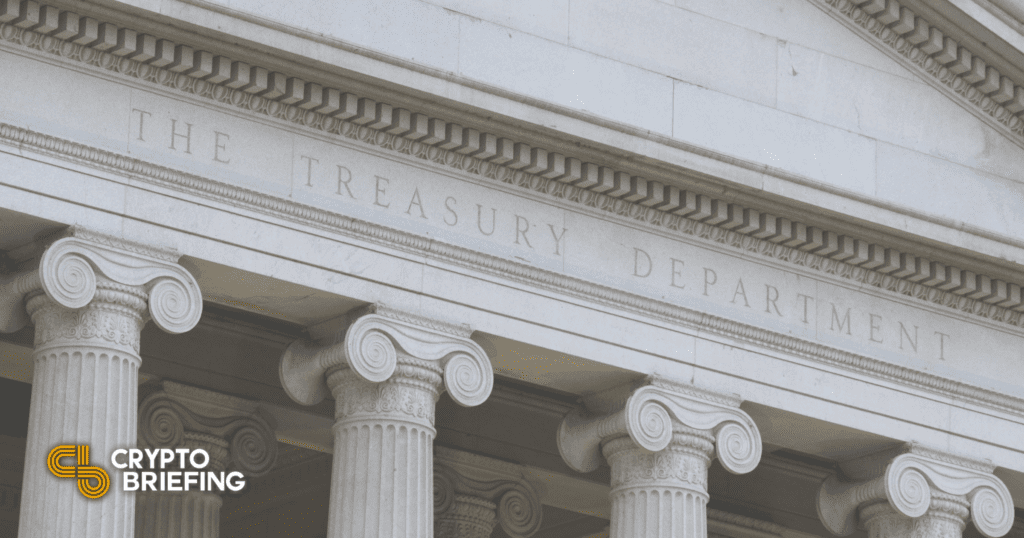
Shutterstock cover by Chris Hill

Stablecoin Report Released by Key U.S. Advisory Panel

The President's Working Group on Financial Markets has recommended swift and comprehensive regulatory legislation.

A highly-anticipated report from the President’s Working Group on Financial Markets was released today. The report urged swift legislative action to extend federal oversight to the rapidly-growing stablecoin market.

PWG Urges Stablecoin Regulation

The President’s Working Group on Financial Markets (PWG), in conjunction with Federal Deposit Insurance Corporation (FDIC) and the Office of the Comptroller of the Currency (OCC), has released a report on stablecoins recommending that Congress exercise its broad legislative power to regulate the issuance and custody of stablecoins in the United States. The report was published earlier today by the U.S. Department of the Treasury.Ā 

The report has recommended ā€œthat Congress act promptly to enact legislation to ensure that payment stablecoins and payment stablecoin arrangements are subject to a federal prudential framework on a consistent and comprehensive basis.ā€

In addition to standard AML/CFT concerns, the report identifies three particular risks to the national interest posed by an unregulated stablecoin market: the risk posed by ā€œstablecoin runs,ā€ the risks associated with the stability of stablecoins as a payment system, and the systemic risk of ā€œconcentration of economic power.ā€

Advertisement

To mitigate the risk of so-called ā€œstablecoin runsā€ā€”a hypothetical scenario, named for real-world bank runs, in which depositors all attempt at once to redeem their stablecoins for cash only to find that the issuing entity does have enough to cover the demand—the report recommends legislation requiring stablecoin issuers to be ā€œinsured depository institutions,ā€ which are subject to ā€œappropriate supervision and regulation.ā€Ā Ā 

To address the second main concern involving the stability of stablecoins as a payment system, the report recommends that Congress empower federal authorities to require ā€œany entity that performs activities that are critical to the functioning of the stablecoin arrangement to meet appropriate risk-management standards.ā€ This would entail submission to federal oversight.Ā 

The third primary concern listed in the report is the risk of ā€œconcentration of economic power,ā€ which the report suggests mitigating by requiring stablecoin issuers ā€œto comply with activities restrictions that limit affiliation with commercial entities.ā€

The report urges prompt action on behalf of Congress, writing:

ā€œThe rapid growth of stablecoins increases the urgency of this work. Failure to act risks growth of payment stablecoins without adequate protection for users, the financial system, and the broader economy. In contrast, a regulatory framework that supports confidence in payment stablecoins, in normal times and in periods of stress, could increase the likelihood of stablecoins supporting beneficial payments options.ā€

In addition to requesting Congressional action regarding the regulation of stablecoins, the report also asserts that ā€œstablecoin arrangements and activities may implicate the jurisdiction of the SEC and/or CFTC,ā€ writing that:

ā€œStablecoins, or certain parts of stablecoin arrangements, may be securities, commodities, and/or derivatives. Moreover, much of the trading, lending, and borrowing activity currently fueled by stablecoins on digital asset trading platforms and within DeFi similarly may constitute securities and/or derivatives transactions that must be conducted in compliance with federal securities lawsā€¦ā€

While it urges Congressional expediency to address stablecoin arrangements, the report warns that, in the meantime, these agencies ā€œwill continue to use their existing authorities to address these prudential risks to the extent possible.ā€

Disclaimer: At the time of writing, the author of this piece owned BTC, ETH, and several other cryptocurrencies.

Disclosure: This article was edited by Jacob Oliver. For more information on how we create and review content, see our Editorial Policy.
Stablecoin Report Released by Key U.S. Advisory Panel

The President's Working Group on Financial Markets has recommended swift and comprehensive regulatory legislation.

Shutterstock cover by Chris Hill

A highly-anticipated report from the President’s Working Group on Financial Markets was released today. The report urged swift legislative action to extend federal oversight to the rapidly-growing stablecoin market.

PWG Urges Stablecoin Regulation

The President’s Working Group on Financial Markets (PWG), in conjunction with Federal Deposit Insurance Corporation (FDIC) and the Office of the Comptroller of the Currency (OCC), has released a report on stablecoins recommending that Congress exercise its broad legislative power to regulate the issuance and custody of stablecoins in the United States. The report was published earlier today by the U.S. Department of the Treasury.Ā 

The report has recommended ā€œthat Congress act promptly to enact legislation to ensure that payment stablecoins and payment stablecoin arrangements are subject to a federal prudential framework on a consistent and comprehensive basis.ā€

In addition to standard AML/CFT concerns, the report identifies three particular risks to the national interest posed by an unregulated stablecoin market: the risk posed by ā€œstablecoin runs,ā€ the risks associated with the stability of stablecoins as a payment system, and the systemic risk of ā€œconcentration of economic power.ā€

Advertisement

To mitigate the risk of so-called ā€œstablecoin runsā€ā€”a hypothetical scenario, named for real-world bank runs, in which depositors all attempt at once to redeem their stablecoins for cash only to find that the issuing entity does have enough to cover the demand—the report recommends legislation requiring stablecoin issuers to be ā€œinsured depository institutions,ā€ which are subject to ā€œappropriate supervision and regulation.ā€Ā Ā 

To address the second main concern involving the stability of stablecoins as a payment system, the report recommends that Congress empower federal authorities to require ā€œany entity that performs activities that are critical to the functioning of the stablecoin arrangement to meet appropriate risk-management standards.ā€ This would entail submission to federal oversight.Ā 

The third primary concern listed in the report is the risk of ā€œconcentration of economic power,ā€ which the report suggests mitigating by requiring stablecoin issuers ā€œto comply with activities restrictions that limit affiliation with commercial entities.ā€

The report urges prompt action on behalf of Congress, writing:

ā€œThe rapid growth of stablecoins increases the urgency of this work. Failure to act risks growth of payment stablecoins without adequate protection for users, the financial system, and the broader economy. In contrast, a regulatory framework that supports confidence in payment stablecoins, in normal times and in periods of stress, could increase the likelihood of stablecoins supporting beneficial payments options.ā€

In addition to requesting Congressional action regarding the regulation of stablecoins, the report also asserts that ā€œstablecoin arrangements and activities may implicate the jurisdiction of the SEC and/or CFTC,ā€ writing that:

ā€œStablecoins, or certain parts of stablecoin arrangements, may be securities, commodities, and/or derivatives. Moreover, much of the trading, lending, and borrowing activity currently fueled by stablecoins on digital asset trading platforms and within DeFi similarly may constitute securities and/or derivatives transactions that must be conducted in compliance with federal securities lawsā€¦ā€

While it urges Congressional expediency to address stablecoin arrangements, the report warns that, in the meantime, these agencies ā€œwill continue to use their existing authorities to address these prudential risks to the extent possible.ā€

Disclaimer: At the time of writing, the author of this piece owned BTC, ETH, and several other cryptocurrencies.

Disclosure: This article was edited by Jacob Oliver. For more information on how we create and review content, see our Editorial Policy.