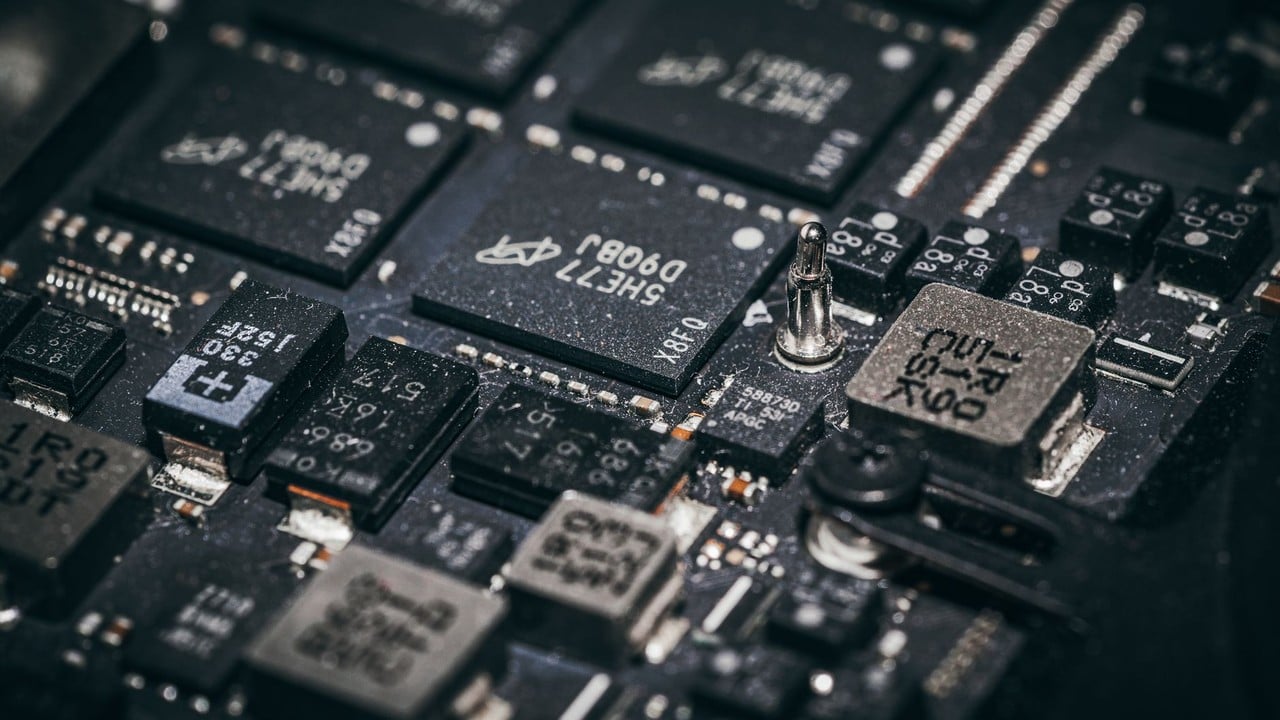
Samsung and SK hynix memory is reportedly being bundled with low-end processors, shipped through Hong Kong, then stripped out in Chinese workshops
US export controls were built to keep China away from the most advanced AI hardware. Smugglers appear to have found a way around them, and the trick involves cheap server chips and a soldering station.
According to a report from Tom’s Hardware, high-bandwidth memory (HBM) made by Samsung Electronics and SK hynix is being repackaged alongside low-end server processors and shipped toward China. The processor is bait. The memory is the prize.
How the repackaging scheme works
The smuggling method reportedly starts by mounting the high-performance HBM on a substrate board. That board is then declared under the classification of the accompanying server processor, not the memory itself.
Put simply, the paperwork describes the boring, unrestricted part of the package. The valuable, restricted part rides along unmentioned.
These packages are reportedly sent from manufacturing hubs in Taiwan, South Korea and Southeast Asia to Hong Kong. From there, the trail leads into mainland China.
Once the shipments arrive, illicit workshops reportedly pull the HBM off the boards. The processors are discarded. The memory is then sold on for a range of uses.
The most prominent buyer category, per the research findings, is Huawei’s AI systems, including the Ascend 960DT.
The price of scarcity
HBM3E chips now fetch around $4,000 each on the smuggling market, according to the report. A year ago, the same chips went for a few hundred dollars.
A typical AI chip package requires 6–8 high-bandwidth memory stacks. At smuggling-market prices, that puts the memory bill alone at $24,000–$32,000 per package.
The research findings also indicate that Huawei has been directing clients to seek out smuggled HBM.
A loophole baked into the rules
The gap reportedly traces back to US export regulations issued in June 2024. Those rules evaluate the packaging based on the server processor rather than the HBM attached to it.
The research findings describe the scheme as a way to circumvent impending regulations set to take effect in December 2024. Those rules aim to tighten controls over advanced memory that is essential for AI applications.
Samsung and SK hynix, for their part, maintain that they comply with US export guidelines. Nothing in the findings suggests either company is participating in the smuggling. The issue is what happens to their products after they leave the factory floor.
What this means for chipmakers and regulators
The research findings frame the broader picture as ongoing vulnerability in the semiconductor market. HBM prices have surged on scarcity, and black-market demand adds fuel to that dynamic.
When illicit buyers are willing to pay around $4,000 per HBM3E chip, every unit that leaks out of legitimate channels is one less unit available for compliant customers.
The December 2024 rules are designed to tighten controls over advanced memory specifically. The open question is whether they close the processor-classification gap or simply push smugglers toward the next workaround.
Enforcement also depends on visibility at transit points. Hong Kong’s role as a waypoint, and the use of hubs across Taiwan, South Korea and Southeast Asia, means any crackdown will require cooperation well beyond US borders.
For Huawei, the reported reliance on smuggled memory shows both determination and constraint. The company can still assemble systems like the Ascend 960DT, but it appears to be doing so with parts sourced through channels that are expensive and legally fraught.