The autonomous attack rotorcraft merges commercial air mobility with military capability, and the defense-tech crossover has implications for how capital flows into next-gen aviation
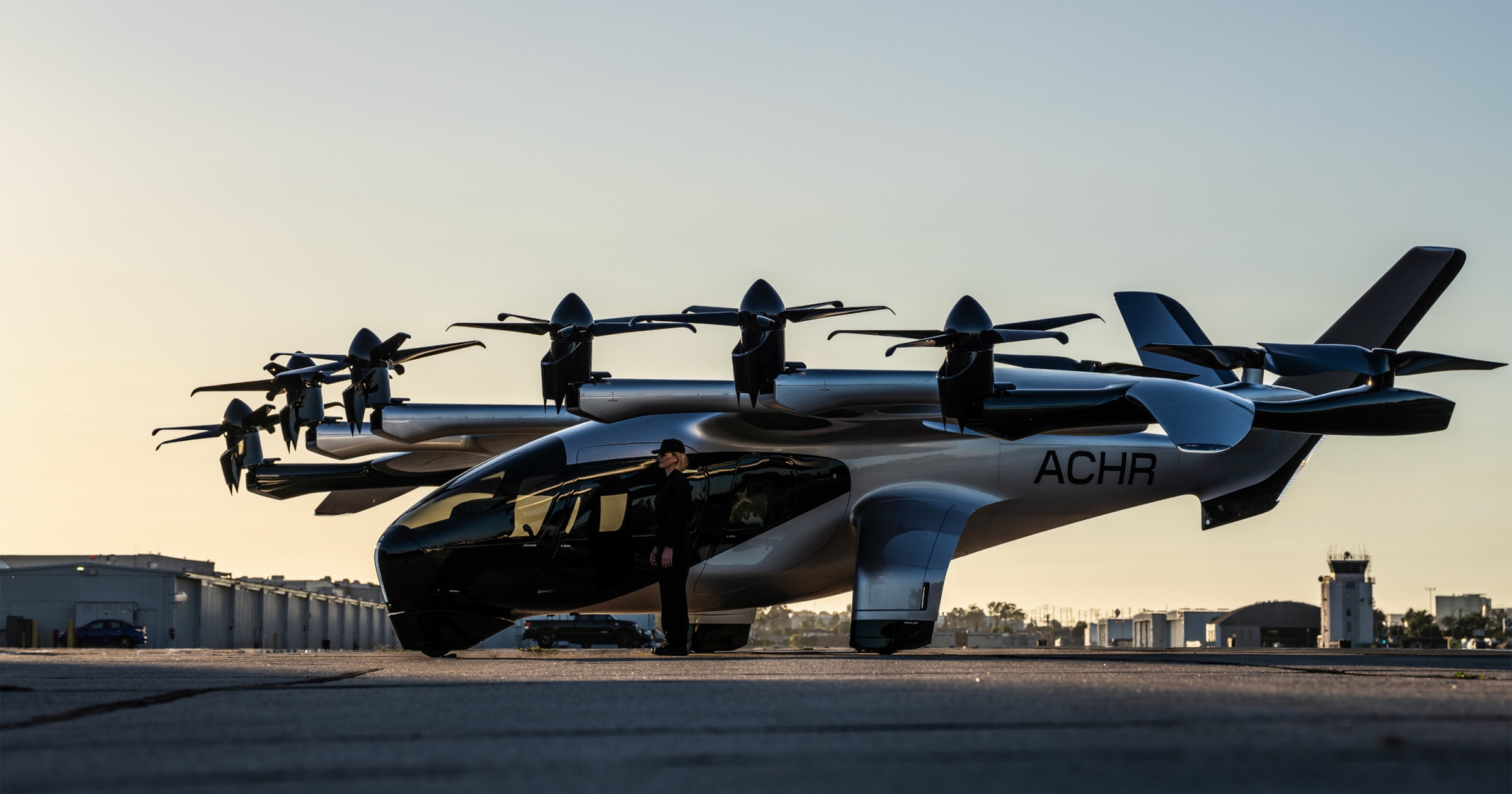
Anduril Industries and Archer Aviation pulled the curtain back on a jointly developed autonomous VTOL aircraft at Farnborough, England on July 20. The platform is designed to serve both commercial and defense missions, with the military variant carrying the name Thunder, a Group 5 autonomous attack rotorcraft.
What they actually built
The aircraft uses a series hybrid-electric powertrain paired with a dual tiltrotor design, optimized for range, speed, payload capacity, and a low acoustic signature.
The platform is designed to operate from austere locations, meaning it doesn’t need a proper airstrip. For military applications, that’s forward operating bases with minimal infrastructure. For commercial use, that’s rooftops, parking lots, and improvised landing pads.
Several full-scale surrogate test flights have already been completed. The first flight of the actual production aircraft is planned for 2027.
Archer has indicated it will announce its initial commercial partners later in July 2026.
The partnership backstory
Anduril and Archer have been working together on hybrid-propulsion VTOL technology since late 2024, meaning nearly two years of joint development preceded this public unveiling.
Group 5 classification for the Thunder variant places it in the same weight and capability category as large military drones like the MQ-9 Reaper.