
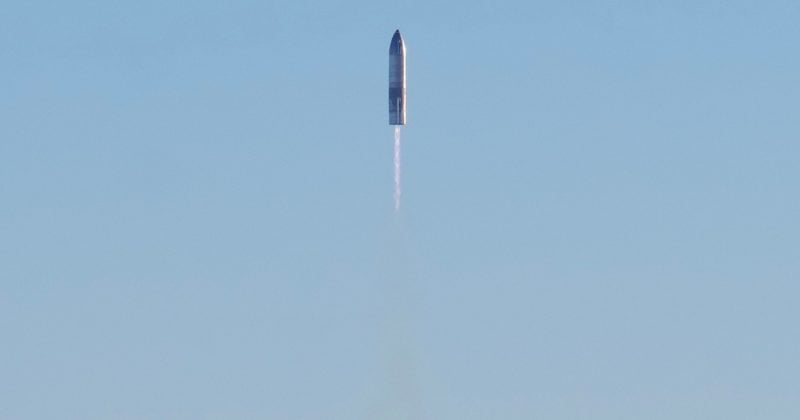
Photo: Forest Katsch / Wikimedia Commons / CC BY-SA 4.0 (https://creativecommons.org/licenses/by-sa/4.0)
SpaceX revenue nearly doubles in first public earnings, and crypto markets are paying attention
The newly public space giant posted $7.8 billion in Q2 revenue, while tokenized SpaceX stock creates a parallel investment narrative in crypto markets.
SpaceX just dropped its first quarterly earnings report as a public company, and the numbers are the kind that make Wall Street analysts spill their coffee. The Elon Musk-led space enterprise posted $7.8 billion in Q2 2026 revenue, a 92% jump from roughly $4.1 billion in the same quarter last year.
That figure beat Wall Street expectations of approximately $6.9 billion.
Starlink is the real engine here
Starlink generated $4.3 billion in revenue during Q2, a 66% increase year-over-year. Its subscriber count doubled to 12 million users.
For the full year of 2025, Starlink contributed $11.4 billion out of SpaceX’s total $18.7 billion in revenue. That’s 61% of the entire business coming from beaming internet from space.
Starlink’s operating income hit $1.66 billion in Q2. SpaceX’s full-year 2025 revenue of $18.7 billion represented a 33% increase from the prior year.
AI, tech, and the markets they move—in one daily briefing.
Daily. Free. Join 34,000+ readers across crypto, finance, and policy.
The fine print investors shouldn’t ignore
Despite all the top-line fireworks, SpaceX reported a net loss of $541 million in Q2. The adjusted EBITDA number paints a rosier picture at $3.5 billion, reflecting 191% year-over-year growth.
SpaceX completed its IPO on the Nasdaq in June 2026 under the ticker SPCX, making Q2 its debut as a reporting public company. The stock reportedly faced some pressure post-earnings despite the revenue beat.
Why crypto markets care about a rocket company
The concept of tokenized SpaceX stock has gained traction in crypto circles, offering a mechanism for investors to gain exposure to the company’s trajectory outside conventional equity markets. Before the IPO, SpaceX shares were notoriously difficult to access, limited to accredited investors and secondary market transactions with high minimums.
Starlink’s doubling of its subscriber base to 12 million also has implications for decentralized networks. More global connectivity means more potential users for Web3 applications, particularly in underserved regions where traditional internet infrastructure is unreliable or nonexistent.