
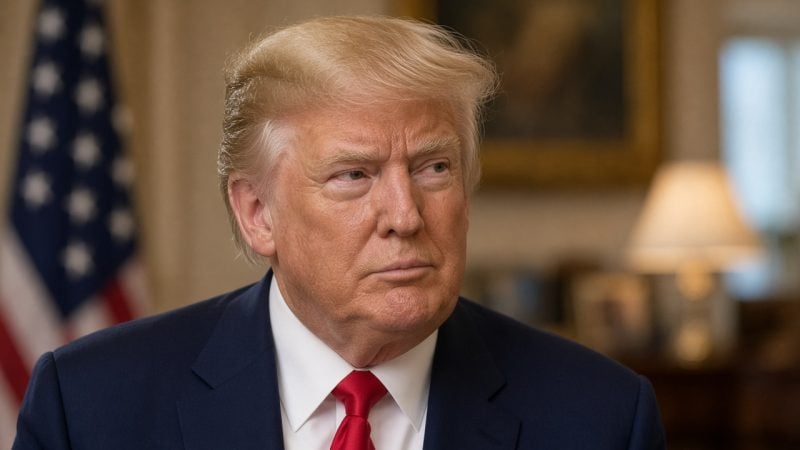
Trump signs security agreement with Denmark and Greenland, expanding permanent US Arctic presence

Trump signs security agreement with Denmark and Greenland, expanding permanent US Arctic presence

The deal grants the US permanent control over Greenland security operations while banning non-NATO adversaries from the territory, updating a defense pact that dates back to 1951.

President Trump has locked down what he’s calling an “Infinite Life” Agreement with Denmark and Greenland, granting the United States permanent control over security operations on the world’s largest island. The deal, announced on September 18, represents the most significant expansion of US military positioning in the Arctic since the Cold War.

The agreement bans non-NATO adversaries from establishing military bases or deploying personnel in Greenland, while introducing investment screening measures targeting adversarial nations in sensitive sectors.

What the deal actually includes

The new accord updates the 1951 US-Denmark Defense of Greenland Agreement, which was last amended in 2004. That original treaty gave the US basing rights at Thule Air Base (now Pituffik Space Base), but the new version goes considerably further.

Permanent US access and operational control over Greenland’s security architecture is the centerpiece. The agreement also implements screening mechanisms for foreign investments, particularly in critical minerals.

Advertisement

Secretary of State Marco Rubio described it as a “historic deal” that comes at zero cost to US taxpayers.

A formal signing ceremony is scheduled for September 22-23 during the UN General Assembly.

Denmark and Greenland’s position

Danish Prime Minister Mette Frederiksen stated that the agreement strengthens Arctic security within the NATO framework.

Greenlandic Prime Minister Jens-Frederik Nielsen confirmed that the accord respects Danish sovereignty and preserves Greenland’s right to self-determination. No territory is being transferred to the United States. This distinction matters enormously given the backdrop of Trump’s earlier rhetoric about acquiring Greenland outright, comments that caused a diplomatic firestorm when they first surfaced during his first term.

The self-determination clause is particularly significant for Greenland’s 57,000 residents. The island has been moving gradually toward greater autonomy from Denmark since gaining self-governance in 2009.

Why the Arctic matters now

The investment screening provisions in the agreement are aimed squarely at China’s playbook of acquiring stakes in critical mineral operations. Greenland has previously seen Chinese-linked companies express interest in rare earth mining projects, and the new framework appears designed to shut that door permanently.

Greenland’s rare earth deposits have been estimated to be among the largest outside of China, which currently dominates global production of these elements.

Disclosure: This article was edited by Editorial Team. For more information on how we create and review content, see our Editorial Policy.
Trump signs security agreement with Denmark and Greenland, expanding permanent US Arctic presence

The deal grants the US permanent control over Greenland security operations while banning non-NATO adversaries from the territory, updating a defense pact that dates back to 1951.

President Trump has locked down what he’s calling an “Infinite Life” Agreement with Denmark and Greenland, granting the United States permanent control over security operations on the world’s largest island. The deal, announced on September 18, represents the most significant expansion of US military positioning in the Arctic since the Cold War.

The agreement bans non-NATO adversaries from establishing military bases or deploying personnel in Greenland, while introducing investment screening measures targeting adversarial nations in sensitive sectors.

What the deal actually includes

The new accord updates the 1951 US-Denmark Defense of Greenland Agreement, which was last amended in 2004. That original treaty gave the US basing rights at Thule Air Base (now Pituffik Space Base), but the new version goes considerably further.

Permanent US access and operational control over Greenland’s security architecture is the centerpiece. The agreement also implements screening mechanisms for foreign investments, particularly in critical minerals.

Advertisement

Secretary of State Marco Rubio described it as a “historic deal” that comes at zero cost to US taxpayers.

A formal signing ceremony is scheduled for September 22-23 during the UN General Assembly.

Denmark and Greenland’s position

Danish Prime Minister Mette Frederiksen stated that the agreement strengthens Arctic security within the NATO framework.

Greenlandic Prime Minister Jens-Frederik Nielsen confirmed that the accord respects Danish sovereignty and preserves Greenland’s right to self-determination. No territory is being transferred to the United States. This distinction matters enormously given the backdrop of Trump’s earlier rhetoric about acquiring Greenland outright, comments that caused a diplomatic firestorm when they first surfaced during his first term.

The self-determination clause is particularly significant for Greenland’s 57,000 residents. The island has been moving gradually toward greater autonomy from Denmark since gaining self-governance in 2009.

Why the Arctic matters now

The investment screening provisions in the agreement are aimed squarely at China’s playbook of acquiring stakes in critical mineral operations. Greenland has previously seen Chinese-linked companies express interest in rare earth mining projects, and the new framework appears designed to shut that door permanently.

Greenland’s rare earth deposits have been estimated to be among the largest outside of China, which currently dominates global production of these elements.

Disclosure: This article was edited by Editorial Team. For more information on how we create and review content, see our Editorial Policy.