
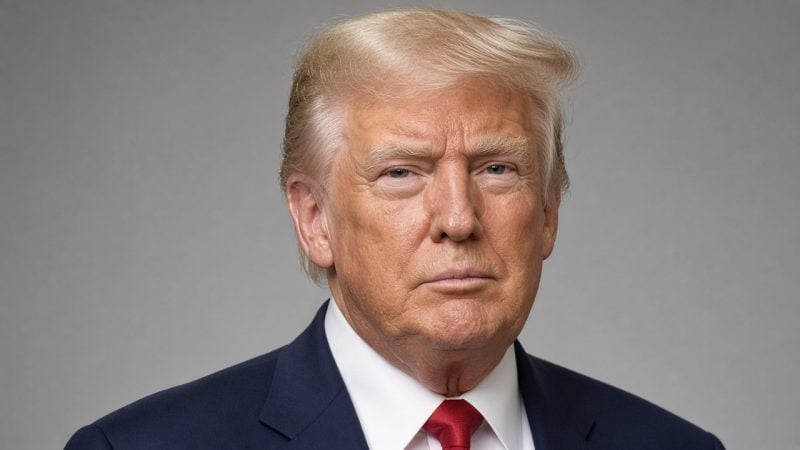
Trump, Xi Jinping prepare for summit as Beijing pushes back on US space militarization claims

Trump, Xi Jinping prepare for summit as Beijing pushes back on US space militarization claims

Pentagon's first official acknowledgment of on-orbit weapons draws sharp rebuke from China days before a critical diplomatic meeting

The Pentagon just told the world it has weapons in orbit. China’s response was roughly what you’d expect.

On September 15, US Air Force Secretary Troy E. Meink confirmed the deployment of “on-orbit space control weapons” during a conference, marking the first time a Pentagon official has publicly acknowledged the United States has active military capabilities stationed in space. The timing, about a week before President Donald Trump is set to meet Chinese President Xi Jinping, is either spectacularly poor or spectacularly deliberate.

China fires back, diplomatically speaking

Beijing didn’t wait long. The day after Meink’s remarks, Chinese Foreign Ministry spokesman Guo Jiakun called on the US to halt its military expansion beyond Earth’s atmosphere. He framed the disclosure as destabilizing, warning it could trigger an arms race in a domain where no one really wants one.

That summit is now set for September 23-24 in the US, where Trump and Xi are expected to discuss trade, artificial intelligence, and ongoing technology restrictions. The agenda was supposed to signal a thaw following a May summit in Beijing. Instead, the conversation about orbital weapons has turned the diplomatic temperature back up.

Advertisement

The Pentagon doubles down on space as a warfighting domain

Meink’s confirmation wasn’t the only signal coming from the US defense establishment. Lt. Gen. Gregory Gagnon of the US Space Force stated that preparations are underway for combat operations extending into cislunar space. That’s the vast region between Earth and the Moon, an area roughly 240,000 miles deep that until recently was discussed almost exclusively in the context of scientific exploration.

The US Space Force was established in 2019, but its operational posture has grown significantly more assertive. Meink’s statement represents the first official acknowledgment that the US has moved from planning to deployment when it comes to space-based weapons, a distinction that carries real weight in international security circles.

For China, the disclosure validates years of warnings about American militarization of space. For the US, it’s a deterrence signal aimed squarely at Beijing and Moscow, both of which have tested anti-satellite weapons and expanded their own orbital military programs.

Trade tensions add fuel

The Pentagon recently expanded its 1260H list, a blacklist of companies with alleged ties to the Chinese military. The updated roster now includes major Chinese firms such as Alibaba, Baidu, and BYD.

That list matters because it restricts US investment in the named companies and sends a chilling signal to global capital markets about the risks of doing business with Chinese tech and industrial giants. Adding household names like Alibaba, one of the world’s largest e-commerce platforms, and BYD, a dominant electric vehicle manufacturer, raises the stakes considerably.

What this means for markets and the broader competition

The 1260H list expansion could force institutional investors to reassess positions in Chinese tech companies, particularly those with dual-use technology capabilities. Alibaba and Baidu are deeply embedded in global supply chains and AI development, meaning restrictions on these firms have knock-on effects well beyond their stock prices.

The risk is that space militarization becomes a new axis of competition that’s even harder to negotiate than tariffs. The Outer Space Treaty of 1967, while still technically in force, was written before smartphones existed, let alone orbital weapons platforms.

Disclosure: This article was edited by Editorial Team. For more information on how we create and review content, see our Editorial Policy.
Trump, Xi Jinping prepare for summit as Beijing pushes back on US space militarization claims

Pentagon's first official acknowledgment of on-orbit weapons draws sharp rebuke from China days before a critical diplomatic meeting

The Pentagon just told the world it has weapons in orbit. China’s response was roughly what you’d expect.

On September 15, US Air Force Secretary Troy E. Meink confirmed the deployment of “on-orbit space control weapons” during a conference, marking the first time a Pentagon official has publicly acknowledged the United States has active military capabilities stationed in space. The timing, about a week before President Donald Trump is set to meet Chinese President Xi Jinping, is either spectacularly poor or spectacularly deliberate.

China fires back, diplomatically speaking

Beijing didn’t wait long. The day after Meink’s remarks, Chinese Foreign Ministry spokesman Guo Jiakun called on the US to halt its military expansion beyond Earth’s atmosphere. He framed the disclosure as destabilizing, warning it could trigger an arms race in a domain where no one really wants one.

That summit is now set for September 23-24 in the US, where Trump and Xi are expected to discuss trade, artificial intelligence, and ongoing technology restrictions. The agenda was supposed to signal a thaw following a May summit in Beijing. Instead, the conversation about orbital weapons has turned the diplomatic temperature back up.

Advertisement

The Pentagon doubles down on space as a warfighting domain

Meink’s confirmation wasn’t the only signal coming from the US defense establishment. Lt. Gen. Gregory Gagnon of the US Space Force stated that preparations are underway for combat operations extending into cislunar space. That’s the vast region between Earth and the Moon, an area roughly 240,000 miles deep that until recently was discussed almost exclusively in the context of scientific exploration.

The US Space Force was established in 2019, but its operational posture has grown significantly more assertive. Meink’s statement represents the first official acknowledgment that the US has moved from planning to deployment when it comes to space-based weapons, a distinction that carries real weight in international security circles.

For China, the disclosure validates years of warnings about American militarization of space. For the US, it’s a deterrence signal aimed squarely at Beijing and Moscow, both of which have tested anti-satellite weapons and expanded their own orbital military programs.

Trade tensions add fuel

The Pentagon recently expanded its 1260H list, a blacklist of companies with alleged ties to the Chinese military. The updated roster now includes major Chinese firms such as Alibaba, Baidu, and BYD.

That list matters because it restricts US investment in the named companies and sends a chilling signal to global capital markets about the risks of doing business with Chinese tech and industrial giants. Adding household names like Alibaba, one of the world’s largest e-commerce platforms, and BYD, a dominant electric vehicle manufacturer, raises the stakes considerably.

What this means for markets and the broader competition

The 1260H list expansion could force institutional investors to reassess positions in Chinese tech companies, particularly those with dual-use technology capabilities. Alibaba and Baidu are deeply embedded in global supply chains and AI development, meaning restrictions on these firms have knock-on effects well beyond their stock prices.

The risk is that space militarization becomes a new axis of competition that’s even harder to negotiate than tariffs. The Outer Space Treaty of 1967, while still technically in force, was written before smartphones existed, let alone orbital weapons platforms.

Disclosure: This article was edited by Editorial Team. For more information on how we create and review content, see our Editorial Policy.