
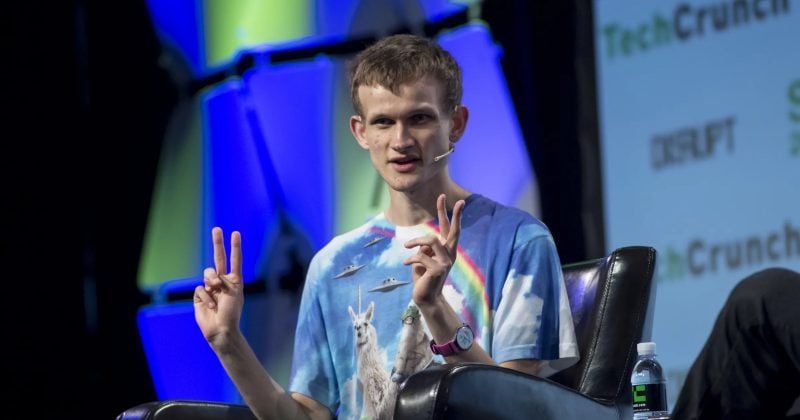
Vitalik Buterin vibe-codes anonymous billboard demo on Aztec
Ethereum's co-founder built a privacy-preserving message board prototype using AI moderation and zero-knowledge proofs, and he did it with vibe coding


Ethereum co founder Vitalik Buterin has released a working demo of an anonymous message board on Aztec that combines private posting with onchain moderation rules and deposit based spam controls.
Buterin shared the project on Farcaster, describing it as a “vibe coded” toy version of an anonymous billboard concept he outlined in 2022. He said the project remains in its early stages but can already support nontrivial functionality. The code is publicly available through his GitHub account.
Users begin by depositing ETH through a contract on Ethereum. They can then claim the deposit privately on Aztec, publish messages and later return the funds to Ethereum.
Posts do not include the sender’s address in publicly visible transaction data and cannot be linked to the original Ethereum deposit. Withdrawals reveal the Ethereum address receiving the funds, while the anonymity pool consists of depositors who have not yet withdrawn.
The deposit also determines how frequently a user can post. A deposit of 0.001 ETH allows approximately one message per hour, while 0.005 ETH supports five and 0.01 ETH supports ten. The funds serve as collateral for the posting system rather than a fee and can eventually be withdrawn.
The demo assigns a censor address when the contract is deployed. That address can flag posts as immoral, remove them from the default feed and impose a longer waiting period before the author can publish again.
Users can still choose to view flagged content through a separate option, meaning moderation hides posts by default rather than permanently deleting them from the public record. The censor can also transfer its authority to another Aztec address.
AI, tech, and the markets they move—in one daily briefing.
Daily. Free. Join 34,000+ readers across crypto, finance, and policy.
The rules used to judge content are stored onchain and can be read by the app, its command line interface and the moderation system.
A local language model monitors new posts and checks them against the policy. The current configuration uses the Qwen 3.5 2B model through llama.cpp, then submits an onchain flag when it identifies a violation. The model operates locally rather than through an external AI service.
The structure means the moderation policy is public and verifiable, while the actual judgment is performed by an AI system controlled by the censor. It does not remove the need to trust the moderator, but it makes the rules and resulting actions visible onchain.
Buterin’s original 2022 proposal examined how zero knowledge proofs could support forums where users remain anonymous while still carrying private reputation records. Under that model, moderation actions could affect a user’s ability to continue posting without publicly exposing which messages came from the same person.
The new demo implements a simpler version of that idea through private deposit notes, posting cooldowns and penalties tied to flagged messages.
Parts of the system have also undergone formal verification. The repository includes 70 proven theorems covering rate limits, privacy, moderation screening and deposit safety, with no unfinished proofs listed.
The project is still experimental. Its repository lists unresolved access control work and browser flows that have not been fully tested, meaning the demo should not be treated as a finished consumer platform.
Aztec allows applications to combine private and public execution within the same contract while settling their results to Ethereum. In Buterin’s demo, the user’s identity and posting history remain private while the messages, moderation policy and enforcement actions remain publicly verifiable.