The Ukrainian president called for a ceasefire, prisoner exchange, and a leaders' meeting at a neutral location as the war enters its fifth year.
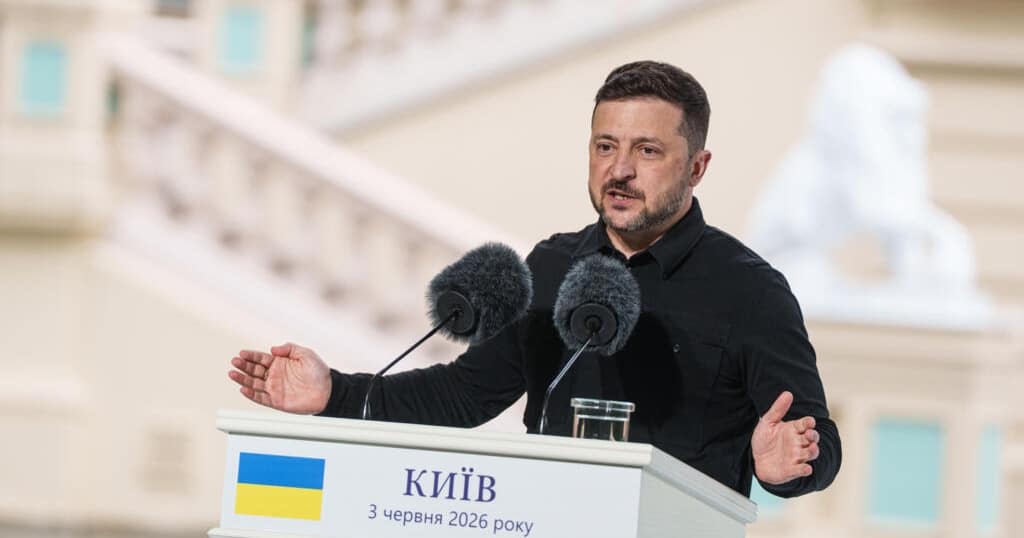
Ukrainian President Volodymyr Zelenskyy sent an open letter to Russian President Vladimir Putin on June 4, proposing direct peace talks to end a war that has now dragged on for more than four years. The letter calls for a face-to-face meeting at a neutral location, a full ceasefire during negotiations, and an all-for-all prisoner exchange.
The last time these two countries sat across from each other at a negotiating table was spring 2022, just weeks after Russia’s full-scale invasion began on February 24 of that year. Those early rounds took place in Belarus and Istanbul. They went nowhere.
What Zelenskyy is proposing
The open letter lays out several concrete conditions. First, any talks would need to happen at a neutral venue. Zelenskyy suggested Switzerland, Turkey, or Arab countries as potential hosts, explicitly ruling out political capitals like Moscow or Kyiv.
Second, he’s calling for a full ceasefire that would hold for the entire duration of negotiations.
Third, Zelenskyy proposed an all-for-all prisoner exchange, meaning every prisoner of war held by both sides would be returned.
The format itself is notable. Zelenskyy isn’t asking for a multilateral summit or a UN-brokered framework. He’s proposing a direct, leaders-only engagement between himself and Putin.
The Kremlin’s response, such as it is
Kremlin spokesman Dmitry Peskov acknowledged that the letter had been received. Rather than engaging with the specific proposals, the Kremlin’s public response amounted to saying that Zelenskyy could travel to Moscow “at any time.”
No formal acceptance, no counter-proposal, no timeline was provided as of June 5, 2026.
Why this matters beyond the battlefield
The conflict, entering its fifth year as of June 2026, has reshaped global energy markets and agricultural supply chains. Ukraine and Russia are major grain exporters, and the war has disrupted shipping routes and production capacity. A ceasefire could ease volatility in oil, natural gas, and commodity prices, particularly in Europe.