CoinShares says data center bans could make Bitcoin miners’ power assets more valuable
CoinShares says restrictions on new AI data centers could benefit miners with existing power connections, but signed tenants remain critical to capturing higher valuations.
Restrictions on new data center construction following the US midterm elections could increase the value of existing Bitcoin mining infrastructure, although companies with paying AI tenants stand to benefit most, according to Benoît Pellevoizin, managing director of CoinShares France.
In a written interview with Crypto Briefing, Pellevoizin said growing opposition to AI data centers is making existing grid connections more valuable as new projects face longer approval timelines and greater regulatory uncertainty.
According to the Associated Press, voters supported restrictions on data center development in 44 of 45 completed local referendums during last week’s midterm elections. The measures included outright bans, temporary moratoriums and other construction restrictions.
An NBC News exit poll also found that 56% of voters considered AI and data centers a crucial or major factor in their congressional vote.
Pellevoizin said concerns about electricity prices, water consumption and the influence of Big Tech have increased public resistance to new facilities, while existing mining sites may face fewer obstacles because they already hold power contracts and grid connections.
According to CoinShares’ second quarter Bitcoin mining report, grid connection delays now exceed five years for many projects, with facilities entering service in the PJM region taking more than seven years on average.
The report estimated that fully leased AI data centers have been valued at approximately $27 million per megawatt in recent transactions, compared with less than $3 million per megawatt for some publicly traded miners holding energized but unleased capacity.
However, converting mining infrastructure into facilities suitable for AI computing can cost between $8 million and $15 million per megawatt, making secured tenants and financing essential.
CoinShares sees widening valuation gap between Bitcoin miners
Pellevoizin said investors are increasingly distinguishing miners with signed AI hosting agreements from companies relying on future development plans.
CoinShares’ research found that miners with contracted AI or high performance computing capacity traded at an average of 12.9 times forward sales, compared with 3.7 times for miners without contracts.
The crypto and markets news you actually need—every morning.
Daily. Free. Join 34,000+ readers across crypto, finance, and policy.
The distinction became apparent following the midterm elections, when Bitcoin mining and data center stocks suffered sharp losses.
Cipher Digital fell approximately 20% last Wednesday, while Hut 8 declined around 23% and TeraWulf lost less than 7%, according to market data reported by Unchained.
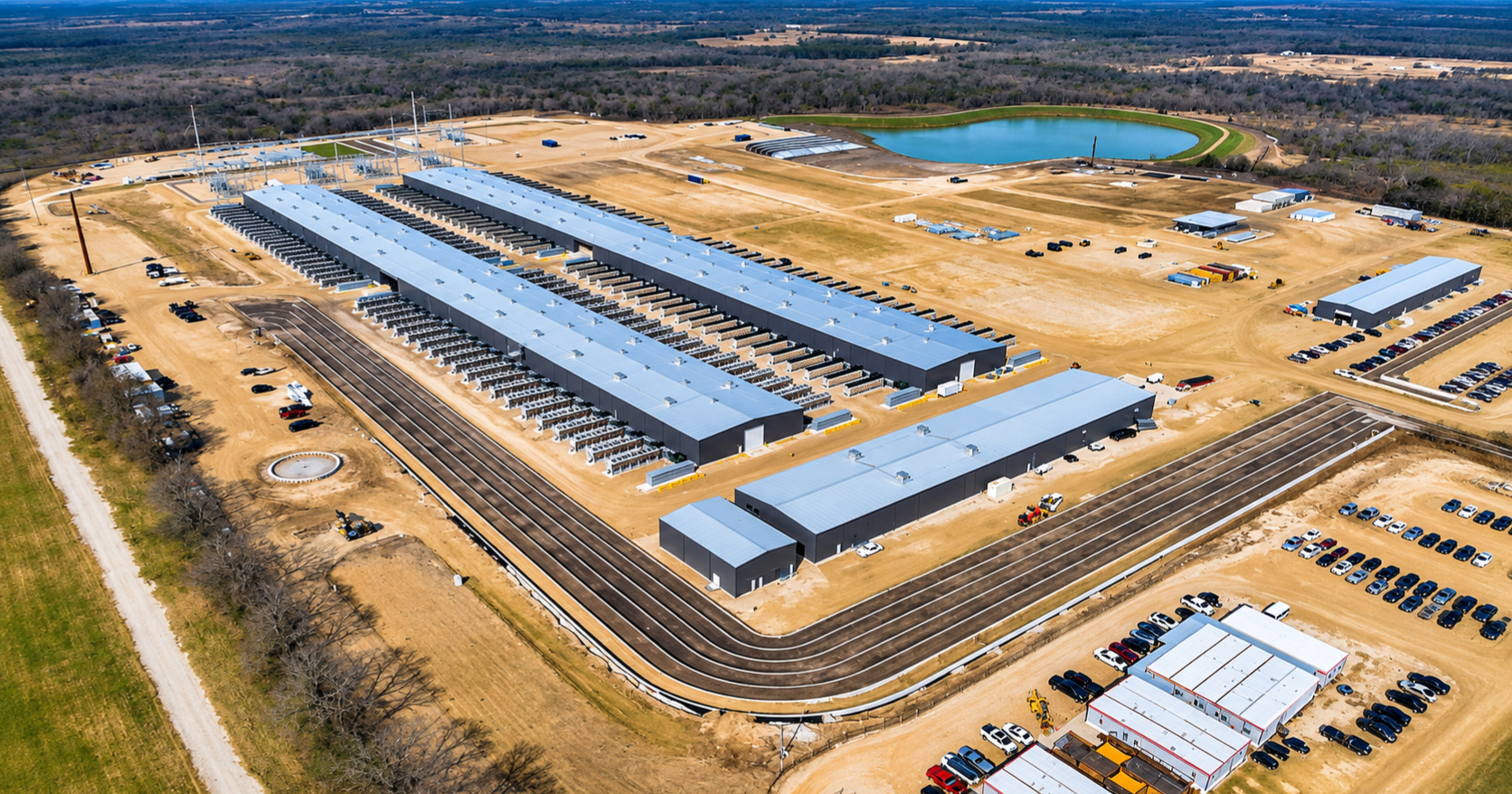
Riot Platforms, meanwhile, gained around 10% that same day after announcing a $28 billion, 15 year AI data center lease covering 910 megawatts at its Corsicana campus in Texas.
The election also raised questions about future construction in Texas, where Governor elect Gina Hinojosa has proposed pausing new data center approvals until lawmakers establish additional protections for electricity consumers and local communities.
According to Reuters, Goldman Sachs estimates that states facing potential restrictions account for approximately 45% of planned US data center capacity, with Texas representing about a quarter.
Analysts at US investment bank Jefferies estimate that approximately 13 gigawatts of announced Texas data center projects could be at risk from tighter permitting rules, although existing projects with secured approvals may be better positioned.
Bernstein also lowered its price targets on seven Bitcoin mining companies by approximately 35% to 54% following the election, citing financing conditions and uncertainty surrounding Texas data center development.
Pellevoizin said the market is increasingly focused on how quickly miners can convert their contracted capacity into revenue.
CoinShares’ report identified more than $100 billion in disclosed AI and high performance computing backlog across covered mining companies, compared with approximately $1.1 billion in annualized revenue.
Of more than 4 gigawatts of contracted capacity, only around 550 megawatts were generating billable revenue at the time of the report.
Core Scientific had approximately 437 megawatts billing by mid July, while rental payments at Cipher’s Black Pearl facility began in August.
CoinShares renamed its WGMI fund the Bitcoin Mining and Digital Power ETF in August to reflect the growing overlap between Bitcoin mining, AI computing and power infrastructure.
Pellevoizin said the firm is watching changes to state permitting rules, the pace at which contracted capacity begins generating revenue and the development of Texas grid operator ERCOT’s large load connection queue.
Disclosure: This article was edited by Estefano Gomez. For more information on how we create and review content, see our Editorial Policy.

