
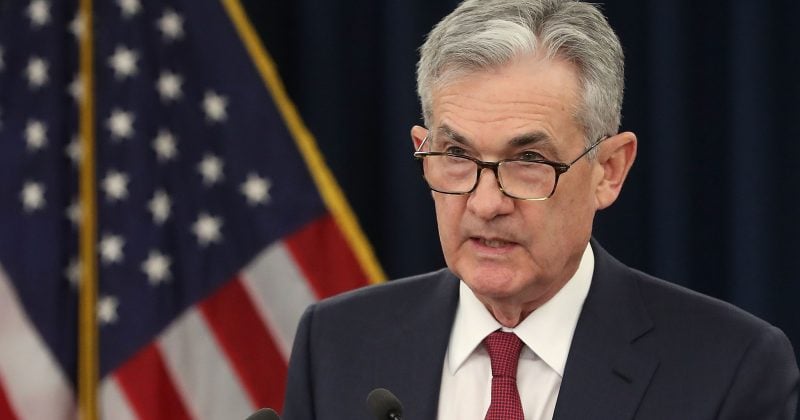
Fed keeps interest rates unchanged in March
The CME Group’s FedWatch Tool had signaled a 99% probability of rates holding steady.
The Federal Reserve kept interest rates unchanged today, maintaining the federal funds rate between 4.25% and 4.50% for the second consecutive meeting amid growing recession concerns fueled by the Trump administration’s economic policies.
The central bank has adjusted its 2025 economic forecasts, lowering GDP growth projections to 1.7% from the previous 2.1% in December, while simultaneously raising forecasts for unemployment to 4.4% from 4.3%, PCE inflation to 2.7% from 2.5%, and core PCE inflation to 2.8% from 2.5%.
The Fed projects two 50-basis-point interest rate cuts in 2025, consistent with both market expectations and its December forecast.
The decision matched widespread market expectations. The CME Group’s FedWatch Tool indicated a 99% probability of the Fed maintaining its current target interest rates, reflecting near-unanimous market confidence in that outcome.
In its FOMC statement, the central bank highlighted a resilient labor market but voiced concerns about persistent inflation and global economic challenges. The Fed indicated it would carefully monitor inflation and labor market data before adjusting policy.
Fed Chairman Jerome Powell echoed this cautious approach last month, noting a strong economy that doesn’t yet warrant changes.
With his press conference minutes away, markets await clarity on what conditions might prompt future rate moves—and how the Fed views mounting economic risks.
Powell’s speech expected to bring clarity
This Wednesday’s meeting was the first since the enactment of Trump’s trade policies targeting China, Mexico, and Canada.
The news moving money, markets, and the world—before your day starts.
Daily. Free. Join 34,000+ readers across crypto, finance, and policy.
The Fed had already flagged these tariffs as a source of uncertainty at its January meeting, where rates also held steady.
Economists warn that Trump’s tariffs could reverse recent inflation progress by driving up consumer prices and inviting retaliation, potentially straining the economy.
US inflation data supports a cooling trend—the consumer price index rose 0.2% in February, lowering the annual rate to 2.8% from 3%, with core CPI also up 0.2%—yet tariff fears persist.
In an interview with Fox News’ Maria Bartiromo, Trump did not rule out the possibility of a recession. Treasury Secretary Scott Bessent added to recession concerns on March 10, stating he could not guarantee the US would dodge one.
Powell’s upcoming remarks are poised to address these tensions—tariffs, inflation, and recession risks.
Since the rate decision met expectations, his words will carry extra weight, potentially shaping market sentiment on whether Trump’s policies could tip the economy into downturn territory.
Bitcoin could thrive in a recession despite short-term market fears: BlackRock
As concerns over tariffs and recession mount, talk about Bitcoin heats up.
BlackRock’s Global Head of Digital Assets, Robbie Mitchnick, sees a recession as a potential catalyst for Bitcoin, noting that increased liquidity and monetary stimulus could fuel its rise.
“Bitcoin is long liquidity in the system. It’s catalyzed by more fiscal spending and debt and deficit accumulation. That happens in a recession,” he said during Yahoo Finance’s Market Domination Overtime on Tuesday. “It’s catalyzed by lower interest rates and monetary stimulus.”
Comparing Bitcoin to gold, Mitchnick explained that while Bitcoin is fundamentally an uncorrelated asset, market sentiment sometimes creates short-term price correlations.
He argued that Bitcoin should act as a global, decentralized, and non-sovereign asset akin to digital gold but acknowledged that short-term interest rate expectations and investor sentiment could influence its price.
Despite recent market pullbacks, Bitcoin is still up approximately 15% since the beginning of November.