
Foxconn lands $52B SpaceX contract to build 13,000 Nvidia GB300 AI server racks

Foxconn lands $52B SpaceX contract to build 13,000 Nvidia GB300 AI server racks

The deal marks Foxconn's first major SpaceX order and could reshape the AI server supply chain dominated by Dell and Super Micro

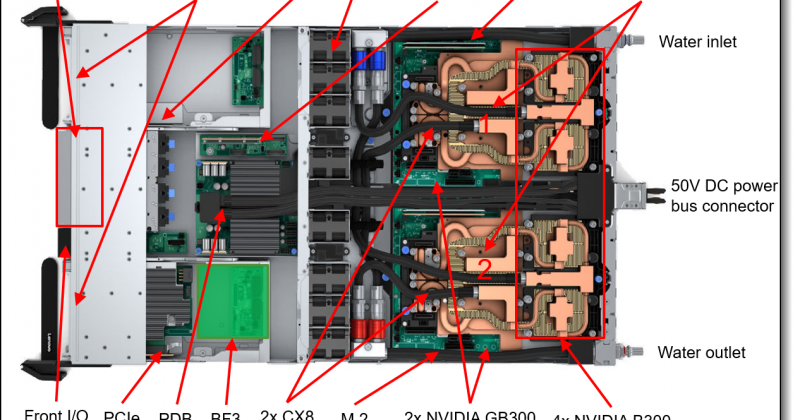
Foxconn just pulled off the kind of deal that makes entire industries recalibrate. The Taiwanese manufacturing giant, formally known as Hon Hai Precision Industry, has secured a contract worth approximately $52 billion to supply SpaceX with more than 13,000 Nvidia GB300-powered AI server racks. At roughly $4 million per rack, that’s not a typo. It’s a single order worth more than the market cap of most publicly traded companies.

The deal, first reported by Taiwan’s Economic Daily, represents Foxconn’s entry into SpaceX’s supplier ecosystem. That’s a space previously controlled by Dell Technologies and Super Micro Computer. Deliveries are expected to begin in late 2026 and run through the first quarter of 2027.

Why this matters beyond the hardware

Foxconn is targeting more than 40% of the global AI server market by 2026. AI servers already represent the company’s largest revenue segment. Landing SpaceX as a client is less a cherry on top and more a proof point that Foxconn’s aggressive bet on AI hardware is paying off at scale.

SpaceX has been aggressively expanding its AI compute capabilities through its Colossus data centers. It’s also struck commercial agreements with Anthropic, Google, and Reflection AI, suggesting that SpaceX’s AI ambitions extend well beyond satellite operations and into the territory of cloud services and large-scale compute.

Advertisement

The competitive shake-up

Dell and Super Micro have been the go-to names for AI server deployments at scale. This deal changes that calculus significantly.

Super Micro in particular has had a turbulent period, dealing with accounting concerns and increased scrutiny. Dell remains a formidable competitor, but Foxconn’s ability to produce at volume and its deep relationship with Nvidia give it a distinct edge in a market where demand consistently outstrips supply.

The Nvidia GB300 represents the next generation of Nvidia’s Blackwell architecture, purpose-built for massive AI training and inference workloads.

SpaceX has also been collaborating with the US Department of Defense on various projects, adding a national security dimension to its AI infrastructure buildout.

What this means for investors

Foxconn’s projected 40% market share target, if achieved, would make it the single largest AI server manufacturer globally.

The risk, as always, is execution. Manufacturing 13,000 high-end AI server racks on a tight timeline is a monumental logistical challenge. Supply chain disruptions, component shortages, or quality issues could delay deliveries and erode margins. And at $4 million per rack, even small defect rates translate into significant financial exposure.

Investors should also watch how Dell and Super Micro respond. Losing a flagship client like SpaceX could push both companies to cut prices or accelerate next-generation product development, potentially compressing margins across the entire sector.

Disclosure: This article was edited by Editorial Team. For more information on how we create and review content, see our Editorial Policy.

Foxconn lands $52B SpaceX contract to build 13,000 Nvidia GB300 AI server racks

Foxconn lands $52B SpaceX contract to build 13,000 Nvidia GB300 AI server racks

The deal marks Foxconn's first major SpaceX order and could reshape the AI server supply chain dominated by Dell and Super Micro

Foxconn just pulled off the kind of deal that makes entire industries recalibrate. The Taiwanese manufacturing giant, formally known as Hon Hai Precision Industry, has secured a contract worth approximately $52 billion to supply SpaceX with more than 13,000 Nvidia GB300-powered AI server racks. At roughly $4 million per rack, that’s not a typo. It’s a single order worth more than the market cap of most publicly traded companies.

The deal, first reported by Taiwan’s Economic Daily, represents Foxconn’s entry into SpaceX’s supplier ecosystem. That’s a space previously controlled by Dell Technologies and Super Micro Computer. Deliveries are expected to begin in late 2026 and run through the first quarter of 2027.

Why this matters beyond the hardware

Foxconn is targeting more than 40% of the global AI server market by 2026. AI servers already represent the company’s largest revenue segment. Landing SpaceX as a client is less a cherry on top and more a proof point that Foxconn’s aggressive bet on AI hardware is paying off at scale.

SpaceX has been aggressively expanding its AI compute capabilities through its Colossus data centers. It’s also struck commercial agreements with Anthropic, Google, and Reflection AI, suggesting that SpaceX’s AI ambitions extend well beyond satellite operations and into the territory of cloud services and large-scale compute.

Advertisement

The competitive shake-up

Dell and Super Micro have been the go-to names for AI server deployments at scale. This deal changes that calculus significantly.

Super Micro in particular has had a turbulent period, dealing with accounting concerns and increased scrutiny. Dell remains a formidable competitor, but Foxconn’s ability to produce at volume and its deep relationship with Nvidia give it a distinct edge in a market where demand consistently outstrips supply.

The Nvidia GB300 represents the next generation of Nvidia’s Blackwell architecture, purpose-built for massive AI training and inference workloads.

SpaceX has also been collaborating with the US Department of Defense on various projects, adding a national security dimension to its AI infrastructure buildout.

What this means for investors

Foxconn’s projected 40% market share target, if achieved, would make it the single largest AI server manufacturer globally.

The risk, as always, is execution. Manufacturing 13,000 high-end AI server racks on a tight timeline is a monumental logistical challenge. Supply chain disruptions, component shortages, or quality issues could delay deliveries and erode margins. And at $4 million per rack, even small defect rates translate into significant financial exposure.

Investors should also watch how Dell and Super Micro respond. Losing a flagship client like SpaceX could push both companies to cut prices or accelerate next-generation product development, potentially compressing margins across the entire sector.

Disclosure: This article was edited by Editorial Team. For more information on how we create and review content, see our Editorial Policy.