
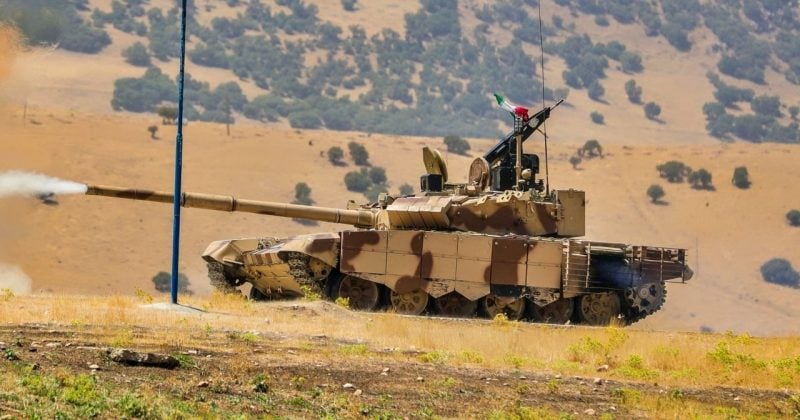
Via nationalsecurityjournal.org
Iranian army seeks fate of three pilots after mission targeting US forces
Iran's military acknowledges it has lost contact with three pilots following an operation against US forces, as conflicting accounts emerge over what actually happened
Iran’s army has publicly admitted it does not know what happened to three of its pilots who participated in a mission targeting US forces. The acknowledgment is notable for what it implies: a military operation that did not go as planned, and a government now searching for answers it may not want to find publicly.
The incident, which unfolded around April 3, 2026, involved a US F-15E Strike Eagle jet operating over southwestern Iran. Iranian forces claimed the aircraft was shot down, pointing to what military analysts described as newly enhanced Iranian air defense capabilities. The US military, for its part, focused its narrative on a successful rescue operation that recovered both American crew members alive.
Two very different stories
Iranian state media initially framed the encounter as a series of victories, claiming multiple US aircraft were downed during the operation and its aftermath. Those accounts also acknowledged casualties within both the Islamic Revolutionary Guard Corps and the regular Iranian Army.
US officials described something more complicated. The rescue of the two F-15E crew members was characterized as among the most complex special operations missions in recent memory, involving dozens of aircraft and extensive aerial coordination. One crew member was recovered on April 3. The second was brought out days later after a prolonged search effort.
The gap between those two narratives is where Iran’s missing pilots live. If the mission succeeded on Iranian terms, there would be little reason to publicly seek information on the fate of three aviators. The army’s announcement suggests the operation cost Iran more than its official statements have acknowledged.
The news moving money, markets, and the world—before your day starts.
Daily. Free. Join 34,000+ readers across crypto, finance, and policy.
The broader context
This incident did not happen in a vacuum. US-Iran tensions had been escalating around the strategic Strait of Hormuz, the narrow waterway through which a significant share of global oil supply travels. Prior Israeli airstrikes against Iranian installations had already rattled regional stability before this engagement added another layer of complexity.
Iran’s military structure adds another dimension worth understanding. The IRGC and the regular Iranian Army operate as parallel forces, sometimes with overlapping mandates and occasionally competing interests. A mission involving both, with casualties reported in both, and now with missing pilots from one, points to an operation that drew from the full range of Iranian military assets.
What investors and markets should watch
The research here is direct: no immediate market response in digital assets was identified in connection with this incident. That tracks with the historical pattern where short, contained military skirmishes generate more noise than lasting market impact.
For now, the Iranian army’s public search for its own pilots is the clearest signal available that this operation produced outcomes neither side has fully disclosed.