
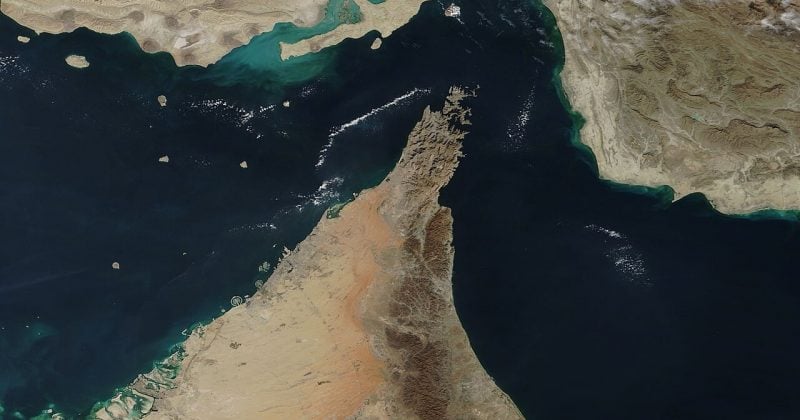
Iran declares sovereign rights over Strait of Hormuz non-negotiable

https://en.wikipedia.org/wiki/Strait_of_Hormuz

Iran declares sovereign rights over Strait of Hormuz non-negotiable

Strait of Hormuz traffic normalization

Iran has declared its sovereign rights over the Strait of Hormuz as non-negotiable, amid ongoing tensions in the region. This statement comes during a critical phase of the 2026 Strait of Hormuz crisis, part of the broader U.S.-Iran conflict. Following U.S. and Israeli military actions against Iran earlier this year, the U.S. reimposed a naval blockade on Iranian ports, prompting Iran to close the strait to all vessels and engage in military actions against commercial ships. Iran’s assertion aims to legitimize its control over the strait, which is considered an international waterway by the U.S. and the International Maritime Organization (IMO).

Advertisement

Key Takeaways

  • Iran’s declaration appears to reflect a firm stance on its control over the Strait of Hormuz, impacting regional stability.
  • Market pricing suggests participants view the likelihood of Strait of Hormuz traffic normalizing by August 31 as decreasing, with odds currently at 15.5% YES.
  • Recent developments, including Iran’s military actions, are consistent with scenarios where the strait remains closed.

What to Watch

The situation remains dynamic as geopolitical actors engage in ongoing negotiations and military maneuvers. Key indicators to monitor include any announcements from Iran’s Presidency regarding peace talks or strait reopening. A shift in the live vessel tracker status from ‘CLOSED’ to ‘OPEN’ would suggest a move toward normalization. Conversely, further military escalation or reaffirmations by Iranian leaders about the strait’s closure could support scenarios where traffic remains disrupted beyond August.

Get live prediction-market analysis, powered by Vera. Sign up for Vera.

Disclosure: This article was edited by Estefano Gomez. For more information on how we create and review content, see our Editorial Policy.

Iran declares sovereign rights over Strait of Hormuz non-negotiable

Iran declares sovereign rights over Strait of Hormuz non-negotiable

Strait of Hormuz traffic normalization

https://en.wikipedia.org/wiki/Strait_of_Hormuz

Iran has declared its sovereign rights over the Strait of Hormuz as non-negotiable, amid ongoing tensions in the region. This statement comes during a critical phase of the 2026 Strait of Hormuz crisis, part of the broader U.S.-Iran conflict. Following U.S. and Israeli military actions against Iran earlier this year, the U.S. reimposed a naval blockade on Iranian ports, prompting Iran to close the strait to all vessels and engage in military actions against commercial ships. Iran’s assertion aims to legitimize its control over the strait, which is considered an international waterway by the U.S. and the International Maritime Organization (IMO).

Advertisement

Key Takeaways

  • Iran’s declaration appears to reflect a firm stance on its control over the Strait of Hormuz, impacting regional stability.
  • Market pricing suggests participants view the likelihood of Strait of Hormuz traffic normalizing by August 31 as decreasing, with odds currently at 15.5% YES.
  • Recent developments, including Iran’s military actions, are consistent with scenarios where the strait remains closed.

What to Watch

The situation remains dynamic as geopolitical actors engage in ongoing negotiations and military maneuvers. Key indicators to monitor include any announcements from Iran’s Presidency regarding peace talks or strait reopening. A shift in the live vessel tracker status from ‘CLOSED’ to ‘OPEN’ would suggest a move toward normalization. Conversely, further military escalation or reaffirmations by Iranian leaders about the strait’s closure could support scenarios where traffic remains disrupted beyond August.

Get live prediction-market analysis, powered by Vera. Sign up for Vera.

Disclosure: This article was edited by Estefano Gomez. For more information on how we create and review content, see our Editorial Policy.