
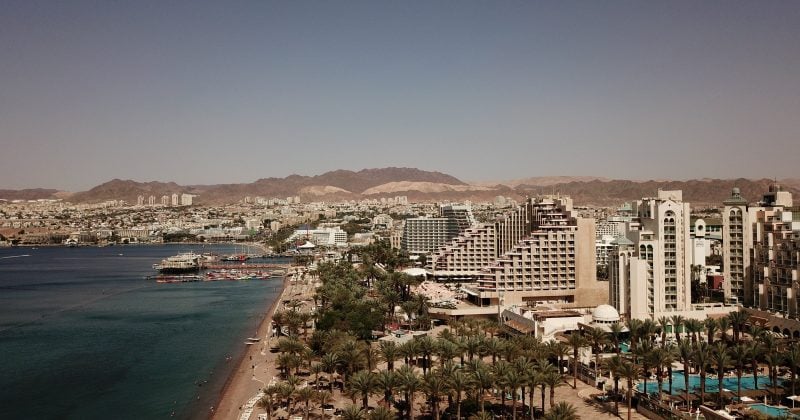
Iran launches missiles targeting Aqaba and Eilat, escalating regional tensions

https://www.tripadvisor.com/LocationPhotoDirectLink-g293980-i392648236-Eilat_Southern_District.html

Iran launches missiles targeting Aqaba and Eilat, escalating regional tensions

Israel airspace closure

Reports have emerged of missile interceptions over Aqaba, Jordan, and Eilat, Israel, as Iran launched missiles targeting the region. The incident is a part of the broader ongoing conflict involving the U.S., Israel, and Iran. Iran’s missile launches, which have crossed Jordanian airspace, have previously resulted in debris falling within Jordan. The recent escalation is notable as Iran appears to be intensifying its targeting of areas near Jordan, including potential threats to Israeli territory. This development could have significant implications for regional security dynamics and airspace management.

Advertisement

Key Takeaways

  • The recent missile launch towards Aqaba appears to increase the likelihood of Israel considering airspace closure.
  • Market pricing suggests a notable uptick in probability for Israel to close its airspace by July 31, reflecting heightened security concerns.
  • The ongoing conflict and missile activities are consistent with scenarios where Israeli airspace restrictions could be imposed.

What to Watch

Key Israeli figures, including Transportation Minister Miri Regev and Defense Minister Yoav Gallant, are central to any airspace closure decisions. Monitoring their responses to the missile threats will be crucial. Further Iranian missile launches or escalations could indicate a heightened likelihood of airspace closure. Watch for any official announcements from the Israeli government regarding airspace management or changes in military posture, which could significantly impact the current market pricing.

Get live prediction-market analysis, powered by Vera. Sign up for Vera.

Disclosure: This article was edited by Estefano Gomez. For more information on how we create and review content, see our Editorial Policy.

Iran launches missiles targeting Aqaba and Eilat, escalating regional tensions

Iran launches missiles targeting Aqaba and Eilat, escalating regional tensions

Israel airspace closure

https://www.tripadvisor.com/LocationPhotoDirectLink-g293980-i392648236-Eilat_Southern_District.html

Reports have emerged of missile interceptions over Aqaba, Jordan, and Eilat, Israel, as Iran launched missiles targeting the region. The incident is a part of the broader ongoing conflict involving the U.S., Israel, and Iran. Iran’s missile launches, which have crossed Jordanian airspace, have previously resulted in debris falling within Jordan. The recent escalation is notable as Iran appears to be intensifying its targeting of areas near Jordan, including potential threats to Israeli territory. This development could have significant implications for regional security dynamics and airspace management.

Advertisement

Key Takeaways

  • The recent missile launch towards Aqaba appears to increase the likelihood of Israel considering airspace closure.
  • Market pricing suggests a notable uptick in probability for Israel to close its airspace by July 31, reflecting heightened security concerns.
  • The ongoing conflict and missile activities are consistent with scenarios where Israeli airspace restrictions could be imposed.

What to Watch

Key Israeli figures, including Transportation Minister Miri Regev and Defense Minister Yoav Gallant, are central to any airspace closure decisions. Monitoring their responses to the missile threats will be crucial. Further Iranian missile launches or escalations could indicate a heightened likelihood of airspace closure. Watch for any official announcements from the Israeli government regarding airspace management or changes in military posture, which could significantly impact the current market pricing.

Get live prediction-market analysis, powered by Vera. Sign up for Vera.

Disclosure: This article was edited by Estefano Gomez. For more information on how we create and review content, see our Editorial Policy.