
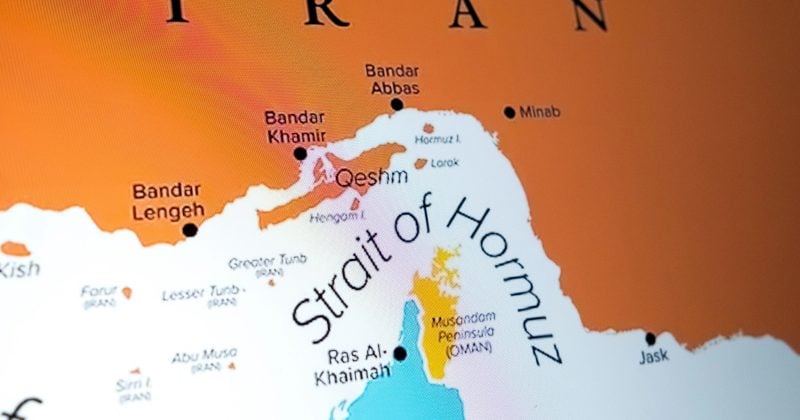
Iran warns US military supporters amid Strait of Hormuz tensions

https://www.axios.com/2026/03/05/iran-war-strait-of-hormuz-shutdown-us-global-economy

Iran warns US military supporters amid Strait of Hormuz tensions

Iran leadership status by end of 2026

Iran’s Khatam al-Anbiya Central Headquarters has declared that any source supporting the US military in actions against Iranian sovereignty would be considered a legitimate target by the Iranian armed forces. This statement comes amid the ongoing conflict over control of the Strait of Hormuz, where tensions between Iran and the US have been escalating. The Iranian military warning suggests that the fragile ceasefire agreement reached in June could unravel, potentially leading to an intensification of hostilities in the region. The heightened rhetoric may also indicate potential instability within Iran’s leadership as the conflict persists.

Advertisement

Key Takeaways

  • The statement from Iran’s military suggests a potential escalation in the conflict over the Strait of Hormuz.
  • Market pricing indicates a decrease in confidence regarding Iran’s current head of state remaining in power by the end of 2026.
  • The recent developments appear consistent with scenarios of increased regional instability and leadership challenges in Iran.

What to Watch

Observers will closely monitor any military actions in the Strait of Hormuz that might trigger a broader regional conflict. Key indicators include statements from Iran’s leadership and responses from the US and its allies. Developments in Iran’s internal politics, particularly any signs of leadership instability, will be critical in assessing the situation’s evolution. The potential for renewed diplomatic negotiations or escalations in military engagements will significantly impact market perceptions.

Get prediction market intelligence as a structured API feed. Early access waitlist.

Disclosure: This article was edited by Estefano Gomez. For more information on how we create and review content, see our Editorial Policy.

Iran warns US military supporters amid Strait of Hormuz tensions

Iran warns US military supporters amid Strait of Hormuz tensions

Iran leadership status by end of 2026

https://www.axios.com/2026/03/05/iran-war-strait-of-hormuz-shutdown-us-global-economy

Iran’s Khatam al-Anbiya Central Headquarters has declared that any source supporting the US military in actions against Iranian sovereignty would be considered a legitimate target by the Iranian armed forces. This statement comes amid the ongoing conflict over control of the Strait of Hormuz, where tensions between Iran and the US have been escalating. The Iranian military warning suggests that the fragile ceasefire agreement reached in June could unravel, potentially leading to an intensification of hostilities in the region. The heightened rhetoric may also indicate potential instability within Iran’s leadership as the conflict persists.

Advertisement

Key Takeaways

  • The statement from Iran’s military suggests a potential escalation in the conflict over the Strait of Hormuz.
  • Market pricing indicates a decrease in confidence regarding Iran’s current head of state remaining in power by the end of 2026.
  • The recent developments appear consistent with scenarios of increased regional instability and leadership challenges in Iran.

What to Watch

Observers will closely monitor any military actions in the Strait of Hormuz that might trigger a broader regional conflict. Key indicators include statements from Iran’s leadership and responses from the US and its allies. Developments in Iran’s internal politics, particularly any signs of leadership instability, will be critical in assessing the situation’s evolution. The potential for renewed diplomatic negotiations or escalations in military engagements will significantly impact market perceptions.

Get prediction market intelligence as a structured API feed. Early access waitlist.

Disclosure: This article was edited by Estefano Gomez. For more information on how we create and review content, see our Editorial Policy.