
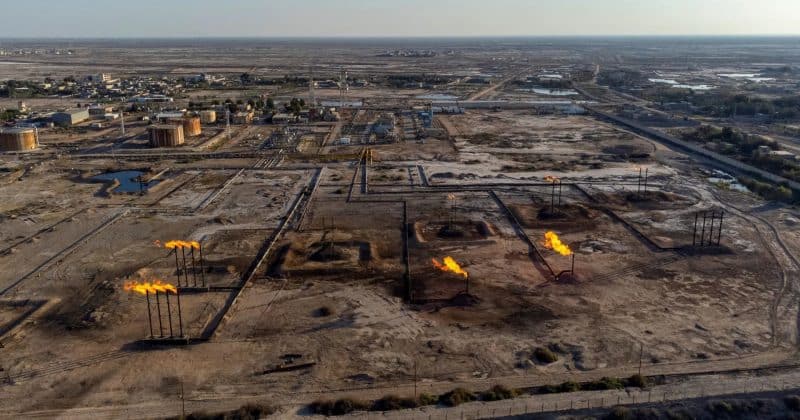
Iraq seeks significant OPEC quota increase amid financial crisis from Iran war
With oil exports down over 97% due to Strait of Hormuz disruptions, Iraq is pushing for higher production quotas as its petroleum-dependent economy faces collapse
Iraq’s oil exports have effectively vanished. A country that was shipping 3.32 million barrels per day just a year ago is now moving roughly 96,000 bpd, a collapse of more than 97% triggered by the ongoing US-Israeli military campaign against Iran and the near-total closure of the Strait of Hormuz to Iraqi tanker traffic.
The financial math is brutal. Iraq derives approximately 90% of its government revenue from oil sales. Monthly oil income has cratered from around $6.8 billion before the conflict to figures below $1 billion in recent months.
OPEC’s response: a quota bump that barely registers
On June 7, 2026, OPEC+ agreed to raise Iraq’s oil output quota by 26,000 bpd starting in July. That increase is part of a broader 188,000 bpd production hike spread across several member countries.
Iraq has historically argued it deserves more room to pump. Baghdad has previously claimed a production capacity of 5.5 million bpd while operating under a quota of 4.4 million bpd. That gap was already a point of tension within the cartel before the war started.
Macro, rates, and crypto—what moved markets and what matters next.
Daily. Free. Join 34,000+ readers across crypto, finance, and policy.
The pipeline gamble through Turkey
Iraq’s cabinet approved plans in early June 2026 to triple pipeline exports to 770,000 bpd via the Ceyhan route through Turkey within 75 days. The Ceyhan pipeline runs from northern Iraq through southeastern Turkey to the Mediterranean port of Ceyhan.