
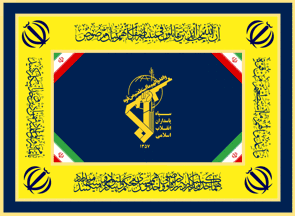
Iran’s Revolutionary Guards claim strike on Al-Adiri base in Kuwait as Gulf tensions escalate
The IRGC's latest operation targets U.S. military logistics infrastructure, sending oil markets into volatility mode
Iran’s Islamic Revolutionary Guard Corps has claimed responsibility for an attack on Al-Adiri camp in Kuwait, marking a significant escalation in the ongoing standoff between Tehran and Washington in the Gulf region.
The IRGC described the operation as the 23rd phase of what it calls ‘Operation Lightning,’ a declared campaign of retaliatory strikes against U.S. military assets in the region.
What happened at Al-Adiri
The strikes, which the IRGC says took place on July 23, targeted Al-Adiri camp alongside Ali Al-Salem air base, another major U.S. military installation in Kuwait.
According to IRGC claims, the targets included an ammunition depot, personnel facilities, communications infrastructure, and helicopter hangars.
Al-Adiri camp sits roughly 100 kilometers from the Iranian border and functions as a primary logistics hub for American forces operating in Kuwait.
Kuwaiti defense forces reported successfully intercepting Iranian drones that were directed at the bases.
The news moving money, markets, and the world—before your day starts.
Daily. Free. Join 34,000+ readers across crypto, finance, and policy.
The IRGC framed the campaign explicitly as ‘revenge,’ citing ongoing U.S. sanctions against Iran and prior American strikes on Iranian targets as justification.
Why the Gulf matters for markets right now
The Strait of Hormuz, which Iran has repeatedly threatened to close in moments of peak tension, is the chokepoint through which a significant share of global crude supply passes.
Both Brent and WTI benchmarks showed swings of several percent in the days surrounding these developments.
What investors should be watching
No crypto tokens or blockchain-based entities were directly referenced in connection with these strikes, and on-chain activity showed no immediate reaction.
The sequenced nature of ‘Operation Lightning’ is the detail that matters most here. A 23rd phase implies a planned, sustained campaign rather than reactive escalation.
The IRGC’s framing of these operations as ‘revenge’ for sanctions and prior strikes suggests Tehran views this as a tit-for-tat sequence rather than a move toward de-escalation.