
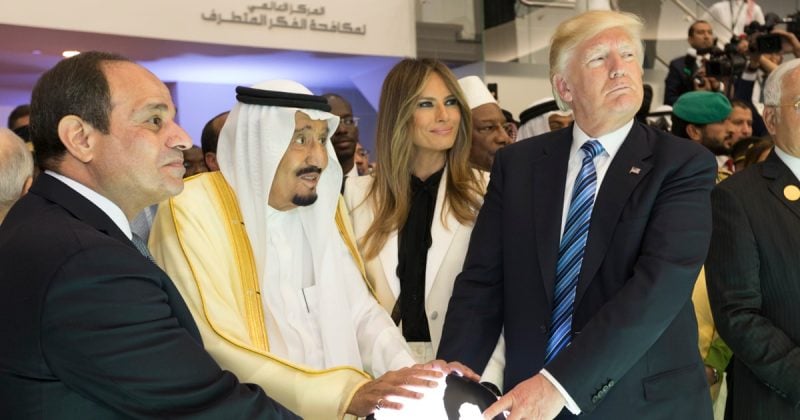
Israel fears US-Saudi nuclear deal could spark Middle East arms race

Israel fears US-Saudi nuclear deal could spark Middle East arms race

A landmark 30-year civilian nuclear agreement between Washington and Riyadh is rattling regional security calculations and adding a new layer of geopolitical risk for global markets.

The United States and Saudi Arabia have finalized a sweeping civilian nuclear cooperation agreement, and the region’s most anxious observer is not Iran. It’s Israel.

Signed in July 2026 under the Trump administration, the deal runs for 30 years and carries a price tag in the several-billion-dollar range. It opens the door for American nuclear technology to flow into Saudi Arabia, and it leaves open the possibility that Riyadh could enrich uranium domestically, pending the outcome of a joint US-Saudi economic study.

What the deal actually says

The uranium enrichment question is where things get complicated. Enrichment is the process that sits at the fork in the road between civilian power generation and weapons capability. The same technology that keeps the lights on can, with further refinement, produce material for a bomb.

Advertisement

Saudi Arabia has long stated its ambitions plainly. Crown Prince Mohammed bin Salman said in 2018 that if Iran develops a nuclear weapon, Saudi Arabia would follow. That statement has never been walked back.

The agreement does include American safeguards and the prospect of on-site inspections, which the US is expected to enforce. Congress also retains oversight rights under US law governing nuclear cooperation agreements, meaning this deal is not entirely beyond legislative scrutiny.

What the deal notably does not include is a condition that Saudi Arabia normalize relations with Israel. Earlier rounds of negotiation had floated that linkage. It was quietly dropped, and the agreement moved forward anyway.

Israel’s calculation, and why markets should pay attention

Israeli officials have been direct about their concerns. A Saudi civilian nuclear program, they argue, is a short runway to a Saudi military nuclear capability, and that changes the security math for every state in the region.

Bipartisan concern in the US Congress mirrors Israel’s unease. Lawmakers from both parties have raised non-proliferation flags, which suggests this deal will face continued political friction even after its signing.

The deal is structured to favor American nuclear technology firms, effectively sidelining foreign competitors. That is a meaningful opportunity for the US nuclear sector, which has been looking for large-scale international contracts to justify expansion of domestic capacity.

Watch Congress. If lawmakers move to impose conditions on the deal, particularly around enrichment, that could either tighten the agreement’s proliferation guardrails or unravel it entirely. A collapsed deal reopens the question of where Saudi Arabia turns next for nuclear technology, and the answer might be China or Russia.

Disclosure: This article was edited by Editorial Team. For more information on how we create and review content, see our Editorial Policy.

Israel fears US-Saudi nuclear deal could spark Middle East arms race

Israel fears US-Saudi nuclear deal could spark Middle East arms race

A landmark 30-year civilian nuclear agreement between Washington and Riyadh is rattling regional security calculations and adding a new layer of geopolitical risk for global markets.

The United States and Saudi Arabia have finalized a sweeping civilian nuclear cooperation agreement, and the region’s most anxious observer is not Iran. It’s Israel.

Signed in July 2026 under the Trump administration, the deal runs for 30 years and carries a price tag in the several-billion-dollar range. It opens the door for American nuclear technology to flow into Saudi Arabia, and it leaves open the possibility that Riyadh could enrich uranium domestically, pending the outcome of a joint US-Saudi economic study.

What the deal actually says

The uranium enrichment question is where things get complicated. Enrichment is the process that sits at the fork in the road between civilian power generation and weapons capability. The same technology that keeps the lights on can, with further refinement, produce material for a bomb.

Advertisement

Saudi Arabia has long stated its ambitions plainly. Crown Prince Mohammed bin Salman said in 2018 that if Iran develops a nuclear weapon, Saudi Arabia would follow. That statement has never been walked back.

The agreement does include American safeguards and the prospect of on-site inspections, which the US is expected to enforce. Congress also retains oversight rights under US law governing nuclear cooperation agreements, meaning this deal is not entirely beyond legislative scrutiny.

What the deal notably does not include is a condition that Saudi Arabia normalize relations with Israel. Earlier rounds of negotiation had floated that linkage. It was quietly dropped, and the agreement moved forward anyway.

Israel’s calculation, and why markets should pay attention

Israeli officials have been direct about their concerns. A Saudi civilian nuclear program, they argue, is a short runway to a Saudi military nuclear capability, and that changes the security math for every state in the region.

Bipartisan concern in the US Congress mirrors Israel’s unease. Lawmakers from both parties have raised non-proliferation flags, which suggests this deal will face continued political friction even after its signing.

The deal is structured to favor American nuclear technology firms, effectively sidelining foreign competitors. That is a meaningful opportunity for the US nuclear sector, which has been looking for large-scale international contracts to justify expansion of domestic capacity.

Watch Congress. If lawmakers move to impose conditions on the deal, particularly around enrichment, that could either tighten the agreement’s proliferation guardrails or unravel it entirely. A collapsed deal reopens the question of where Saudi Arabia turns next for nuclear technology, and the answer might be China or Russia.

Disclosure: This article was edited by Editorial Team. For more information on how we create and review content, see our Editorial Policy.