
Via quantifiedstrategies.com
Korean stocks are now more volatile than Bitcoin, and US bonds aren’t far behind
The KOSPI's annualized volatility has blown past 60%, fueled by a two-stock concentration problem that's starting to worry regulators
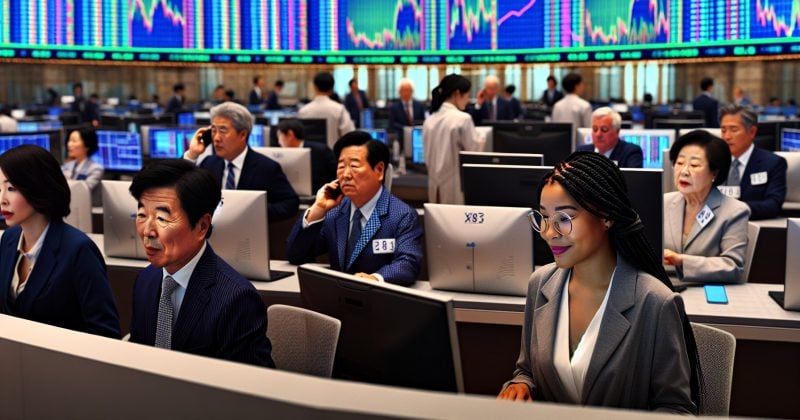
The KOSPI, South Korea’s benchmark equity index, has been swinging so hard in 2026 that its annualized volatility exceeded 60%, surpassing Bitcoin’s legendary price gyrations and roughly doubling the volatility of Japan’s Nikkei. A stock index, the kind of thing pension funds hold, is currently out-volatiling the world’s most famous speculative asset.
What’s actually happening here
On July 16, 2026, the KOSPI closed down 6.37% in a single session, landing at 6,820.6 points and officially entering a technical bear market. That one-day move represented a drop of roughly 25% from the index’s June peak.
South Korean President Lee Jae Myung described the market as “quite unstable” around July 15, following an unprecedented surge.
The root cause isn’t mysterious. Samsung Electronics and SK Hynix, two AI-adjacent semiconductor giants, together account for over 50% of the KOSPI’s total index weight. When AI chip sentiment catches a cold, the entire South Korean equity market gets pneumonia.
Regulators step in, US Treasuries stay calm
South Korean regulators didn’t sit on their hands. On July 29 and 30, 2026, authorities announced a package of measures designed to cool the volatility. The proposals included caps on individual investments in single-stock leveraged ETFs and increased trading costs.
Macro, rates, and crypto—what moved markets and what matters next.
Daily. Free. Join 34,000+ readers across crypto, finance, and policy.
The US Treasury market, by comparison, is playing a different game entirely. Ten-year yields traded in a range of 4.65% to 4.73% through late July 2026, a band narrow enough to make the KOSPI’s chaos look like it belongs in a different financial universe. The two markets are, for now, not meaningfully correlated in their day-to-day movements.
What this means for global investors
For investors with exposure to Korean equities or Asia-Pacific funds with meaningful KOSPI allocation, the regulatory changes are worth watching closely. Caps on leveraged ETF investment and higher trading costs will likely reduce speculative volume in the short term. Whether that translates to lower volatility or simply lower liquidity is an open question, and tighter liquidity in a stressed market can sometimes make price swings worse, not better.
Samsung and SK Hynix’s combined weight in the KOSPI is a structural feature, not a temporary quirk, and until that changes, every major AI sentiment shift will continue to send the Korean market on rides that most investors didn’t sign up for.