
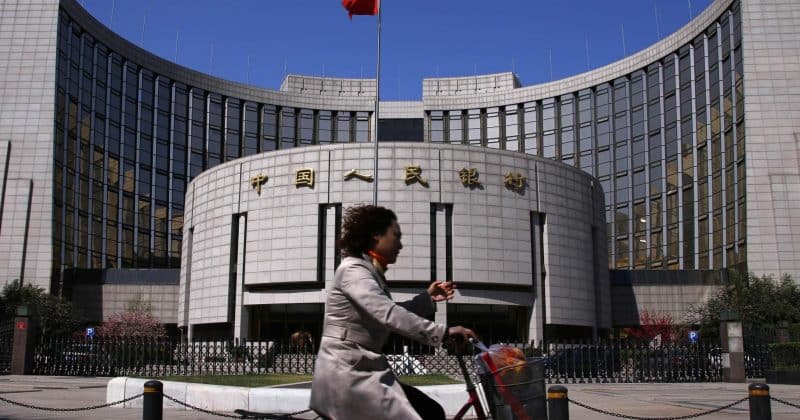
People’s Bank of China urges rating firms to reassess AAA ratings
China's central bank targets rampant rating inflation in a bond market where over 95% of rated securities carry top-tier grades despite record defaults
China’s central bank has told domestic credit rating agencies to stop handing out top grades like participation trophies. The People’s Bank of China issued directives urging firms to curb the concentration of AAA ratings in the country’s bond market, a move that signals Beijing is finally getting serious about the gap between what ratings say and what defaults show.
A market where almost everyone gets an A
The numbers tell a story that borders on absurd. As of late 2018, over 95% of rated interbank bonds in China carried AAA or AA ratings. Only 0.11% were rated BBB+ or lower.
For context, nearly 50% of the outstanding amount of domestic corporate bonds held “Super AAA” or plain AAA ratings by the end of that year.
Meanwhile, corporate bond defaults were telling a very different story. Default volume surged from 1.26 billion RMB in 2014 to 128 billion RMB in 2018, a roughly 100x increase. The default rate climbed from 0.17% to 1.03% over that same period.
The distortion becomes even more glaring when you compare domestic and international assessments of the same issuers. On jointly rated issues, Chinese domestic agencies have assigned ratings that average 6 to 7 notches higher than those from global firms like Moody’s, S&P, and Fitch. A bond that Moody’s might rate as speculative junk could carry a gleaming AAA from a domestic Chinese agency.
Macro, rates, and crypto—what moved markets and what matters next.
Daily. Free. Join 34,000+ readers across crypto, finance, and policy.
Who’s actually defaulting
The concentration of defaults hasn’t been evenly distributed. Approximately 80% of corporate defaults in China have been attributed to private firms, which face disproportionate scrutiny and market pressure compared to state-owned enterprises.
This creates a structural problem. Private companies are the ones most likely to default, yet the rating system has historically failed to differentiate between the credit quality of a well-connected SOE and a leveraged private manufacturer. When every bond looks the same on paper, investors can’t price risk properly, and when defaults inevitably arrive, the market absorbs shocks it never saw coming.
What this means for investors and the broader market
If rating agencies actually comply and begin downgrading bonds that don’t deserve top-tier status, yields on a significant portion of the market could rise as investors demand compensation for newly visible risk. Private firms, already responsible for the vast majority of defaults, could face even tighter financing conditions.
More accurate ratings could attract foreign capital that has historically been wary of China’s opaque credit market. Aligning domestic assessments closer to global benchmarks, even partially closing that 6–7 notch gap, would remove a significant barrier to entry for international investors.
The key variable now is enforcement. China has flagged rating inflation as a concern before without meaningful follow-through. If the PBOC backs these directives with actual consequences for non-compliance, the resulting market adjustment could be one of the most significant credit events in emerging markets this decade.